The Hidden Scripts of the Moretti Papermill Loft
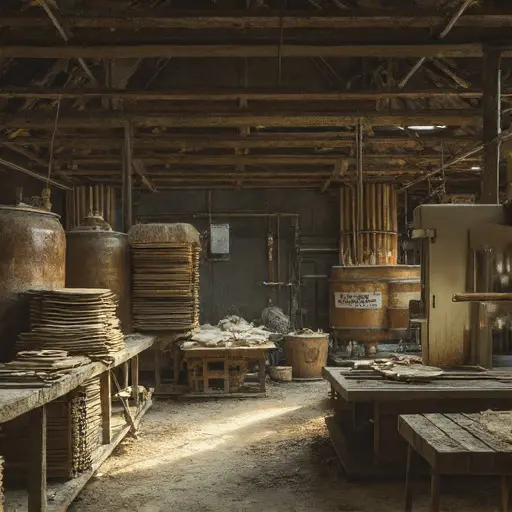
The papermill loft hangs in suspended stillness. On the central vat, a half-formed sheet rests on the deckle, its pulp notes left unfinished. Tools and molds lie scattered yet carefully positioned, with pulp stains frozen mid-splatter, evidence of interrupted labor rather than neglect.
Crafting Fibers and Sheets
These implements belonged to Lorenzo Moretti, professional papermaker (b. 1872, Florence), trained in artisanal workshops supplying booksellers, offices, and artists. His meticulous Italian notes record fiber ratios, water levels, and pressing sequences. A folded card refers to his apprentice, Giulia Moretti, “collect batch Thursday,” reflecting routine, precise measurement, and the patience required to coax pulp into uniform sheets.
Tools Aligned for Production
On the main bench, molds, presses, and brushes lie neatly arranged. Partially dried sheets lean against racks, some sagging under uneven moisture. A ledger beneath folded sheets lists clients, paper types, and intended pulp consistencies. One sheet shows the formation process halted mid-lift, suggesting abrupt interruption. Flecks of wet pulp and residue mark the workspace, frozen mid-motion.
Fading Precision
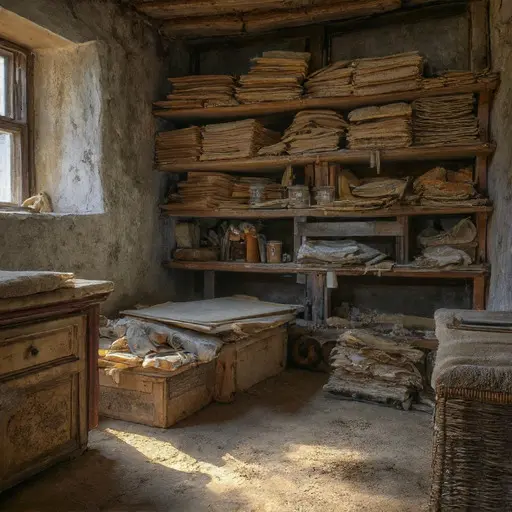
Later ledger entries reveal inconsistent pulp measures and uneven sheet thickness. Several sheets curl or tear. A letter from a publisher remains unopened, hinting at interrupted commissions. Gradually, failing eyesight and trembling hands undermined Moretti’s craft, leaving paper incomplete, fibers uneven, and pulp instructions abandoned mid-process.
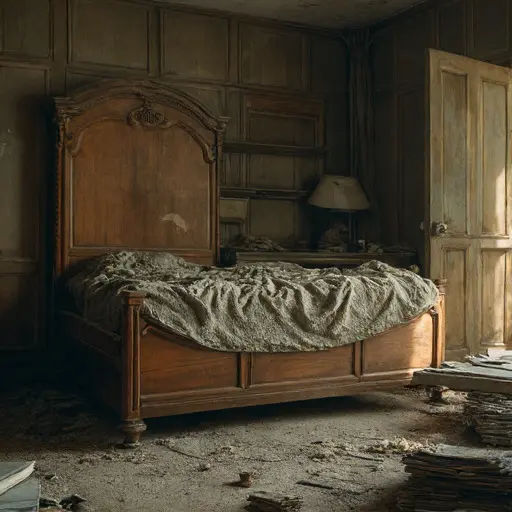
In the Papermill Loft’s final drawer, Moretti’s last pulp record ends abruptly, with unfinished notes and instructions suspended. A penciled note—“complete for Giulia”—stops mid-word. No explanation survives for his departure, nor why Giulia never collected the paper.
The house remains abandoned, vats, sheets, and tools frozen in quiet incompletion, every batch and pulp suspended, awaiting hands that will never return.