The Hidden Patterns of the Singh Weaver’s Hall
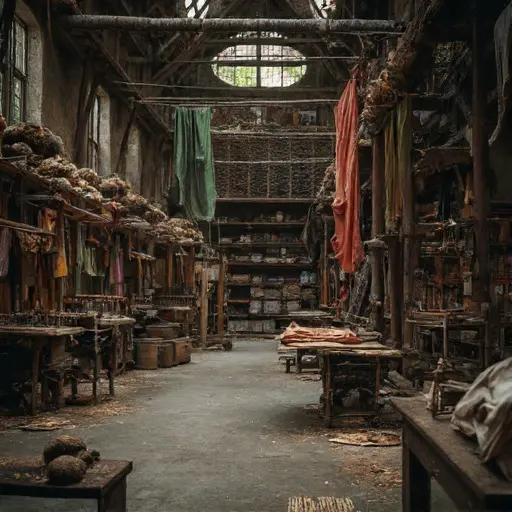
The Weaver’s Hall resonates with suspended rhythm. On a loom, penciled warp notations for a ceremonial rug end abruptly. Every spool, shuttle, and frame implies disciplined practice abruptly halted, the careful routine frozen mid-motion.
Life in Threads
These implements belonged to Anika Singh, master weaver (b. 1880, Jaipur), trained in Rajput textile traditions and skilled in intricate block-printing methods. Ledger entries reveal commissions for palace interiors and wealthy patrons. A folded note references her assistant, Ravi Singh, “deliver finished carpet Wednesday,” indicating a meticulous daily pattern of threading, dyeing, and weaving.
Tools and Technique
Looms hold partially woven textiles. Spools of silk and cotton thread are arranged by color, some fraying at the edges. Bobbins, shuttles, and brushes are scattered, stiff with residual dye. Anika’s ledger, under a small wooden weight, details client names, patterns, and intended use. Dust and residual fibers highlight the sudden cessation of repeated, patient gestures.

Evidence of Declining Precision
Later ledger entries reveal inconsistent warp spacing and pattern misalignments. Margin notes—“Ravi questions symmetry”—are smudged. Brushes show frayed bristles, shuttles splintered, and threads tangled. Anika’s failing eyesight and fatigue subtly deform motifs. Pencil markings trail off mid-instruction, a quiet record of declining mastery.
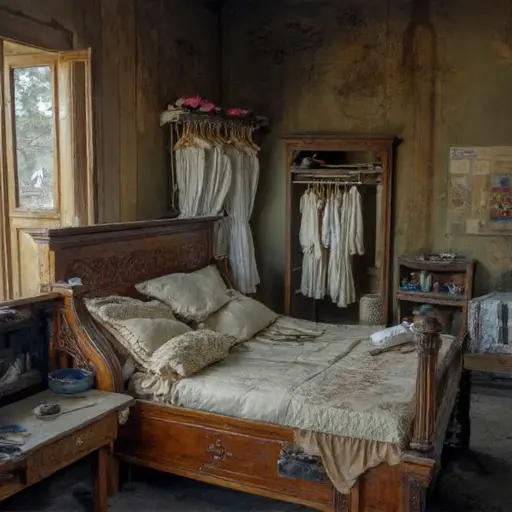
In the Hall’s final drawer, Anika’s last panel ends mid-pattern, warp lines trailing into silence. A penciled note—“verify with Ravi”—abruptly cuts off.
No record explains why she abandoned her work, nor why Ravi never returned.
The house remains abandoned, looms, threads, and textiles waiting in stillness, the quiet heavy with unfinished craft and lost mastery.
