The Hidden Mkhize Pantry Corner Where the Stitch Sank Crooked
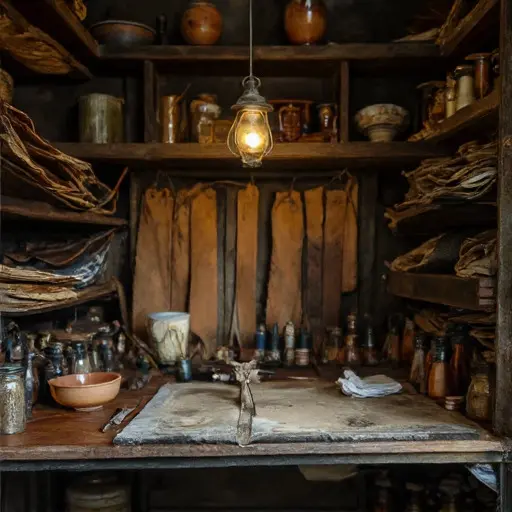
The pantry corner holds a warm scent of dried spices mixed with oiled hide. Lanternlight glances off tools arranged with earnest care, each casting a small shadow that hints at a practiced rhythm faltering somewhere unseen.
A Leatherworker Guided by Even Hands
Sipho Mandla Mkhize, born 1879 near Durban, crafted modest belts and satchels for traveling merchants.
A soft cloth from his sister Thandi cushions his awls. Sipho cut patterns at dawn, stitched seams by midday, and burnished edges under dim lamplight. His modest upbringing shows in reused thread cards and Zulu-script notes slipped beneath the counter.
Work Pressed Close in a Spice-Scented Space
A belt blank rests on the breadboard, one edge trimmed twice. A stitching pony grips a strap whose seam wavers near its center. On the shelf, hides crease slightly at their folds, as though handled in indecision. A bowl of rivets sits beside a mallet whose handle bears faint dents from hesitant strikes. The flour bin lid supports a pattern drawn in pencil, its final curve faint and unsure.
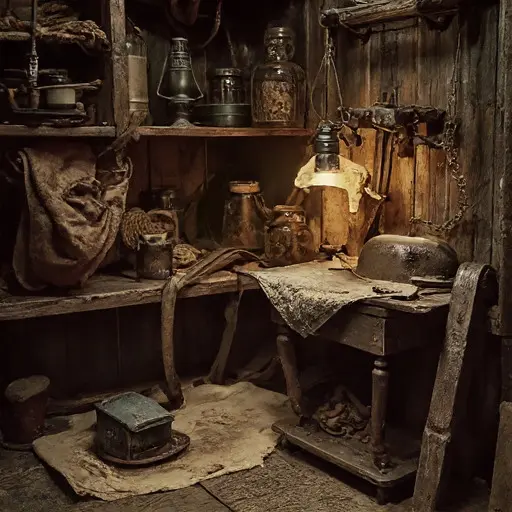
Strain Rising Beneath Lantern Warmth
Behind stacked hides lies a returned note—“uneven seam.” A strap shows faint impressions from repeated adjustments. Sipho’s stool stands skewed toward the door, as though rising to reconsider each decision. A mallet rests on its side, handle warmed by recent use. A trail of wax flakes arcs across the floor, marking hesitant pacing. Even the lantern wick burns slightly lopsided, as if echoing the unsettled work below.
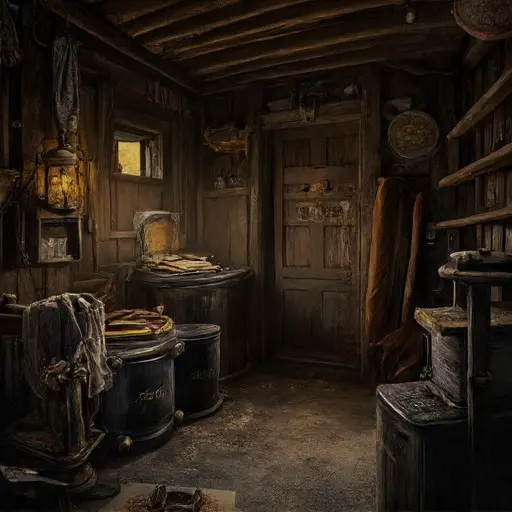
Returning to the pantry corner, one quiet trace remains: a perfectly stitched strap beside the crooked one—certainty and doubt resting in shared shadow.
The house remains abandoned.
