The Hidden Ledger of Nakamura’s Forgotten Calligraphy Chamber
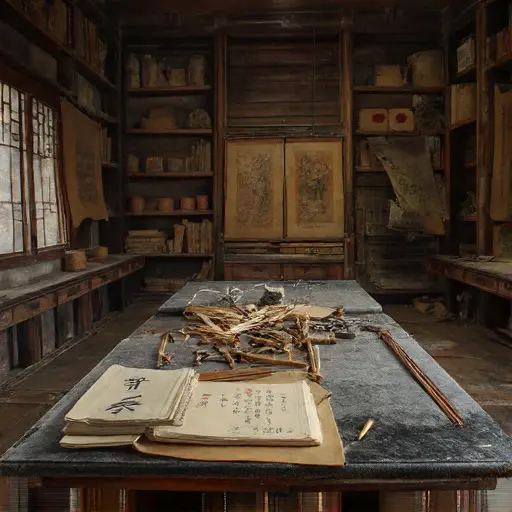
The calligraphy chamber hangs in deliberate quiet. On a central desk, a partially written scroll rests, its stroke sequences incomplete. Brushes lie neatly beside ink stones, the room echoing the absent rhythm of precise hands.
Crafting Characters with Care
The chamber belonged to Hiroshi Nakamura, professional calligrapher (b. 1872, Kyoto), trained in classical schools and commissioned for temples, scholars, and noble patrons. His handwriting appears on practice sheets and client orders, exact and restrained. A note references his apprentice, Emiko Nakamura, who prepared ink and paper. His daily routine involved planning stroke sequences, controlling brush pressure, and composing characters with exact spacing. Temperament disciplined, ambition modest, and devotion to calligraphy defined his life.
Scrolls Suspended Mid-Flow
Sheets of paper and unfinished scrolls lie untouched. A ledger beneath the desk lists client commissions and stroke instructions but ends abruptly. Dust coats brushes, ink stones remain dry, and unused ink sticks lie in trays, tools poised for work that never resumed. Characters remain half-formed, the air heavy with the pause of intentional practice.
When Tradition Lost Patrons
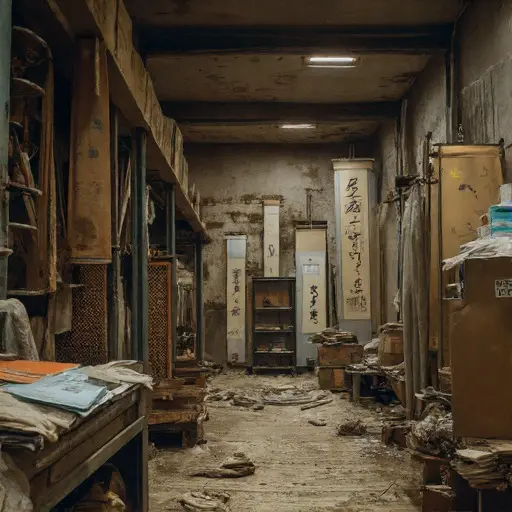
Later ledger entries grow sparse. Correspondence from temples and scholars remains unopened. Nakamura’s decline was caused by mass-printed books and Western-style lettering; handcrafted stroke sequences could not compete with faster reproduction. Daily practice slowed, then stopped entirely, leaving each scroll suspended mid-completion.
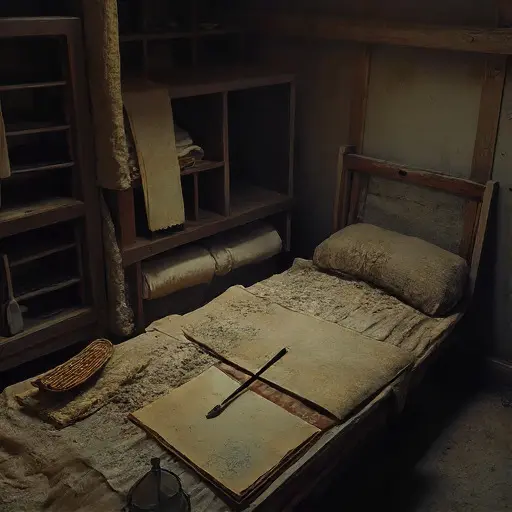
The final ledgers and calligraphy tools remain untouched. No note explains Nakamura’s departure; Emiko never returned to retrieve materials. The house remains abandoned, desks stacked, scrolls aligned, each stroke frozen mid-motion, a testament to precise labor halted permanently, the silent weight of unfinished artistry lingering in every corner.