The Hidden Ledger of Moretti’s Forgotten Tailor Workshop
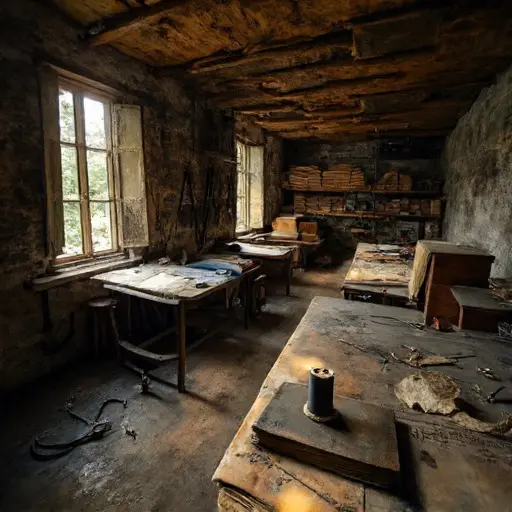
The tailor workshop hangs in meticulous stillness. On a worktable, a half-cut coat rests, its pattern lines incomplete. Tools lie arranged deliberately, scissors and chalk at rest, as though awaiting the return of the master’s hands.
Stitching with Exacting Care
The workshop belonged to Giovanni Moretti, professional tailor (b. 1872, Florence), trained in artisanal guilds and employed for private commissions. His handwriting appears on pattern notes and measurement sheets, precise and restrained. A note references his apprentice, Livia Moretti, who organized materials and assisted in cutting. His daily routine consisted of measuring clients, drafting pattern outlines, cutting, and stitching garments with methodical focus. Temperament exact, ambition disciplined, and devotion to bespoke craftsmanship defined his life.
Tools and Patterns Left Midwork
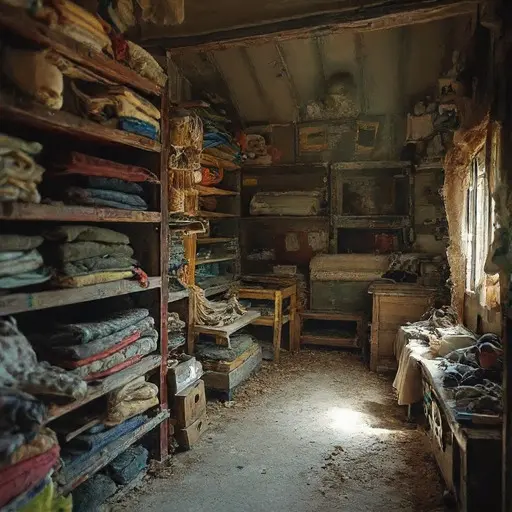
Fabrics lie folded but untouched, pins embedded in incomplete garments. A ledger beneath the counter lists client measurements and pattern steps but ends abruptly. Dust layers on half-cut cloths and scissors, showing where the workflow ceased. A thimble remains atop a measuring tape, poised as though waiting for the next seam, the room suspended in the rhythm of absent activity.
When Craft Lost Demand
Later ledger entries grow sparse, and correspondence with clients remains unopened. Moretti’s decline was caused by the rise of mass-produced clothing and imported textiles; hand-crafted pattern sequences could not compete with industrial efficiency. Daily work slowed, then stopped, the precise craft of tailoring rendered commercially obsolete.
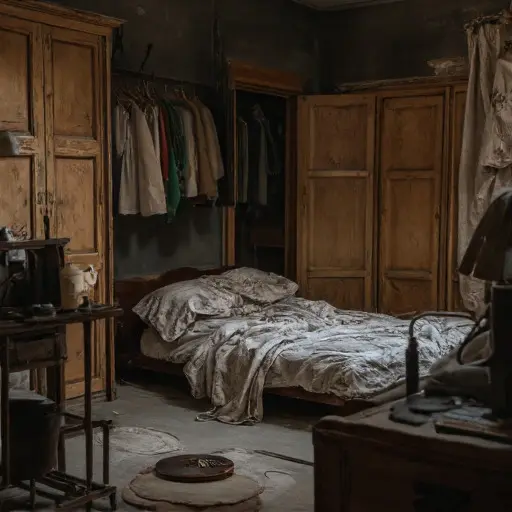
The final ledgers and garments remain untouched. No note explains Moretti’s departure; Livia never returned to collect the tools. The house remains abandoned, tables stacked, scissors aligned, each pattern suspended in quiet anticipation, a testament to labor interrupted and artistry left forever incomplete.