The Hidden Ledger of Carroway’s Cabinetmaker Workshop
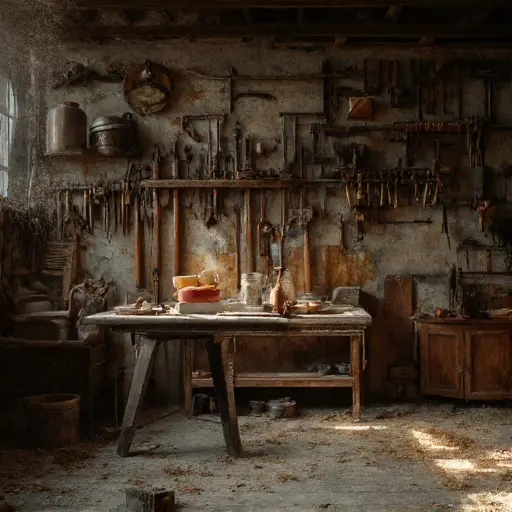
The cabinetmaker workshop is frozen mid-creation. The ledger records client orders, wood types, and detailed designs, yet stops abruptly mid-entry. A half-assembled chair leans against the bench, tools left mid-use.
Every object suggests labor paused, the sudden absence palpable. Silence dominates, punctuated only by imagined clatter of chisels and sanding blocks long still.
Traces of Craftsmanship
This space belonged to George Carroway, master cabinetmaker (b. 1867, Sheffield), whose skill crafted bespoke furniture for the middle and upper classes. Evidence of his life is scattered: a note from his sister Matilda Carroway reminding him of unpaid debts, a bundle of oak veneers stacked neatly, a mallet dented from long use, and a set of hand-carved knobs half-finished. His days were rigidly structured—measuring, cutting, carving, and documenting every project in the ledger. Ambition drove him, but increasing competition, declining health, and arthritic hands eroded his capacity to keep pace.
Abrupt Cessation
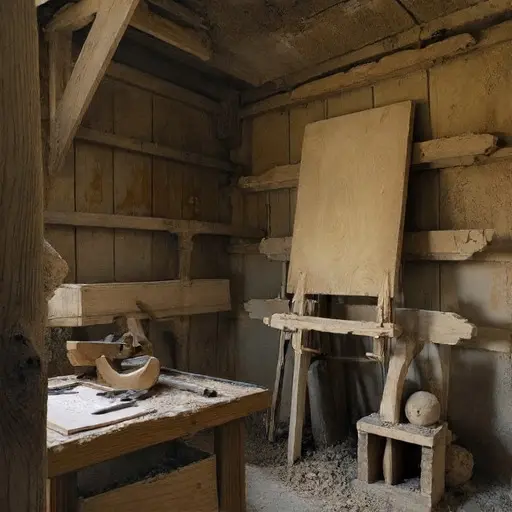
George’s decline followed repetitive strain and worsening arthritis, combined with financial pressure from unpaid orders. The ledger reveals repeated corrections, erased notes, and abandoned sketches. Tools lie scattered, some tipped over, a mallet rests atop a half-finished chair. Every surface conveys sudden cessation: effort interrupted, work abandoned mid-process. The room preserves the precise moment when daily labor ceased, haunted by meticulous hands that will not return.
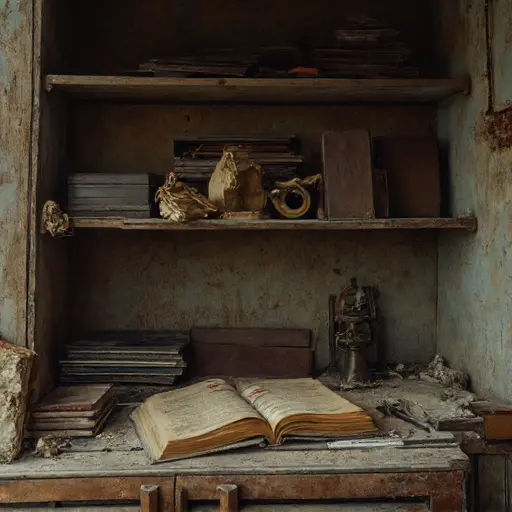
The ledger remains open, entries unfinished, orders uncompleted, furniture left mid-creation.
No apprentice resumed his craft. No explanation exists for George’s sudden disappearance.
The workshop remains abandoned, its tools, unfinished furniture, and ledger a quiet testament to interrupted labor, sudden absence, and a mystery lingering amid sawdust, varnish, and the faint echo of precise, halted motion.