The Hidden Lanterns of Moreau’s Forgotten Observatory
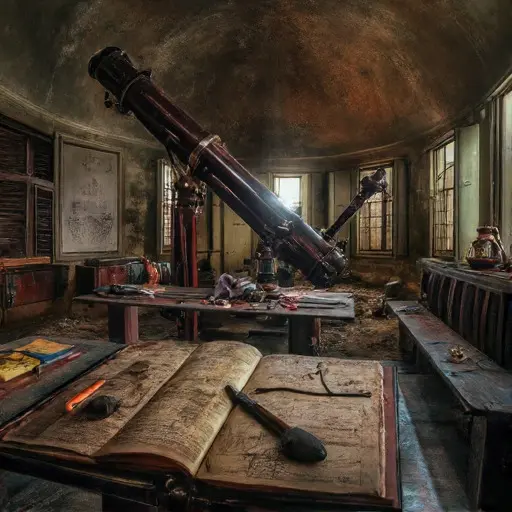
The observatory holds a meticulous stillness. On the central bench, a partially sketched chart rests, its alignment notes unfinished. Compasses, protractors, and ink bottles remain where they were last set, suggesting a routine paused, not abandoned in haste.
Mapping the Heavens
The space belonged to Lucien Moreau, professional astronomer (b. 1872, Lyon), educated in university observatories and hired for municipal sky surveys. His handwriting appears on charts and labels, careful and restrained. A note references his nephew, Henri Moreau, who assisted with nightly observations. His temperament was methodical, his ambition to chart planetary movements precise, following a disciplined schedule from dusk to dawn, marking alignment angles, recording transits, and noting lunar phases with quiet devotion.
Instruments Suspended in Time
Telescopes and brass instruments rest unused. Star maps are pinned to boards, some corners curling from humidity. A ledger beneath scattered sketches tracks transit times, telescope azimuths, and alignment calculations, stopping mid-entry. One chart shows a lunar observation interrupted mid-notation. Dust and fingerprints mark the last interactions with tools, evidence of work paused abruptly but carefully, as if Moreau intended to return imminently.
When Night Became Uncertain
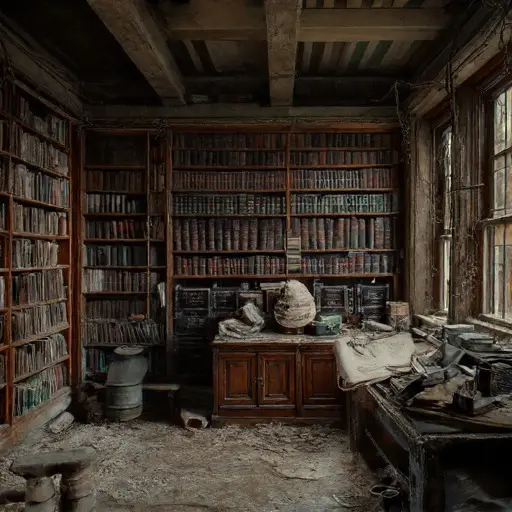
Later entries in ledgers show calculations left inconsistent. Letters from peers remain unopened, suggesting halted correspondence. Moreau’s decline arose not from illness but from funding cuts and shifting municipal priorities; the observatory no longer supported detailed mapping, leaving expertise unutilized. Nightly routines faltered; instruments stayed idle. The alignment charts, meticulously drafted, became unnecessary records rather than active tools.
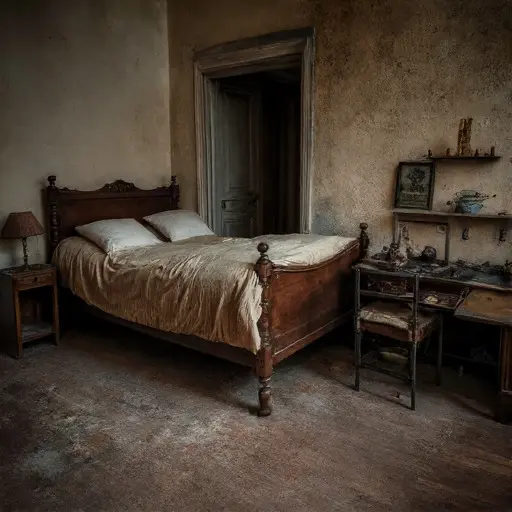
The final drawer holds charts without completion. No farewell note explains the departure; Henri never retrieved Moreau’s instruments. The house remains abandoned, telescopes, charts, and lanterns frozen in quiet incompletion, every alignment waiting for attention that will never return, suspended in the precise silence of a scholar’s interrupted work.