The Hidden Kovács Washroom Where the Pattern Refused to Fit
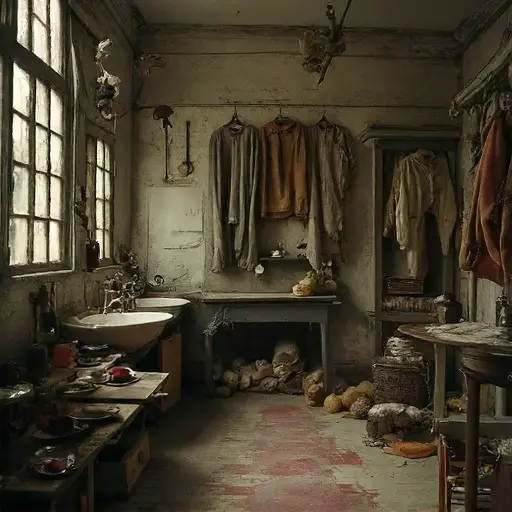
Stepping into the washroom, a soft hush settles over damp tiles, carrying the faint tang of soap and misplaced pattern chalk. Nothing is disrupted, yet the room bears the tremor of a miscalculation—small, persistent, capable of unsettling a life’s quiet mastery.
A Life Measured in Seams and Small Triumphs
Béla Andor Kovács, born 1875 in Szeged, tailored garments for modest shopkeepers and traveling tradesmen.
A linen handkerchief embroidered by his sister Ilona rests near basted waistcoat fronts. Béla worked in gentle cycles: morning measurements, midday cutting, evening fine-stitching by kettle warmth. His humble origins show in reused muslin scraps pressed beneath basins and in a meticulous alignment of tools that honored routine over haste.
Paths of Work Shaped by Domestic Corners
Hungarian-language measurement notes lie tucked beneath the soapstone slab. A wooden pressing block, smoothed by years, pairs with a tin of beeswax for thread conditioning. On the low table, a half-finished waistcoat reveals careful welt pockets, though the left side droops a fraction lower. A faint crease under the drying frame hints Béla often stood there, judging drape and fall.
Threads of Strain at the Edge of Routine
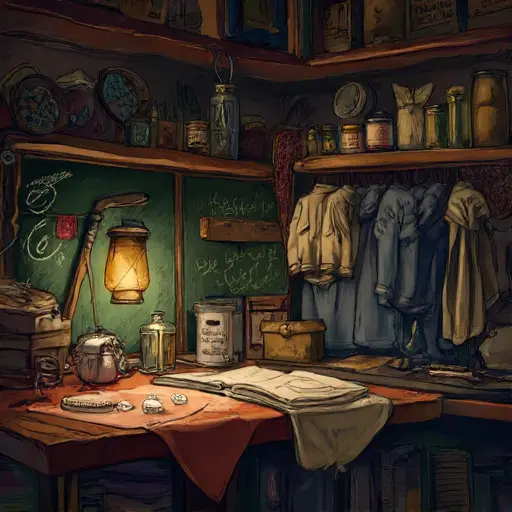
Behind a basin lies a returned commission slip stating “uneven shoulders.” A shoulder block bears a shallow dent, perhaps from too-firm testing. Pins scattered along the hamper’s rim stand driven too deeply; their angles betray the twitch of doubt. The towel rack leans, shifted by pacing steps that kept close to the kettle’s former warmth.
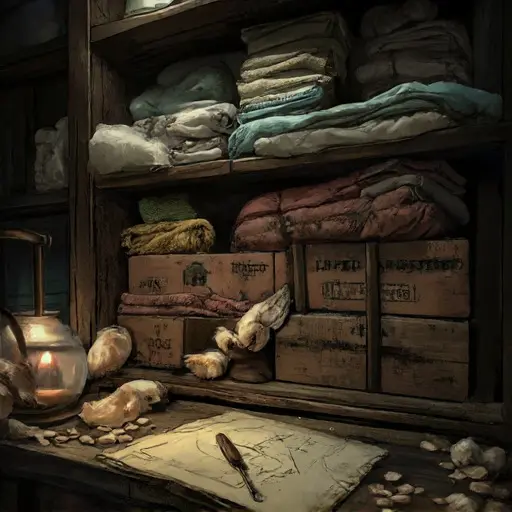
Returning to the washroom, one final clue rests on the low table: a single, perfectly aligned sleeve pinned to a front panel whose mate lies miscut—still waiting for the correction Béla never dared to attempt.
The house remains abandoned.
