The Hidden Inkwell of the Petrov Engraver’s Studio
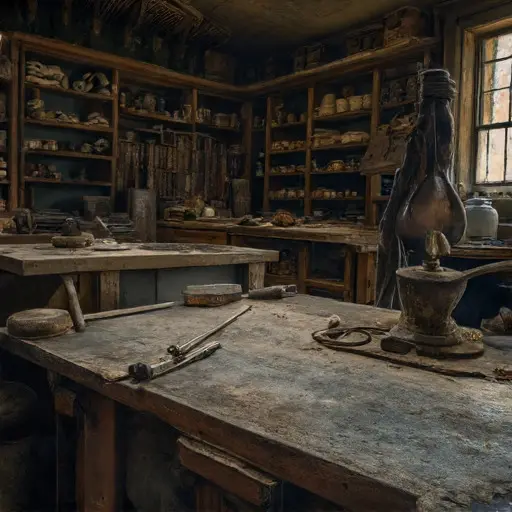
A hushed stillness fills the Engraver’s Studio, where penciled etch instructions on a sheet stop abruptly, hinting at interrupted artistry and frozen precision.
Tools of Precision
These implements belonged to Sergei Petrov, engraver (b. 1879, Moscow), trained at a local art guild.
His Cyrillic notes record line depth, shading sequences, and plate preparation. A folded slip references his apprentice, Vera Petrov, “complete royal seal Wednesday,” revealing a meticulous daily routine of incising, polishing, and inking, alongside a temperament of patience, exacting skill, and steady hand.
Plates and Instruments
On the main bench, chisels, burins, and scrapers lie aligned. Copper plates rest beneath blotters. A ledger beneath a cloth records line counts, shading intensity, and acid bath durations, each carefully dated. A partially etched heraldic crest remains pinned on a board, evidence of work halted abruptly mid-detail.
Decline in Method
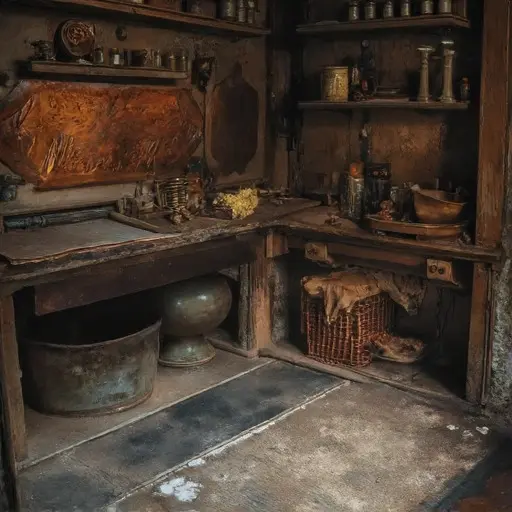
Later ledger pages reveal repeated corrections to shading and line depth. Several plates show inconsistent cross-hatching. A margin note—“client disapproves engraving”—is smudged, indicating rising pressure. Tools lie abandoned across benches. Persistent tremors in his hands forced Sergei’s delicate craft to falter, leaving engravings permanently incomplete and routines disrupted.

In the Studio’s final drawer, Sergei’s last etch sheet ends mid-line, notes trailing into blank space. A penciled reminder—“verify with Vera”—stops suddenly.
No evidence explains why he abandoned his work, nor why Vera never returned to finish the plates.
The house remains abandoned, plates and tools frozen mid-creation, preserving the quiet persistence of engraving interrupted, unresolved, and suspended in hushed neglect, a testament to meticulous artistry left unfinished.