The Hidden Ink Notations of the Varga Calligraphy Chamber
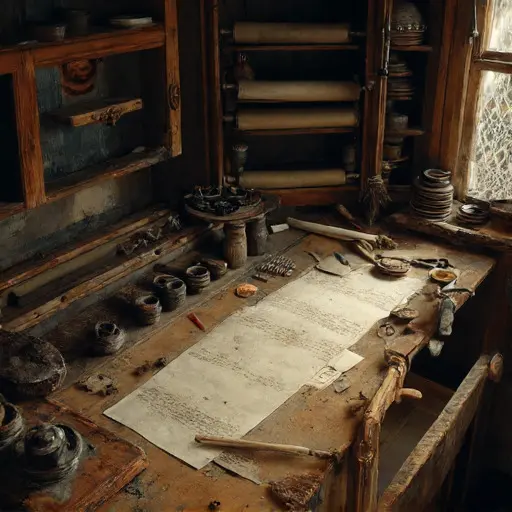
A soft stillness permeates the Calligraphy Chamber, where nibs remain poised above sheets, and inkpots stand uncapped. Each brush and scroll hints at a precise rhythm that was once followed and then, abruptly, halted.
The Scribe’s Discipline
These implements belonged to Miklós Varga, calligrapher (b.
1878, Budapest), trained in a traditional Hungarian workshop and producing ecclesiastical manuscripts and civic certificates. His precise Hungarian annotations document stroke sequences, ink mixtures, and paper alignment. A folded note mentions his apprentice, Eszter Varga, “deliver completed hymnals Thursday,” showing a methodical routine of mixing ink, guiding strokes, and careful letter formation, maintained with patience and meticulous attention.
Tools of Line and Form
On the central desk, ceramic inkpots sit lined in order; nibs are sorted by size. Parchment scrolls remain partly rolled, pinned for stability. A ledger tucked beneath a cloth lists commissions, clients, and completion dates. A partially written decorative capital rests under a small wooden weight, evidence of Miklós’ disciplined yet suspended practice.
Signs of Interruption
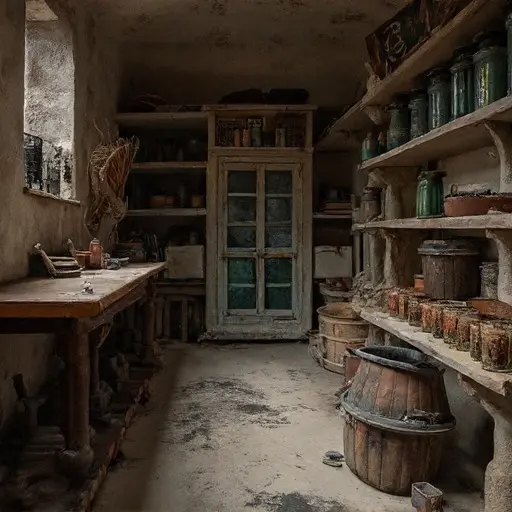
Later ledger entries show uneven completion times; some scrolls are left partially inked. A margin note—“client disputed lettering”—is smudged. Nibs lie misaligned, brushes stiff from dried ink. Miklós’ careful precision faltered under advancing cataracts and fatigue, leaving commissions incomplete and practice suspended indefinitely.
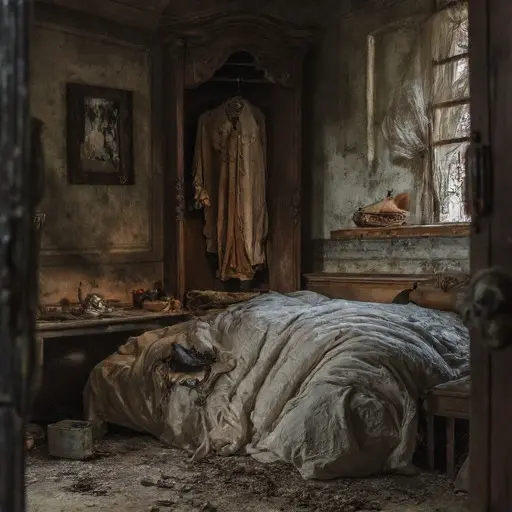
In the Chamber’s final drawer, Miklós’ last stroke guide ends mid-line, letters unfinished. A penciled note—“review with Eszter”—cuts off abruptly.
No record explains why he abandoned his work, nor why Eszter never returned.
The house remains abandoned, its desks, scrolls, and stroke guides a silent testament to suspended artistry and halted devotion.