The Hidden Duarte Tally Board and the Deal That Drifted
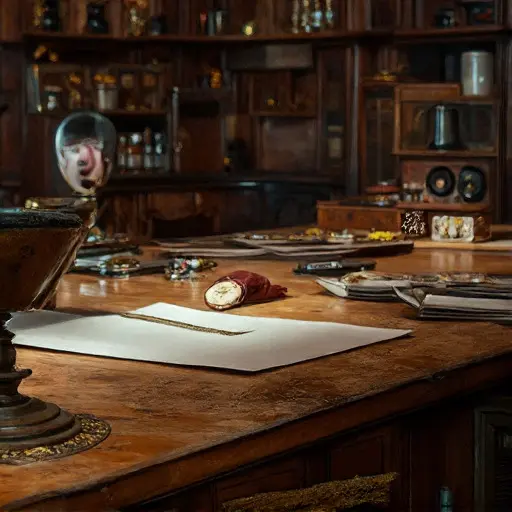
A brittle quiet permeates the Counting Room, dust drifting through lamplight across the waiting crates. The tally board’s grooves remain perfectly clean except for one slightly smudged line. A quill rests askew in its holder, the nib stained in a sharp streak of ink.
On the corner of the desk, a folded envelope puckers at its edge, unfinished sealing wax hardened beside it. Nothing is overturned, yet nothing sits at perfect ease, as though a single, unsettled choice shaped the atmosphere and then receded into silence.
The Measured Routines of João Manuel Duarte, Spice Merchant
The furnished rooms conjure João Manuel Duarte, born 1869 in Porto, trained among small family stalls near the Douro’s trade routes. In the Spice Alcove, earthenware jars labeled with Portuguese names—pimenta, noz-moscada, açafrão—curve in tidy rows. A folded canvas measuring sheet leans against wooden bins filled with cinnamon bark. His temperament emerges in the careful corking of vials, the precise trimming of quills, the habit of weighting invoices with the same brass weight each time.
Mornings likely saw him tallying new shipments; midday, sampling quality of cloves or pepper; evenings, preparing invoices under soft lamplight. In the Dining Niche, a modest case of imported teas stands beside two delicate cups, their Portuguese floral pattern indicating touches of home. Everything suggests a man defined by quiet dependability, shaping commerce into routine.

Disquiet Rising Through the Trade
Tension emerges in the corners of the house. In the Upper Storage Landing, a crate stamped “Lisboa” lies half-open, its inventory marked incorrectly in fading graphite. A recent invoice from an English importer, its totals crossed out twice, sits pinned beneath a paperweight in the shape of a galleon. On the Guest Cot, a travel bag contains only a folded invoice pad and cork stoppers—no garments, no provisions.
Near the Kitchen Pass-Through, a jar of turmeric has spilled, yellow grains tracing the faint pattern of a disrupted gesture. A chipped cup on a shelf suggests a hand trembling mid-reach. These quiet ruptures imply an error—perhaps in shipment, perhaps in valuation—that pressed João’s certainty thin.
The Token That Shifted Out of Line
Returning to the Counting Room, all unease gathers around the burgundy token on the tally board. It rests one groove away from its proper mark, the smudge beside it curving slightly as though nudged by an unsteady hand. A quill lies broken near the wax tin, its splintered shaft hinting at sudden pressure. The brass scale sways faintly, unbalanced by a grain of spice caught beneath one pan.
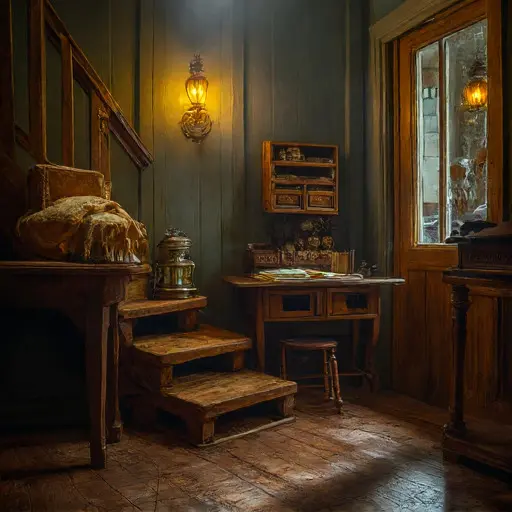
Beneath the tally board lies João’s final calculation: a parchment bearing figures written with steady control until the last line, where the numbers lean and taper, the ink fading mid-stroke. No annotation explains what he discovered—only a silence where intention and doubt collided.
The house divulges nothing more, and it remains abandoned still.
