The Hidden Courtyard House Beneath the Cedar Trees
Deep within a quiet forest neighborhood where ancient cedar trees and tall palms surround forgotten pathways, an abandoned Victorian Moroccan Courtyard Revival residence remains hidden behind layers of vegetation. Built from warm ivory plaster, deep saffron sandstone, cobalt ceramic tilework, dark cedar wood, and a weathered copper roof crowned with rounded ornamental caps, the three-story family house stands as a remarkable fusion of Victorian elegance and traditional courtyard architecture.
The residence was designed around a peaceful inner courtyard, where shaded galleries connect each section of the home through a network of winding passages. Carved horseshoe arches define the entrances, intricate lattice balconies overlook the gardens, and mosaic-covered columns create a rhythm of color and texture throughout the property. Above the main structure, a circular rooftop pavilion rises like a quiet observatory, offering views over the surrounding woodland.
Years of abandonment have transformed the estate into a naturally aged masterpiece. The walls now curve gently beneath layers of weathering, roof forms have shifted slightly over time, and once-brilliant tile patterns have softened into faded shades of blue and green. Wooden balconies lean subtly with age, while covered walkways twist through the gardens, allowing the architecture to blend seamlessly with the surrounding landscape.
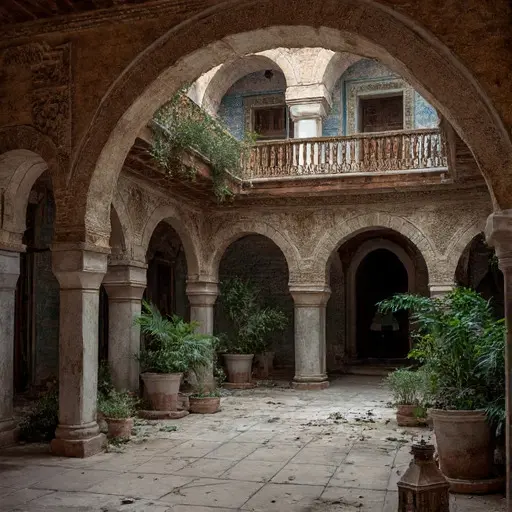
Inside the forgotten residence, the central courtyard remains the heart of the home. Sunlight once filtered through decorative openings and illuminated the intricate tilework, but now soft natural daylight reveals a quiet world of aged stone, worn wood, and abandoned furnishings. The layered galleries surrounding the courtyard still display remarkable craftsmanship, with carved details and colorful mosaics surviving beneath years of neglect.
The interior rooms reveal a mixture of Victorian comfort and Moroccan-inspired design. Large sitting rooms contain faded upholstered furniture, carved wooden cabinets, and decorative ceilings slowly being reclaimed by vines. Narrow passageways lead between private chambers, hidden alcoves, and balconies overlooking the silent courtyard garden below.
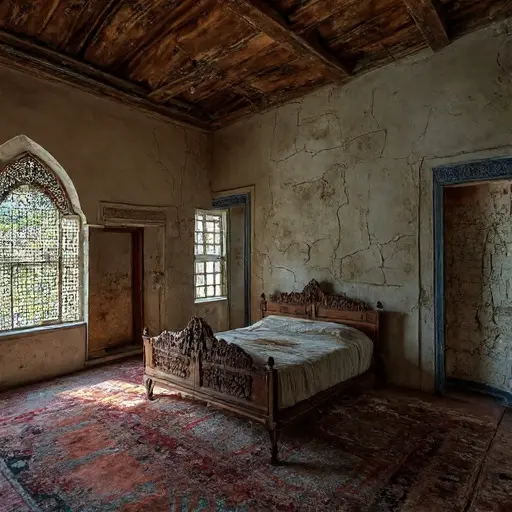
The upper floors contain quiet family rooms and forgotten viewing spaces where the connection between indoor and outdoor living remains visible. Weathered wooden shutters frame views of the overgrown gardens, while old decorative screens cast delicate patterns across dusty floors. Every corner reflects the careful balance between craftsmanship, comfort, and the natural environment.
Outside, the estate is surrounded by a landscape that feels untouched for generations. Moss-covered stone walls disappear beneath wild vines, pebble pathways wind between flowering plants, and towering cedar trees create a sheltered canopy over the abandoned gardens. The property feels less like a forgotten building and more like a hidden sanctuary slowly returning to the forest.
A faded turquoise fountain sits beneath a vine-covered pergola, its dry basin surrounded by fallen leaves and wild growth. Nearby, a rusted bronze garden lantern rests beside a cracked mosaic walkway that disappears through overgrown flower beds and tall grasses. These forgotten details preserve the memory of a once-lively garden filled with quiet gatherings and family moments.
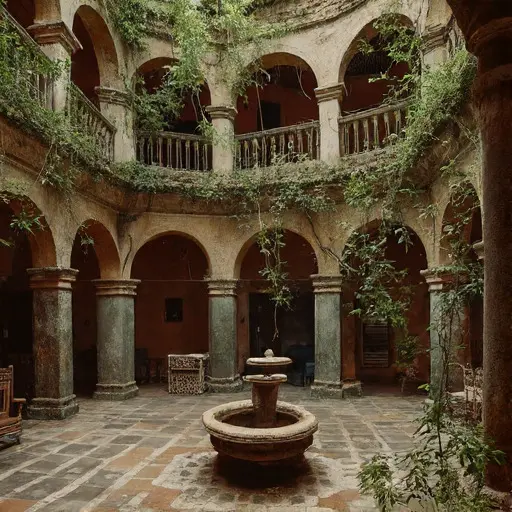
The Victorian Moroccan Courtyard Revival house remains a rare example of architecture transformed by time rather than destroyed by it. Its curved walls, fading mosaics, aged cedar details, and hidden gardens tell the story of a residence where two cultures of design were brought together and eventually embraced by nature.
Today, the abandoned estate stands quietly beneath the cedar trees, preserved as a place where history, craftsmanship, and wilderness exist together. The forest has become part of the home itself, protecting its courtyards, galleries, and forgotten rooms for generations to come.
Photorealistic documentary-style full-frame photography, wide three-quarter courtyard composition, natural lens rendering, true-to-life color grading, subtle film grain, moderate depth of field.