The Hexstone Manor Embedded in Forest Hillside Left Abandoned
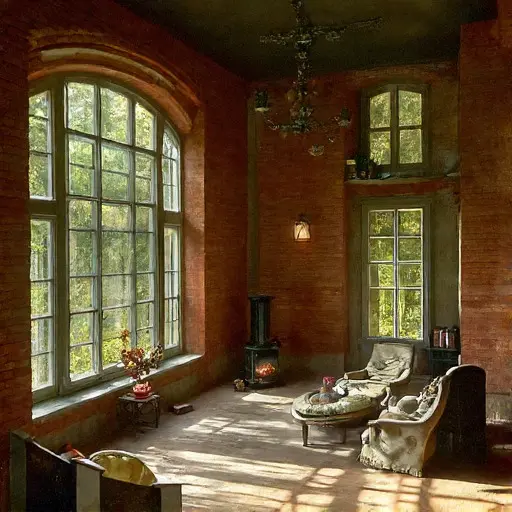
Hexstone Manor was completed in 1909 on a quiet forest hillside at the edge of the Wycliffe Woods. Designed by architect Roland Mercer, the house was intentionally constructed as a compact hexagonal form embedded directly into the slope, allowing each face of the structure to interact with a different segment of the surrounding woodland.
The original occupants were the Harrowell family—Arthur Harrowell, his wife Miriam, and their daughter Lillian.
Arthur worked as a forestry surveyor, and the home’s unusual geometry was influenced by his desire to observe different forest conditions from a single centralized dwelling.
Each side of the manor served a distinct domestic function, making the house feel like a collection of interlinked rooms rather than a traditional rectangular plan. The structure was both efficient and intimate, designed for quiet living rather than display.
For more than two decades, Hexstone Manor remained stable and carefully maintained. Garden paths were kept clear, chimneys were regularly serviced, and the surrounding woodland was lightly managed to preserve sightlines from each windowed face of the building.
THE SLOW SHIFT FROM CARE TO NEGLECT
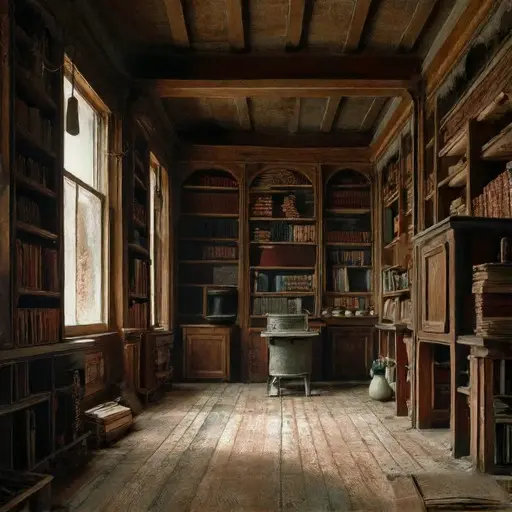
By 1928, Arthur Harrowell’s health began to decline, reducing his ability to maintain fieldwork and oversee woodland management. Without his regular income, the household began to experience financial pressure that slowly affected the upkeep of the property.
Miriam attempted to sustain the manor by reducing maintenance costs and limiting heating to only essential rooms during colder months. Some of the hexagonal wings were closed entirely to conserve resources, altering the rhythm of daily life within the structure.
The forest surrounding the house began to reclaim previously maintained edges. Shrubs grew closer to the stone steps, and ivy began tracing along sandstone seams that had once been regularly cleared. Despite these changes, the house remained structurally sound.
By the early 1930s, Lillian had moved to the city for education and employment opportunities. Letters from this period show increasing concern over taxes, repairs, and the difficulty of maintaining such a uniquely segmented structure without sufficient household income.
FINAL ABANDONMENT AND FOREST RECLAMATION
Arthur Harrowell passed away in 1937, and Miriam relocated shortly afterward to live with relatives in a nearby town. With no clear agreement among remaining heirs, ownership of Hexstone Manor became legally fragmented and unresolved.
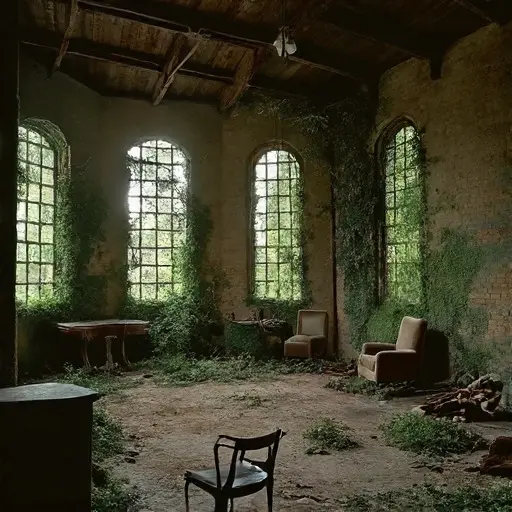
As administrative delays continued, the property remained unoccupied. Without maintenance, the forest began to press more directly against the structure. Ivy spread across shaded brick faces, and moss thickened in the seams between sandstone framing and hillside soil.
Despite this, the house did not collapse or fail structurally. Instead, it slowly shifted into a state of quiet integration with the landscape. Each hexagonal face continued to reflect its designated view of the forest, even as nature advanced across the edges of the building.
By the end of the 1940s, Hexstone Manor was officially listed as abandoned. No restoration efforts were undertaken, and no heirs returned to occupy the property. The house remains embedded in the hillside, its geometric rooms silent, its windows dimly reflecting the surrounding woodland as it gradually reclaims the edges of the structure.