The Hawthorne Queen Anne Residence Left Without Return
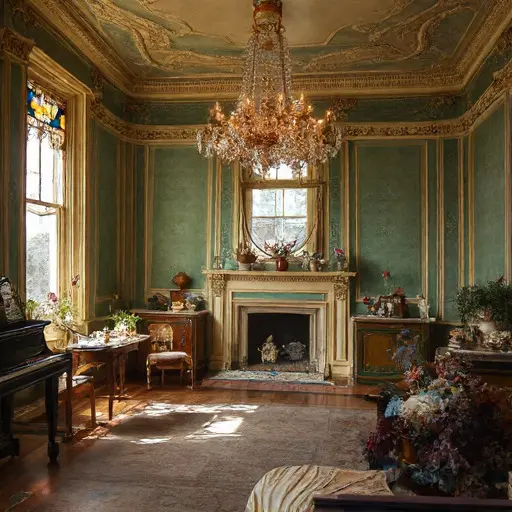
Hawthorne Residence was completed shortly before 1910 for Charles and Eleanor Winslow, whose growing architectural practice enabled the family to establish a permanent home outside the expanding city. They settled there with three children and Eleanor’s widowed mother, believing the spacious house would serve future generations. Daily life revolved around shared meals, music in the parlor, and careful management of household finances recorded in detailed ledgers.
The attached conservatory supplied flowers for every room, while family letters reveal a steady rhythm of celebrations, charitable events, and ordinary domestic routines. Although the residence displayed remarkable craftsmanship, its prosperity depended almost entirely upon Charles’s professional commissions and prudent financial planning.
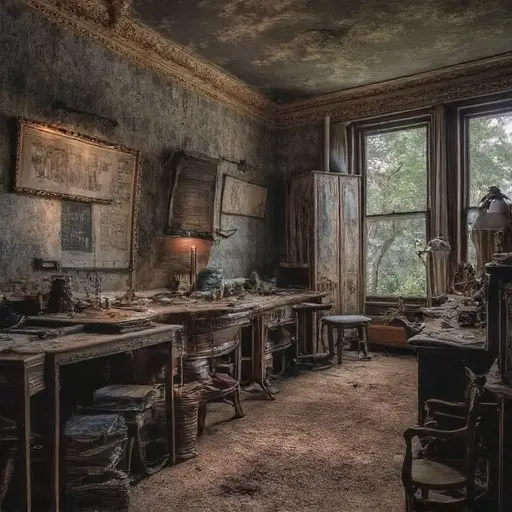
The family’s circumstances deteriorated after construction contracts declined during the economic hardships of the late 1920s. Charles struggled to replace lost commissions, while increasing medical expenses following Eleanor’s illness exhausted household savings. Servants were dismissed, sections of the residence were closed to reduce heating costs, and essential repairs to the elaborate roof and verandas were repeatedly postponed. Bills accumulated beside unanswered legal notices, and maintenance of the conservatory gradually ceased as resources disappeared. Their eldest children relocated to seek employment elsewhere, leaving fewer occupants to maintain the increasingly complex residence. Emotional withdrawal became visible through unused rooms, neglected furnishings, and household records whose entries became infrequent before ending altogether.
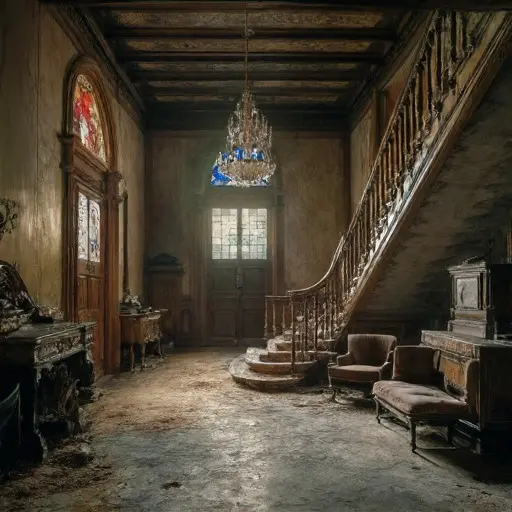
By the mid-1940s, Hawthorne Residence had been completely abandoned following foreclosure proceedings and unresolved inheritance disputes after the remaining family members dispersed. No purchaser restored the property, and no descendants returned to reclaim its contents despite repeated legal attempts to settle ownership. Furniture, correspondence, architectural plans, and personal belongings remained where they had last been used, gradually preserved beneath dust rather than deliberate care. The elaborate Queen Anne residence still stands empty, its richly detailed interior slowly deteriorating through moisture, structural fatigue, and neglect. Without restoration or renewed occupation, the house remains an unresolved monument to a family’s gradual disappearance and the quiet passage of time.