The Hawthorne House and Its Abandonment
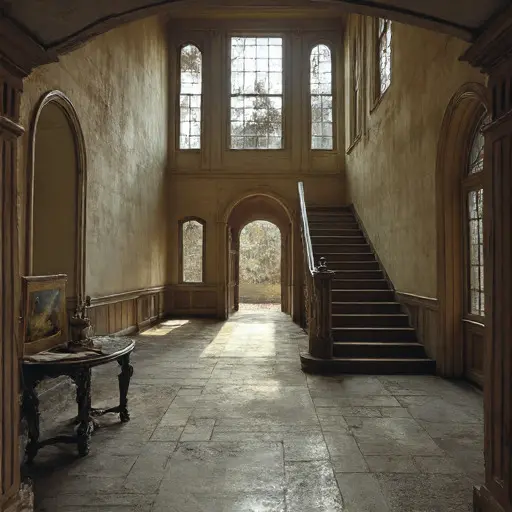
The Hawthorne House was completed in 1896 for William Arthur Hawthorne, born 1851 in Leeds, a land surveyor and rural estate assessor who made his fortune through mapping and valuing agricultural holdings during the expansion of highland grazing leases. His income grew steadily through government contracts and private estate consultations, allowing him to commission a permanent residence overlooking a remote valley plateau. The house was not designed as a display of wealth but as a functional family estate, intended for retirement after decades of fieldwork across rural counties.
He lived there with his wife Edith Marlowe Hawthorne and their son Henry, who later assisted in estate recordkeeping and correspondence.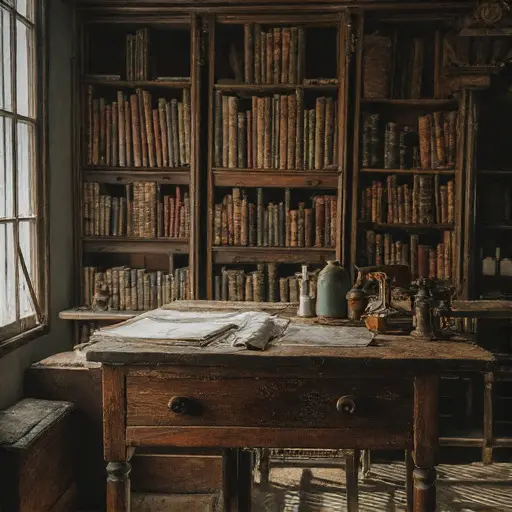
The decline began in 1907 when agricultural lease values across several highland estates dropped sharply following prolonged poor harvest cycles and reduced grazing yields. Hawthorne had personally guaranteed valuations for multiple estate portfolios, assuming long-term stability in land productivity. As revenues fell, lenders began calling in secured obligations. Correspondence shifted from routine surveying reports to formal financial notices. By 1911, portions of his mapped holdings were quietly sold through intermediaries, and Henry’s surveying work was suspended pending disputes over contested valuations.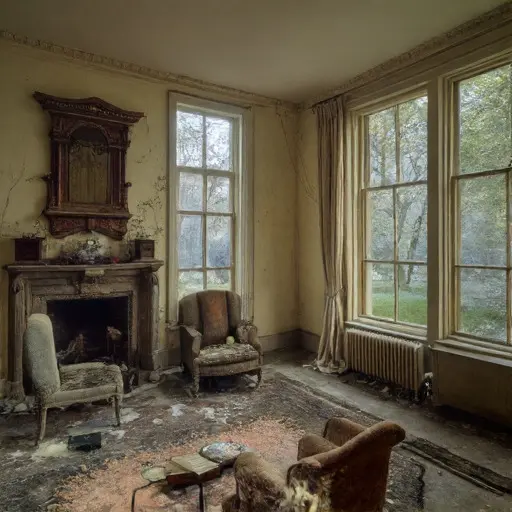
By 1913, William Hawthorne had relocated to administrative offices in the nearest town to resolve ongoing estate disputes, leaving the house under minimal oversight. Edith’s correspondence ceased shortly afterward, and Henry appears only once more in a legal document concerning unresolved valuation discrepancies. The Hawthorne House remained fully furnished but unmanaged, its surveying records locked in the study and its greenhouse left to grow unchecked. No sale was completed, no return was recorded, and the property was officially listed as vacant, standing intact but abandoned without resolution.