The Haverlock Dutch Baroque Manor Left in Forest Quiet
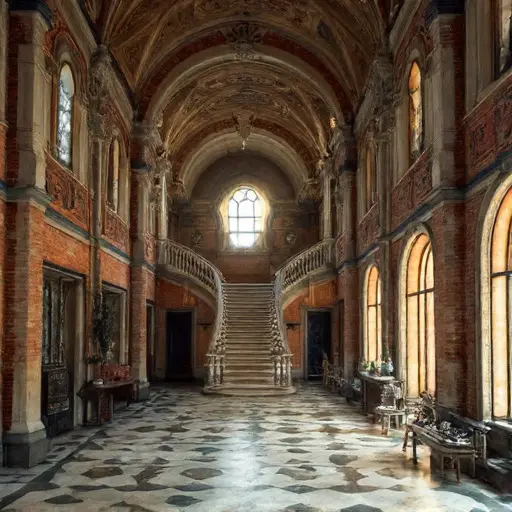
The Haverlock Manor was established at the edge of a dense forest clearing in the early 1900s by a merchant family specializing in regional trade and shipping logistics along inland waterways. Designed in the Dutch Baroque style, the estate emphasized stepped gables, masonry rhythm, and precise ornamentation as a reflection of commercial stability and disciplined wealth management. The household included multiple generations of the family supported by clerks responsible for trade records, agricultural yield documentation, and estate taxation.
Early life within the manor was governed by strict administrative routine, with financial operations conducted in the entrance hall and courtyard-facing rooms used for correspondence review. The surrounding parterre gardens were maintained as extensions of this order, reinforcing the structured geometry of both architecture and land use.
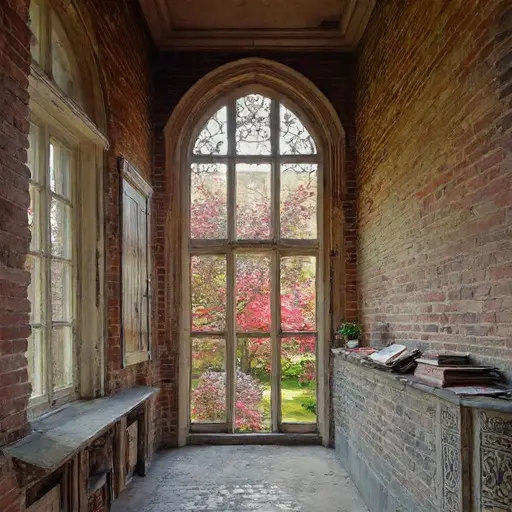
By the late 1920s, the Haverlock estate began to experience financial pressure as regional trade routes declined and shipping contracts became less reliable. Maintenance of the manor’s complex masonry and decorative tilework required consistent upkeep, which became increasingly difficult under reduced income. Portions of the residence were closed off to conserve heating and limit staffing costs, resulting in uneven occupation across the building. Administrative correspondence accumulated without timely response, particularly concerning taxation and land usage regulations. Moisture from the surrounding forest began to penetrate stonework and mortar joints, subtly weakening the crisp structural definition of stepped gables and ornamental glazing. The estate shifted gradually from active commercial residence to partial and irregular occupation.
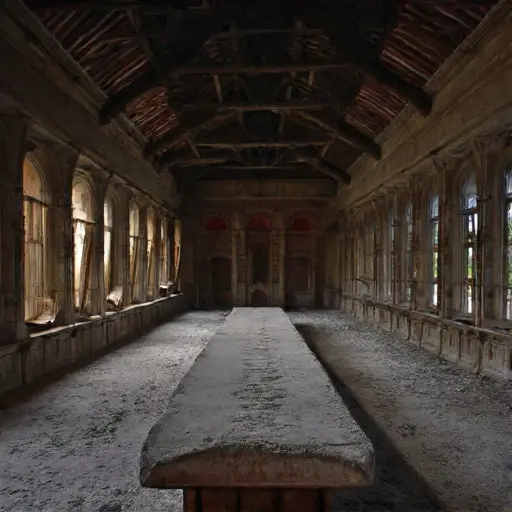
By the early 1940s, following prolonged financial collapse and unresolved inheritance fragmentation, the Haverlock Manor was fully abandoned. No restoration efforts were undertaken, and legal disputes prevented any unified management or redevelopment of the property. The structure remained standing within the forest but deteriorated steadily under seasonal weathering and vegetation encroachment. Interior spaces were left in their final state of use, preserving furniture and documents beneath accumulating dust and moisture. Over time, the once precise Dutch Baroque order dissolved into quiet decay, leaving the manor as an uninhabited architectural remnant slowly reclaimed by the surrounding woodland without resolution or return.