The Haunting Sørensen Drawing Room Where the Ink Dried
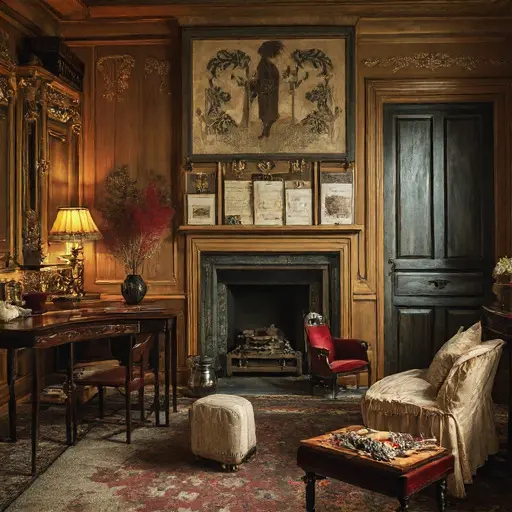
The hush in the drawing room clings to each object, as if breath once passed carefully over every quill here. Dust lies thin, almost deliberate, across open folios. The faint scent of resin ink persists in the upholstery, mixing with an older trace of citrus polish.
Nothing feels disrupted—only poised, the room waiting for a hand that meant to return.
How a Penman’s World Took Shape
Jens Lauritz Sørensen, born 1876 in Odense, crafted ceremonial documents for civic patrons. A wool throw from his sister Astrid lies folded on the chaise, beside practice sheets inked with sweeping capitals. Jens rose early to grind pigments, then spent long afternoons shaping flourishes. His modest education is suggested by reused parchment scraps tucked neatly under the desk blotter.
Practice Pressed Into Domestic Corners
Birch drawers host ribbons stamped with municipal seals, while a wooden tray holds dip pens aligned by nib type. Shipping envelopes marked with Copenhagen postmarks rest under a porcelain dish of sand used for blotting. A half-finished certificate, its borders ruled with impeccable care, leans against a music stand repurposed as a drying rack.
When Pressure Crept In Uninvited
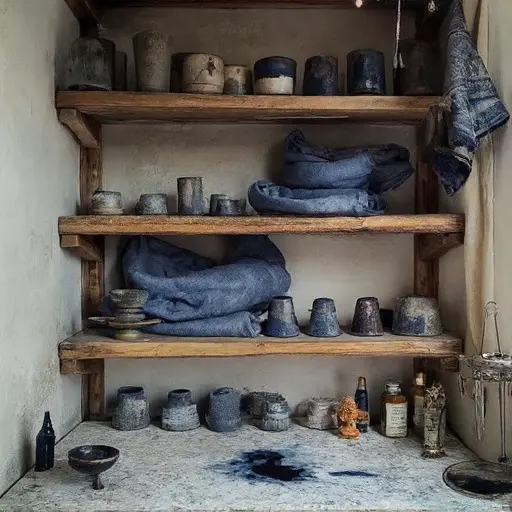
Behind the cabinet, a wrinkled note accuses Jens of forging an endorsement—no name given, only a seal impression smudged beyond clarity. A cracked inkwell rests on a linen napkin, its fracture wrapped hastily with twine. Pale marks on the rug trace restless pacing near the doorframe. The certificate on the music stand bears minor corrections layered too heavily, betraying an unsteady hand seldom seen in his earlier works.
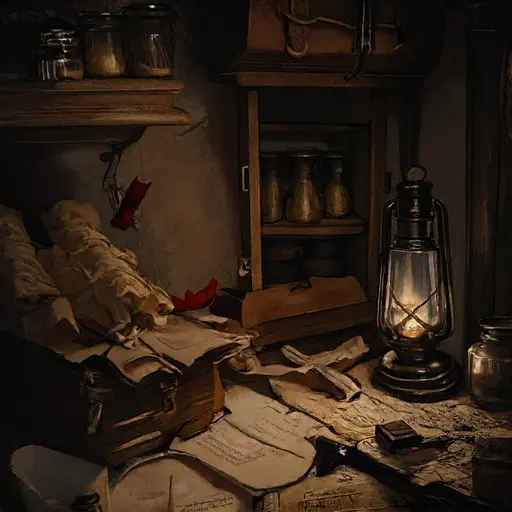
Returning to the drawing room, a final detail remains: a single flourish stroke on the unfinished certificate, drying in a wavering line. It reveals nothing—no guilt, no absolution—only the moment Jens stepped away and never resumed.
The house remains abandoned.
