The Haunting Lullaby of the Sycamore-Cove
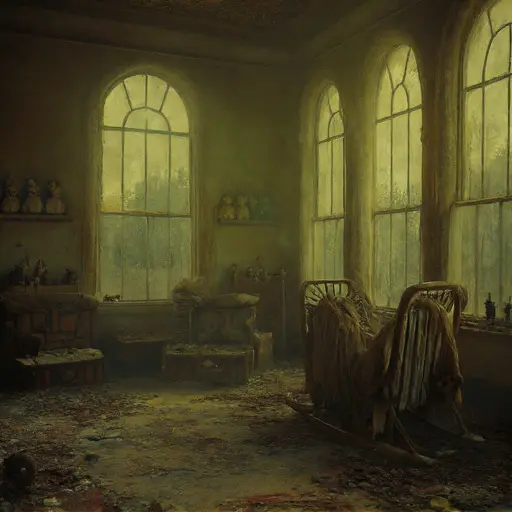
The Sycamore-Cove, a rambling, highly decorative Queen Anne style mansion built in 1890, is defined by its extensive, asymmetrical use of clapboard, shingles, and ornate spindlework. It sits on a high river bluff, perpetually shaded by its namesake trees. To step across its threshold is to be met by a cold, dry atmosphere, heavy with the scent of aged fabric and dust.
The Nursery, a spacious, light-filled room on the top floor, was clearly designed for joy, but it now holds a deep, unsettling silence. Every detail—the static crib, the mute dolls—speaks of a life that was meant to begin here but was tragically lost before it could start.
The Anxious Inheritor, Robert Ashton
The mansion was built by Robert Ashton (1855–1915), a man whose entire existence was defined by the anxiety of keeping what he had inherited. His profession was managing his grandfather’s vast, conservative bond portfolio, a task that required extreme caution and emotional restraint. Socially, he was amiable but profoundly insecure, terrified that he would be the generation to lose the family wealth.
Robert married Eleanor Hayes in 1880, a woman of deep domestic sensibility who longed for a large family. They had one daughter, Isabelle. Robert’s personality was defined by his anxious need to plan for every financial contingency; his daily routine involved obsessive consultation with his ledgers in his second-floor Strong Room. His ambition was to achieve perfect, permanent financial stability; his greatest fear was any situation that was truly outside his control.
The house was built to reflect this. The Nursery was a concession to his wife, but he insisted on a separate, heavily reinforced, windowless Silver Vault—a small, internal safe room beneath the main floor—where the family’s silver and jewels were stored, ensuring that even a domestic tragedy would not affect his liquid assets.
The Silence in the Silver Vault
The tragedy that caused the Sycamore-Cove to be abandoned was a devastating confluence of emotional and financial loss that Robert could not control. Eleanor, his wife, suffered three sequential, late-term stillbirths over a period of five years, leaving the large, beautiful Nursery perpetually empty. The emotional toll destroyed Eleanor, and she retreated entirely from domestic life, becoming a silent invalid.
Robert, already anxious, found his life collapsing. In 1915, a sudden, unforeseen financial panic in the bond market—a risk he believed he had accounted for—wiped out nearly two-thirds of his portfolio. The double tragedy—the lost children and the lost security—shattered his carefully constructed world.
The final, fatal act was one of final despair. Robert retreated to his subterranean Silver Vault, the one place he had deemed utterly safe and impervious to risk. He was found hours later, having quietly taken a massive dose of sleeping draught, the ledger of his ruined assets lying beside him. He had died in the exact place he sought his ultimate security.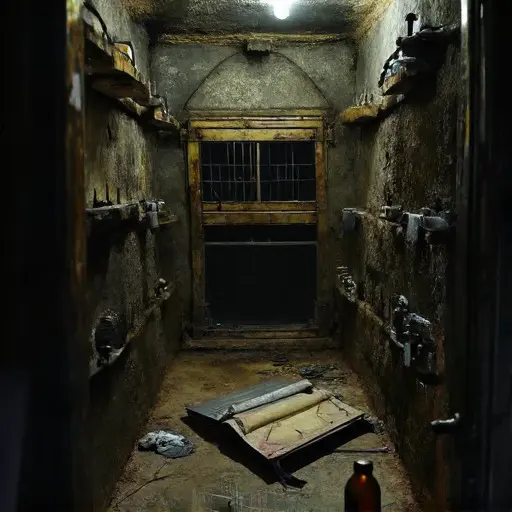
The Unused Lullaby in the Music Cabinet
Eleanor Ashton, the wife, was left entirely broken. Her husband was dead, her children had never lived, and the remaining assets were insufficient to maintain the large estate. Her only surviving daughter, Isabelle, was already grown and married, living abroad.
Eleanor refused to move anything from the Nursery—the empty crib, the unused toys. She instructed the solicitor handling the estate to sell off the remaining, tangible silver and jewels in the Silver Vault to pay her debts, but to leave the house itself untouched. She walked out of the Sycamore-Cove in 1916, taking only a single suitcase, and moved into a sanitarium, where she lived out her final years in quiet, permanent grief.
The house, filled with the psychological weight of its multiple losses, remained empty. The mortgage holders and the state refused to touch the contaminated, debt-ridden property for decades.
In the downstairs Drawing Room, in an ornate, carved-oak music cabinet, one piece of sheet music remains on the stand, its title written in Eleanor’s delicate hand. It is a single, unused copy of a simple folk song, which she had intended to adapt as a lullaby for the child who never lived.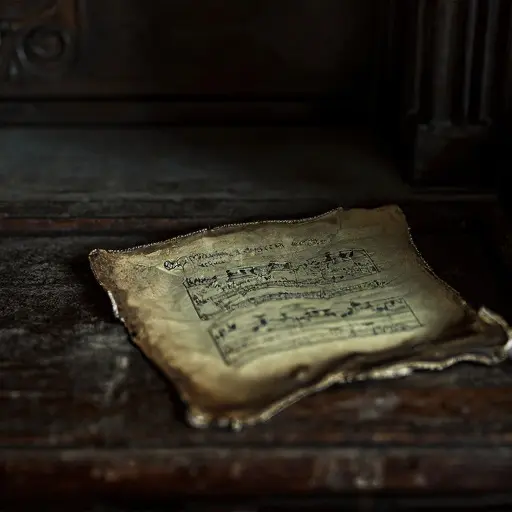
The Sycamore-Cove stands today, its cedar shingles weathered gray and its intricate trim rotting under the sycamore shade. Its ultimate silence is the cold, physical fact of the lost lullaby—a beautiful, massive house built for a family that never truly came to be.
