The Haunted Canvas of Pigment-Wren
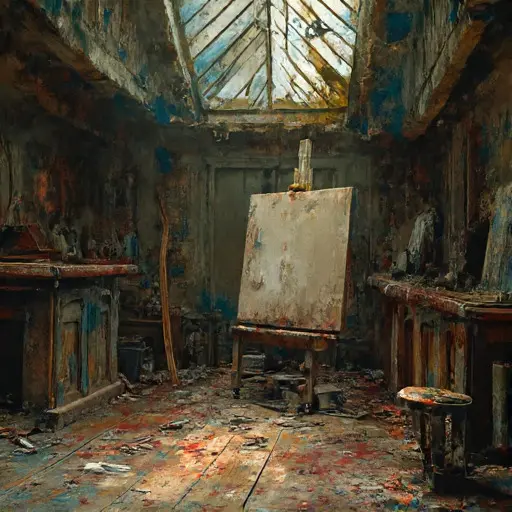
Pigment-Wren was a mansion of unusual design, built with soaring, north-facing walls and enormous windows—a clear testament to its purpose. The exterior was a chaotic mix of brick and glass, designed for the maximum intake of light. The name suggested a place where color and delicate art converged. Stepping through the wide, arching doorway, the air was surprisingly still, dry, and carried the intense, pungent odor of aged oil paints and chemicals. The silence was palpable, a heavy absence of the music and chatter that often accompanies artistic creation. This abandoned Victorian house was a giant, dusty palette, where the history was painted onto the very walls, now fading into a chilling, monochrome stillness.
The Painter’s Desperate Transparency
Pigment-Wren was the isolated residence and grand studio of Eleanor Vance, a brilliant but deeply troubled portrait painter of the late 19th century. Her professional life was characterized by a relentless pursuit of transparency—she sought to paint not just the surface of her subjects, but their internal emotional and psychological state, demanding extreme intimacy from her sitters. Personally, Eleanor was haunted by the belief that she herself was inherently invisible and unloved, convinced that no one could truly see her. She used her art, and the very house, as a desperate means of forcing the unseen into visibility.
The Gallery of Fading Faces
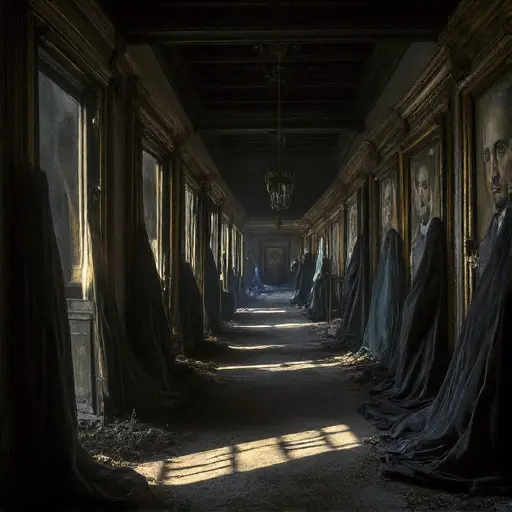
Eleanor’s Portrait Gallery was the public face of her obsession. Here, among the portraits of wealthy, expressionless patrons, we found her final, detailed journal, hidden beneath a stack of blank canvases. Her entries detailed her growing frustration with the limitations of paint, concluding that she could never truly capture the inner life of her subjects. The central tragedy was her husband, Arthur, an art critic who dismissed her talent. Her notes revealed that she stopped painting his face, leaving his portraits finished only from the neck down, an act of quiet, artistic rejection. Her final entry detailed her decision to create a painting that was “pure internal truth,” a work that would finally make her visible.
The Hidden Pigment Room
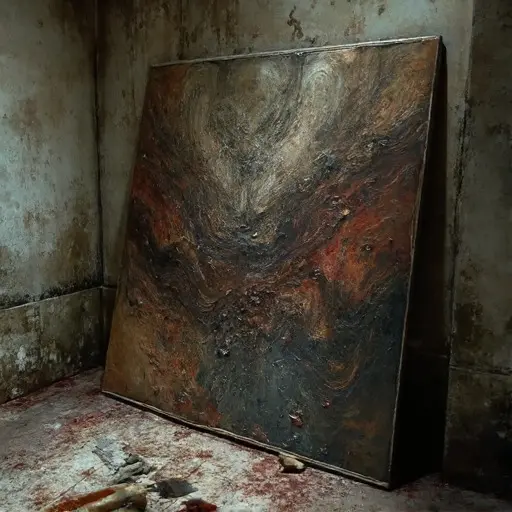
The most disturbing room was a small, sealed closet near the main studio, where Eleanor stored her raw pigments. The air here was sharp with chemical volatility. The shelves held hundreds of small jars of powdered colors. However, several jars were empty, smeared with a dried, metallic residue. We discovered a final, massive canvas leaning against the back wall. It was not a portrait of a person, but an enormous, chaotic swirl of abstract color, painted directly onto the rough canvas without primer. Her final journal entry explained the painting: she was so desperate for genuine emotional transparency that she had begun mixing her own blood and bodily fluids with the expensive oil paints, believing that the only way to paint pure internal truth was to use herself as the medium. The painting was a painful, raw confession. Eleanor vanished shortly after finishing the work. The haunted canvas of Pigment-Wren is the terrifying final expression of a woman who tried to paint herself into existence, leaving her ultimate, painful truth preserved in the silence of the abandoned Victorian house.