The Harrowcliffe House and the Quiet Dissolution of a Riverbend Engineering Trust
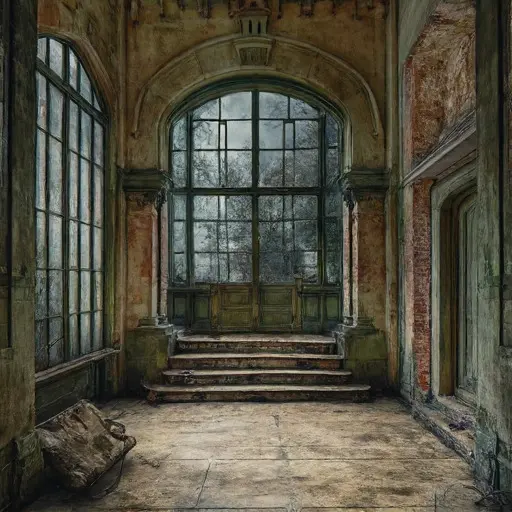
The Harrowcliffe House was completed in 1893 for Daniel Percival Harrowcliffe, born 1845 in Derbyshire, a civil engineering financier specializing in river infrastructure projects and bridge construction bonds. His wealth came from underwriting municipal riverworks and private canal stabilization contracts during a period of expanding inland transport development. The house was built after his appointment to a regional engineering trust, intended as both residence and administrative center for project documentation and investment oversight.
He lived there with his wife Beatrice Linton Harrowcliffe and their son Julian, who later assisted in surveying records and contract reconciliation for river construction accounts.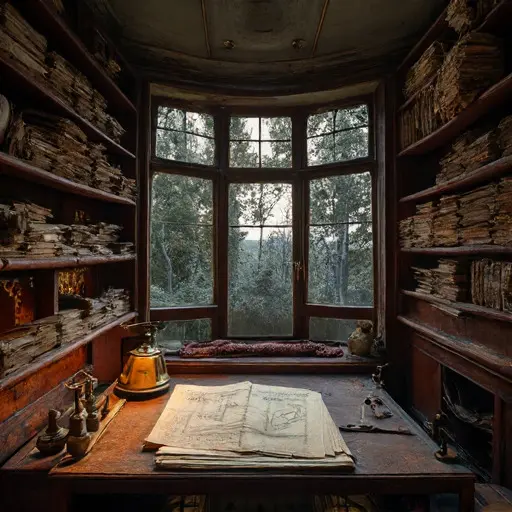
The decline began in 1906 after a series of structural failures along contracted riverworks, including partial bridge subsidence and delayed canal reinforcements caused by unexpected seasonal flooding. Several municipal clients withheld payments pending inspection outcomes, while private investors withdrew from ongoing infrastructure bonds. Harrowcliffe had personally guaranteed portions of the engineering liabilities, assuming corrective works would restore confidence. By 1910, legal arbitration proceedings began consolidating his holdings, and correspondence shifted from technical reports to formal claims and contested valuations. Julian’s involvement in surveying ceased after a final audit questioned the stability of multiple bundled river infrastructure contracts.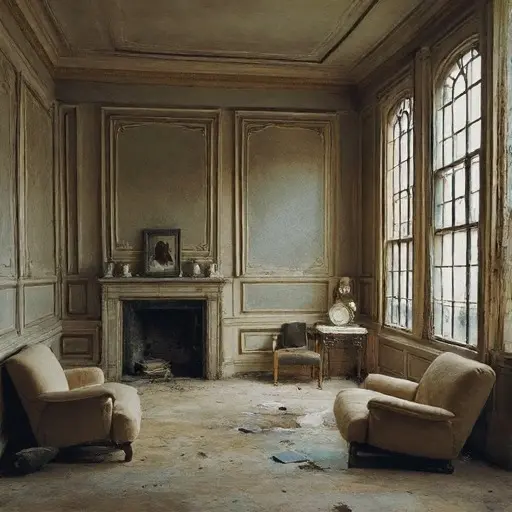
By 1913, Daniel Harrowcliffe had relocated to a temporary office near the municipal works department to resolve outstanding engineering liabilities, leaving the house under only intermittent caretaker visits. Beatrice’s correspondence ceased shortly afterward, and Julian’s name appears once more in a final arbitration record concerning disputed infrastructure valuations. The Harrowcliffe House remained fully furnished but unmanaged, its engineering archives locked in the study and its river-facing rooms left untouched. No sale was completed, no family returned, and the property was recorded as vacant, standing intact but slowly reclaimed by the riverbend landscape without resolution.