The Harrington House Beside Blackpine Viaduct
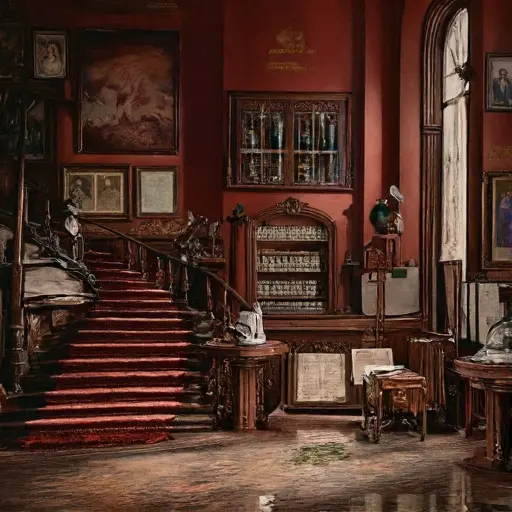
The Harrington family arrived at Blackpine Basin in 1908 after William Harrington accepted a senior engineering position with the mountain railway and purchased the house near the viaduct. Three generations lived there: William and his wife Margaret, their three children, and William’s widowed father, while Margaret managed the household. Their income came from railway engineering contracts, timber leases, and a small freight business serving the mountain line.
During the 1910s, the mansion remained occupied and maintained, with railway employees occasionally using its covered walkways and carriage court during working visits.
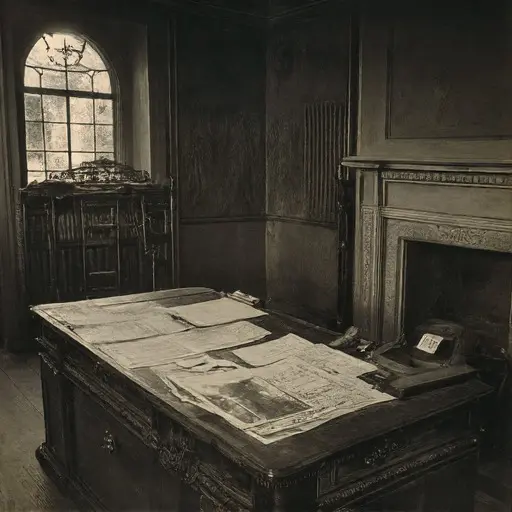
The first warning came in 1922 when the mountain railway reduced Harrington’s engineering contract after passenger traffic fell. Freight shipments declined soon afterward, while a landslide caused costly damage along the line. William dismissed household workers and closed the upper bedrooms, then postponed repairs to the slate roof and iron walkways. After William died in 1926, his sons disagreed over the freight business and remaining railway contracts. By 1928, unpaid bank loans, railway debts, and property taxes had accumulated beyond the family’s means. Margaret moved with her youngest daughter to relatives in the lowlands, while her sons left to seek railway work elsewhere.
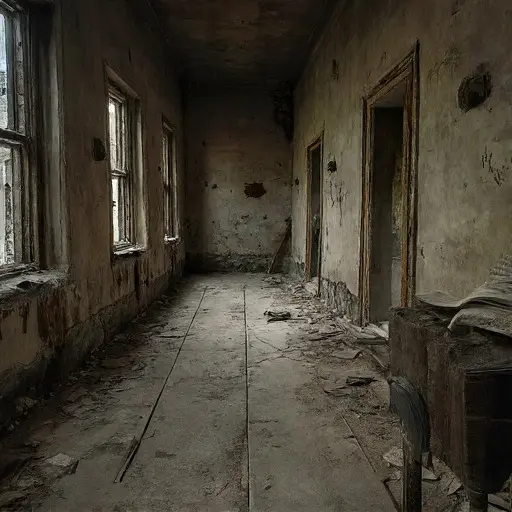
The Harrington House was abandoned in 1929 after foreclosure followed railway contraction, freight losses, unpaid loans, taxes, and the family dispute. Remaining furniture and business equipment were auctioned, while the railway company removed its records and machinery. No restoration occurred, and no Harrington family member returned. County documents show failed attempts to lease the isolated property after the viaduct line was discontinued. By the 1940s, roof damage and broken windows had made several rooms unsafe. The mansion remains beside Blackpine Viaduct, empty and deteriorating without restoration or a confirmed future owner.