The Greywatch Coastal Railway Cottage Left After Signal Decommissioning
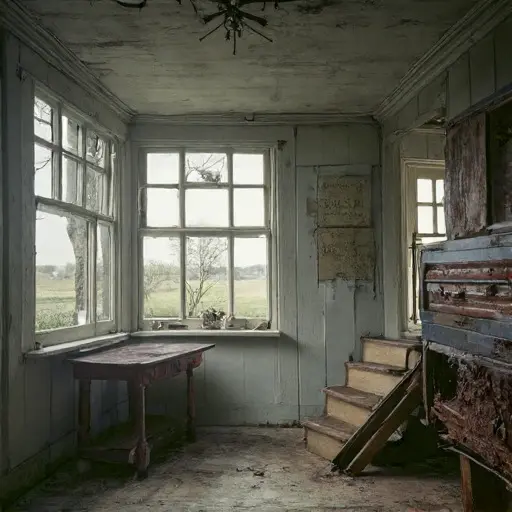
The Greywatch Cottage was constructed in 1887 along a narrow stretch of coastal railway where the line ran parallel to the sea for several miles The location was selected to serve both as a family residence and a functional oversight point for a minor signal section controlling train movement between two larger coastal stations
The defining architectural feature of the property was the elevated signal balcony room projecting above the roofline This space was used for manual signal observation and communication with passing locomotives and adjacent stations Positioned slightly rotated off true alignment it was stabilized through timber bracing and iron bracket supports anchored into the main structure The bay window below provided a continuous visual connection to the railway line
The main house itself remained compact and asymmetrical reflecting incremental additions over time including a rear utility extension and repeated roof repairs responding to wind and salt exposure The roofline became subtly uneven as coastal weathering affected different sections at varying rates while maintaining overall structural integrity
Gradual Decline of Coastal Railway Operations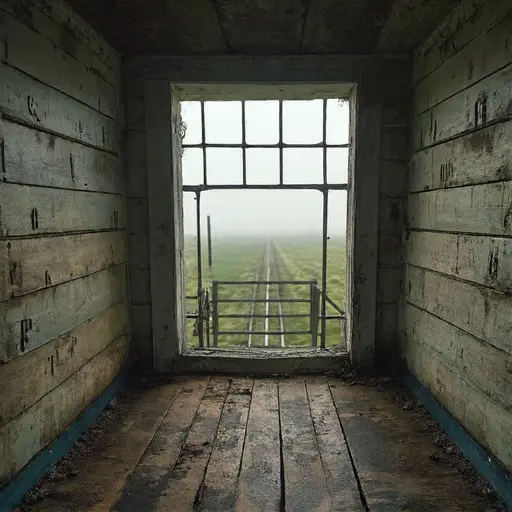
By the early 1930s the Greywatch coastal line experienced a steady reduction in rail traffic as regional transportation networks were reorganized Freight services were rerouted to inland corridors and passenger services became infrequent eventually leading to partial line closures along less profitable coastal segments
As operational use declined the signal balcony saw reduced activity until manual signaling was fully phased out The balcony structure remained intact but its functional purpose gradually disappeared leaving it as an architectural remnant of an earlier transport system Maintenance of the surrounding cottage became irregular with only minimal repairs carried out to prevent structural failure
Environmental exposure intensified the aging process Salt air accelerated weathering on wooden siding and iron railings while stone foundations remained comparatively stable The railway corridor itself began to soften visually as vegetation encroached upon unused sections of track
Final Abandonment of the Coastal Line Cottage
<img src=”https://beyondvisit.
com/wp-content/imagecontent/uploads/abandoned victorian house 34474465.webp” alt=”” />
By 1948 the Greywatch Coastal Railway Cottage was fully vacated following the decommissioning of the coastal signal section and the removal of all active rail operations in the area No demolition or redevelopment was undertaken and the property was left in place
In the following years the structure remained physically unchanged while gradually responding to environmental exposure The railway line remained visible but inactive with vegetation slowly reclaiming the track bed while the signal balcony continued to stand above the roofline without function
By 1950 the Greywatch Cottage remained standing beside the silent coastal railway fully abandoned and structurally intact No collapse occurred no restoration was attempted and no return was recorded The structure persisted in quiet alignment with the rails and the coastline held between sea wind and overcast stillness