The Greyford House and the Quiet Collapse of a Hillside Postal Contracting Firm
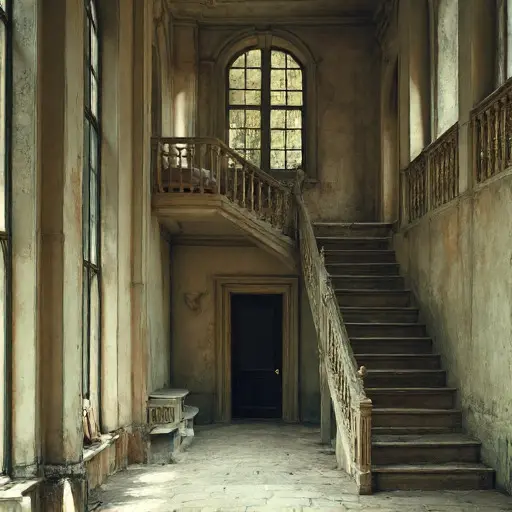
The Greyford House was completed in 1890 for Samuel Whitaker Greyford, born 1841 in West Yorkshire, a regional postal contractor and rural logistics investor managing delivery routes across hillside settlements and valley towns. His wealth came from securing government mail contracts and coordinating rural distribution hubs tied to rail-linked courier systems. The house was built directly into the slope to oversee route planning and correspondence sorting operations, serving as both residence and administrative base.
He lived there with his wife Eleanor Pritchard Greyford and their son Henry, who later assisted in managing route ledgers and postal scheduling records.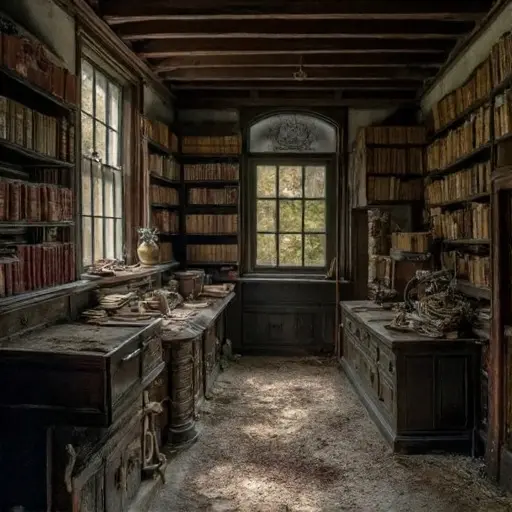
The decline began in 1906 after repeated disruptions in rural mail routes caused by seasonal landslides and infrastructure failures along hillside roads, delaying postal delivery beyond contractual windows. Several government subcontracts were suspended pending review of reliability standards, and private courier partners withdrew from regional agreements. Greyford had personally guaranteed portions of the routing network’s performance, expecting rapid stabilization of hillside access that never fully recovered. By 1911, official postal authorities began restructuring his contracts, and correspondence shifted from routine delivery schedules to formal notices and contested performance evaluations. Henry’s involvement in route management ended abruptly after an audit questioned the accuracy of several bundled distribution metrics across rural districts.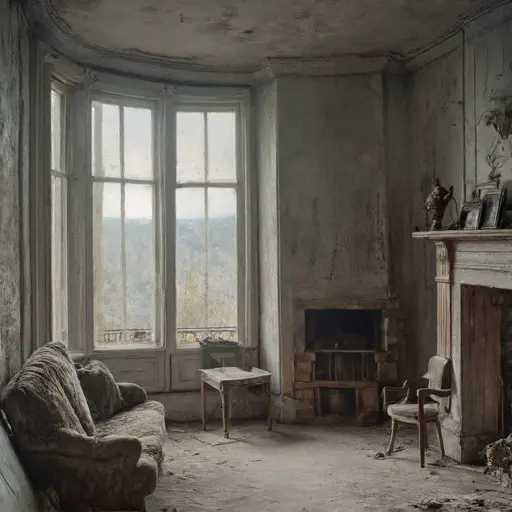
By 1913, Samuel Greyford had relocated to a county postal office to manage unresolved contract disputes, leaving the house under only intermittent caretaker visits. Eleanor’s correspondence ceased shortly afterward, and Henry’s name appears once more in a final administrative file concerning disputed delivery performance records. The Greyford House remained fully furnished but unmanaged, its postal archives locked in the study and its hillside rooms left untouched. No sale was completed, no family returned, and the property was recorded as vacant, standing intact but slowly reshaped by the slope without resolution.