The Greenhouse Cottage Left Vacant After Garden Decline
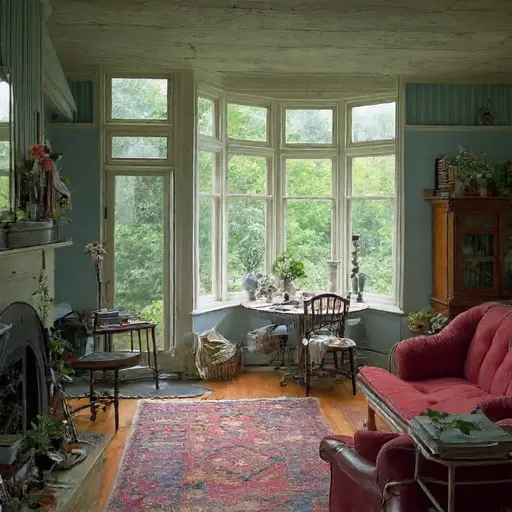
The greenhouse cottage was built in 1891 on the edge of a large private garden clearing surrounded by mature trees. Originally intended as a modest Victorian family residence, it expanded gradually as the Holloway family developed an interest in horticulture. Rather than constructing a separate greenhouse elsewhere on the property, they attached a glass wing directly to the house, linking domestic and gardening spaces into a single evolving structure.
The family lived comfortably in the cottage for more than three decades. The greenhouse produced flowers, vegetables, and ornamental plants that supplemented household income and supplied local markets. Additions were made whenever new space became necessary. A conservatory corridor connected older and newer sections, the roofline stepped upward as rooms were added, and a small octagonal breakfast room appeared at the rear during the first decade of the twentieth century.
By the late 1920s, however, conditions began to change. Competition from larger commercial growers reduced the profitability of small-scale horticulture. Several younger members of the family left for employment opportunities in nearby towns, leaving fewer people available to maintain both the gardens and the increasingly complex house.
Signs of a Gradual Withdrawal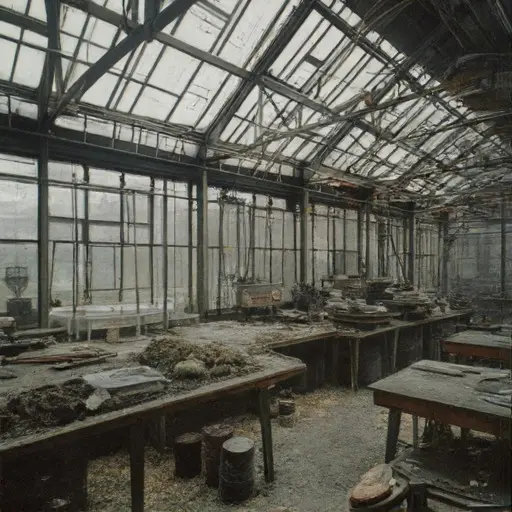
The death of Arthur Holloway in 1933 accelerated the property’s decline. As the family member most responsible for the gardens and greenhouse operations, his absence left a significant gap in both management and labor. Surviving records indicate that maintenance expenses increasingly exceeded income generated by the property.
The greenhouse became the first area to experience neglect. Sections that once held seasonal crops sat empty for months. Heating equipment was used less frequently during winter, and repairs to aging iron supports were postponed. Family account books show repeated attempts to reduce costs through partial closures of greenhouse sections and delayed maintenance.
Inside the cottage, rooms remained occupied, but activity steadily contracted. The conservatory corridor was used less often. Upper-floor bedrooms were closed during colder months to save fuel. Paintwork faded, and small structural issues that once would have been repaired immediately were left unattended.
By the early 1940s, only two family members remained at the property. Wartime shortages further complicated maintenance efforts. Replacement glass became difficult to obtain, and several planned repairs were abandoned altogether. Although the structure remained stable, the house increasingly reflected a household operating on limited resources.
The Final Empty Years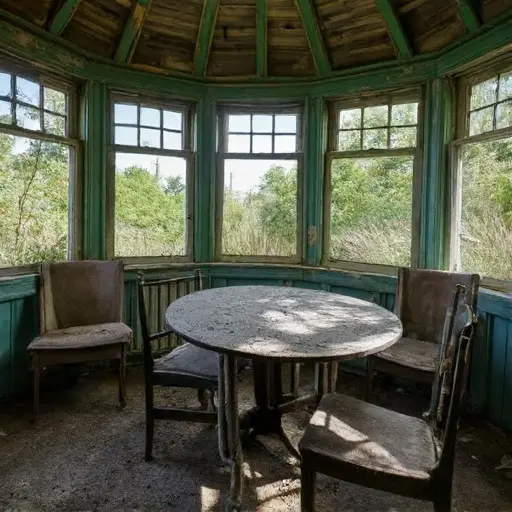
The final occupants left the greenhouse cottage in 1948 after deciding the cost of maintaining the property could no longer be justified. Attempts to sell the house proved unsuccessful due to its remote location and the extensive work required to restore the greenhouse infrastructure.
Over the following years, nature gradually reclaimed the gardens. Pathways disappeared beneath grass. Planting beds lost their defined boundaries. Seasonal wildflowers emerged among neglected rows once carefully maintained by the Holloway family.
The house itself remained standing. The greenhouse supports sagged slightly but held. Windows weathered but stayed largely intact. The structure never suffered a catastrophic collapse, only the slow effects of abandonment and time.
No restoration project was undertaken. No member of the Holloway family returned to occupy the property. Ownership became increasingly unclear as generations dispersed. Today the greenhouse cottage remains abandoned within its overgrown garden clearing, quietly deteriorating beneath the overcast sky, its future unresolved and its rooms still standing empty.