The Grave Comfort of Lullaby-Stone Manor
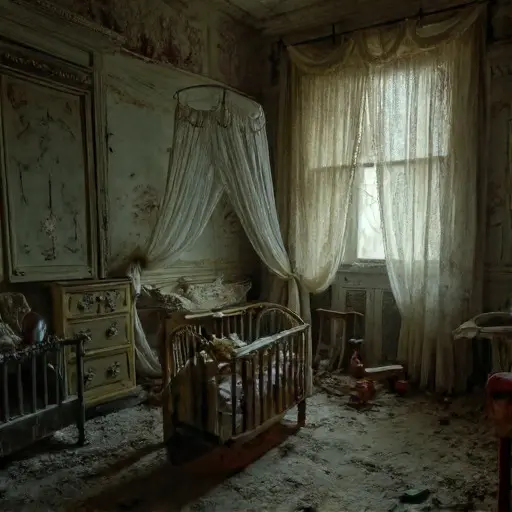
Lullaby-Stone Manor was a mansion built of rough, dark-gray fieldstone, its architecture heavy and low to the ground, giving it a comforting yet profoundly static appearance. Its name suggested a blend of soft, soothing sound and hard, cold permanence. The house sat deep in a sheltered hollow, rarely touched by direct sunlight. Upon entering the main hall, the air was immediately thick, cool, and carried a potent, almost sweet scent of beeswax, old rose perfume, and a lingering, faint trace of medicinal alcohol. The floors were covered in thick, dust-laden rugs that completely muffled all footsteps. The silence here was deep and profound, a heavy quiet that felt deliberately imposed, as if to contain any potential noise. This abandoned Victorian house was a monument built for one purpose: to halt the progress of sorrow and contain a perfect, unchanging moment of comfort.
The Mother’s Perfect Stasis
Lullaby-Stone Manor was the secluded residence and final project of Lady Clara Penhaligon, a wealthy but utterly shattered woman of the late 19th century. Her life was tragically redefined by the death of her only child, Elara, an infant who succumbed to a fever. Personally, Lady Clara was consumed by an unbearable, all-encompassing grief and a pathological inability to accept the finality of loss. She saw the Manor not as a house, but as a giant, perfectly controlled environment designed to preserve the moment of her daughter’s final, peaceful sleep, turning her life into a meticulous, perpetual vigil of preservation.
The Temperature Vault
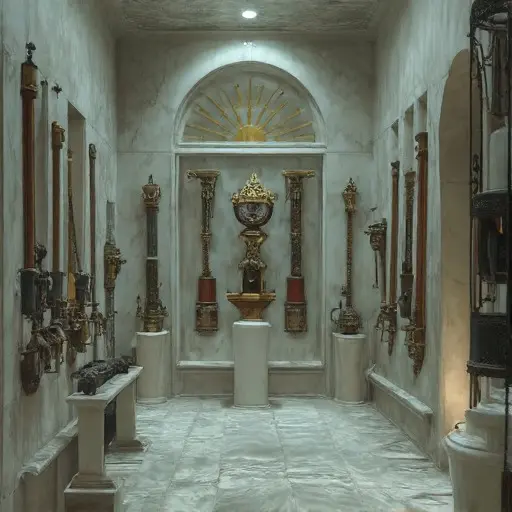
Lady Clara’s Temperature Vault was the engine of her obsessive control. Here, the temperature was once meticulously regulated to maintain a constant, pre-determined coolness. We found her comprehensive Vigil Log, bound in white leather, resting on the pedestal. Her entries chronicled the external temperature versus the internal temperature, treating the house as a complex machine designed to fight the heat of the world. Her final entries detailed her belief that the exact temperature of her daughter’s room on the day she died was the “perfect climate for memory” and that by maintaining it, she could prevent the memory of her daughter from fading. She had begun to replace all organic items in the room with carefully crafted porcelain and plaster replicas.
The Final Sleep Chamber
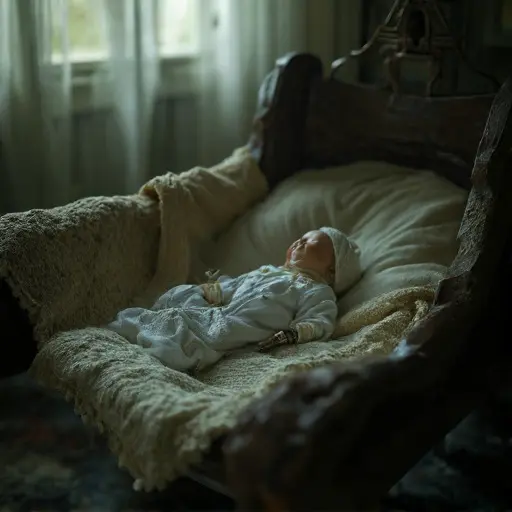
The master bedroom, which Lady Clara had converted into Elara’s nursery after the death, held the final, heartbreaking discovery. The entire room was cold and sterile. The centerpiece, the wooden cradle, was stripped bare. Tucked beneath the thin, dusty mattress was a single, intricately crafted porcelain doll, perfectly molded to resemble an infant, dressed in a faded white christening gown. Tucked beneath the doll was Lady Clara’s final, personal diary. It revealed the tragic climax: she had completed her great work, creating the perfect, unchanging environment and the perfect, unchanging, non-decaying replica of her child. Her final entry detailed her intention to join the only thing that could achieve true stasis—the unchanging stone of the house. The grave comfort of Lullaby-Stone Manor is the profound stillness of that final, cold nursery, a monument to a mother who believed the only way to hold onto a moment of life was to meticulously preserve its absence within the heavy, silent stone of her abandoned Victorian house.