The Glenmoor Castle Left Above the Ravine Forest
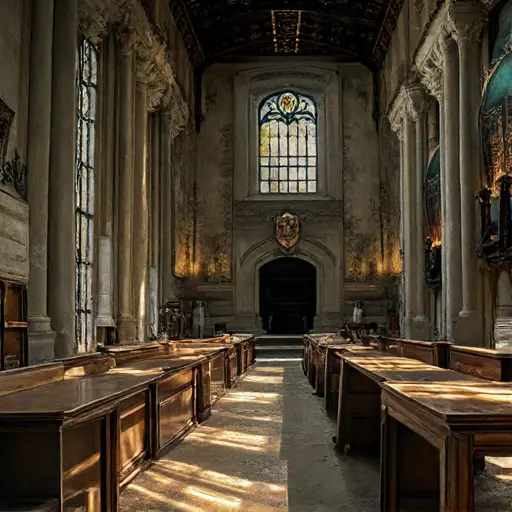
The Glenmoor Castle was established in the early twentieth century on a ravine edge overlooking dense forestland, commissioned by a family seeking to revive Scottish Baronial traditions within a modern estate framework. Built from luminous ivory granite and accented with ornate heraldic carvings, the castle was intended as both a residence and a symbolic anchor of regional heritage continuity. The household consisted of an extended aristocratic family and a small staff responsible for maintaining ceremonial order and estate operations.
Early life within the castle followed strict routines of governance, hospitality, and seasonal gatherings, with the great hall serving as the central stage for both administrative affairs and formal family life. The terraced cliff gardens below the structure were carefully cultivated to reinforce the estate’s visual dominance over the surrounding ravine forest.
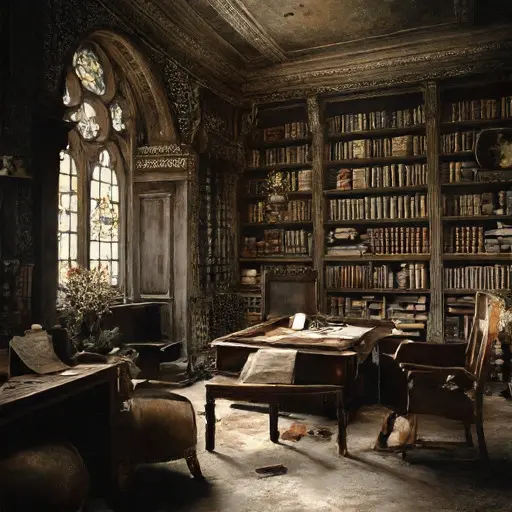
By the late 1920s, Glenmoor Castle began to experience financial pressure due to declining estate revenues and increasing maintenance demands associated with its large-scale stone construction and ornamental detailing. Staff reductions were gradually implemented, and portions of the castle were closed to conserve heating and operational costs. The terraced gardens, once meticulously maintained, began to overgrow as upkeep schedules were reduced. Correspondence from tenants, suppliers, and estate administrators accumulated without response, signaling a breakdown in traditional estate governance. The aristocratic household slowly retreated from its ceremonial rhythms, consolidating activity into a smaller number of heated rooms while larger wings fell into disuse.
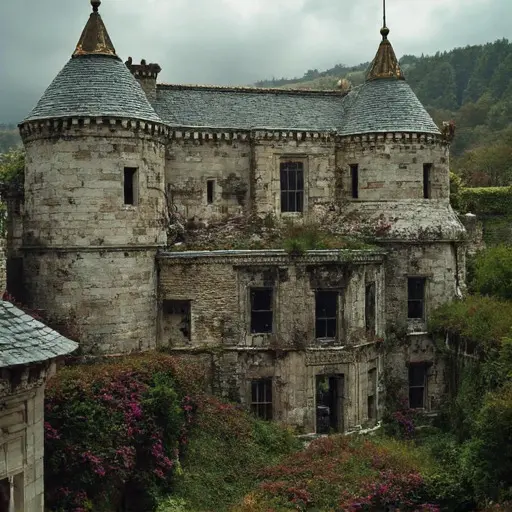
By the early 1940s, after prolonged financial collapse and the dispersal of its remaining family members, Glenmoor Castle was fully abandoned. No restoration efforts were undertaken due to the immense cost of preserving its ornate stonework and the absence of a unified inheritance structure. The estate remained perched above the ravine forest, slowly deteriorating under seasonal weathering and vegetation encroachment. Interior spaces were left untouched in their final inhabited condition, allowing dust, moisture, and plant growth to gradually overtake ceremonial halls and private chambers. The castle persists as an unresolved historic structure, neither restored nor repurposed, with its grand baronial silhouette still rising above the forest as a silent record of aristocratic decline and abandonment.