The Frozen Legacy of the Marble-Sconce
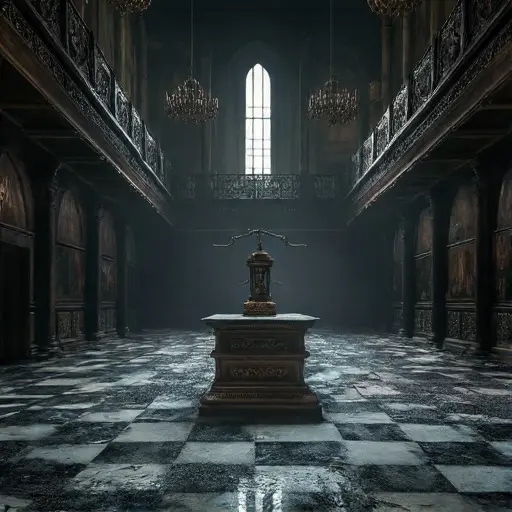
The Marble-Sconce, a monumental, imposing structure of grey granite and heavy marble trim, was completed in 1885, intended to project an image of unshakeable, aristocratic permanence. Its fortress-like façade and deep-set windows give it a cold, unrelenting appearance. To step into the main Grand Hall is to feel an immediate, physical coldness and a silence so deep it seems to solidify the air.
The vast space, built to celebrate a long lineage, is now merely a stage for entropy, its fine marble floor cracked by the very elements the house was built to withstand. The mansion’s ruin is a frozen monument to a legacy that crumbled under internal strain.
The Arrogant Genealogist, Elias Stonecroft
The mansion was built for Elias Stonecroft (1835–1898), a man whose entire identity was rooted in his flawless aristocratic legacy. His profession was not financial, but purely historical: the meticulous, arrogant maintenance of his family’s generational narrative. Socially, he was aloof and judgmental, obsessed with the purity of his bloodline.
Elias married Matilda Vane in 1860, a woman from a wealthy but less established family, whose ambition matched his need for social dominance. They had one child, a daughter named Victoria. Elias’s personality was defined by his crippling snobbery; his daily routine was built around archiving and documenting his family tree in his specialized, cold Archive Room. His ambition was to ensure his legacy was celebrated for centuries; his greatest fear was the discovery of any imperfection or common ancestry.
The house was his monument, and he installed a small, bronze, decorative sconce on the wall of the Grand Hall—not for light, but as a symbolic marker for the founding year of his family’s supposed prominence.
The Crushing Truth in the Archive Room
The tragedy that destroyed the Stonecroft family was a sudden, internal revelation of fraud that invalidated Elias’s entire existence. Victoria, the daughter, grew up under the weight of her father’s arrogance and constant criticism. While preparing for her own marriage, she secretly began to research a minor branch of the family tree in her father’s Archive Room.
In 1898, Victoria discovered the crushing truth: the wealth and “prominence” Elias traced back three generations were fraudulent, based on a marriage certificate forgery performed by his own great-grandfather to claim an estate. The entire legacy was a lie. Victoria confronted her father in the Archive Room, presenting the original, authentic documents that proved the deception.
The shock of the complete and total invalidation of his life’s work triggered a massive, debilitating stroke in Elias. He collapsed on the floor, paralyzed and unable to speak, surrounded by the meticulously filed documents that now proved his shame.
Before he died a month later, he made one final, desperate, yet futile gesture: he managed to point a trembling finger at the sconce in the Grand Hall, a symbol of his false legacy, only to realize he could not move to erase it.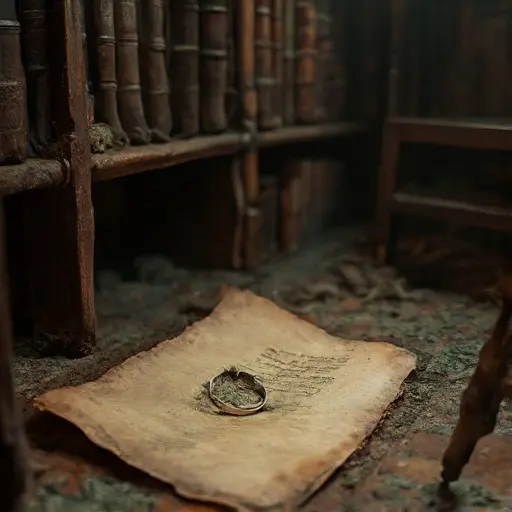
The Unlit Sconce in the Grand Hall
Matilda Stonecroft, the widow, was left with a catatonic husband, an impossible social scandal (which Victoria revealed immediately upon her father’s collapse), and a house entirely saturated with the stench of fraud. Victoria, free but ruined, left the country entirely, never returning to face the consequences.
Matilda refused to touch the house’s contents. She saw the Marble-Sconce as a magnificent lie, and she wanted it to stand as a monument to her husband’s destructive arrogance. She took only her smallest personal effects and walked out in 1899, leaving the vast, cold house and its exposed legacy to the state. She never paid another tax bill, ensuring the house’s abandonment was absolute and irreversible.
In the Grand Hall, high on the wall, one poignant detail remains: the bronze sconce Elias had placed there as a permanent symbol of his lineage. It is covered in a thick layer of dust, tarnished green, and its wick is dark, never to be lit again.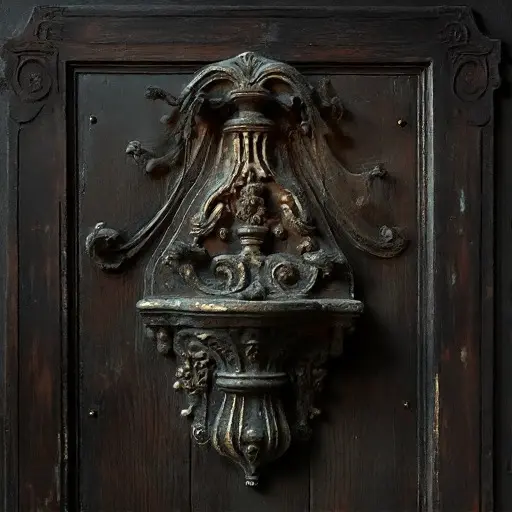
The Marble-Sconce stands today, its imposing granite façade silent against the plateau wind. The frozen legacy of the Stonecrofts remains sealed within its cold walls, a vast, empty mausoleum built on an aristocratic lie that ultimately consumed its proud, arrogant creator.
