The Frozen Display of Iron-Eglantine
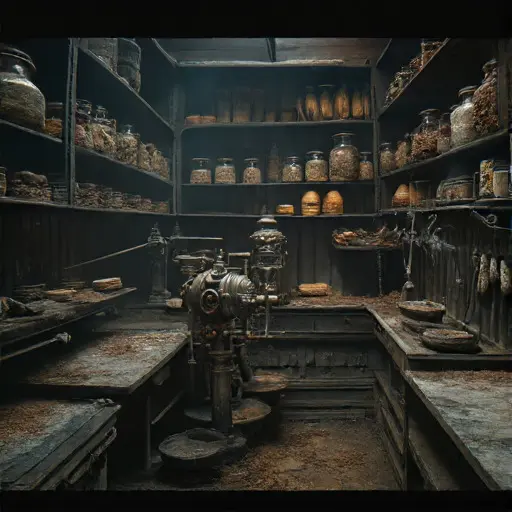
Iron-Eglantine was a massive, uncompromising mansion built of dark, heavy ironstone and black timber, giving it a severe, almost industrial appearance. Its name was a jarring contrast—iron for strength, eglantine for delicate wild rose—suggesting a conflict between brute force and fleeting beauty. The house was situated on a cold, exposed plateau, making it feel perpetually windswept and hostile. Entering the main service corridor, the air was immediately cold, dry, and carried a potent, almost chemical scent of rendered animal fat and brine. The floors were rough, slate flagstones, muting all sound. The silence was unnerving, an absolute void suggesting a household engine that had ceased to turn forever. This abandoned Victorian house was a prison of utility, where sustenance became a source of terror.
The Butcher’s Meticulous Preservation
Iron-Eglantine was the residence and professional hub of Silas Ashworth, a brilliant but pathologically obsessive master butcher and purveyor to the Crown in the late 19th century. His professional life demanded impeccable hygiene, efficiency, and above all, preservation of his stock, treating life as a commodity to be meticulously maintained. Personally, Silas was defined by a profound, escalating germophobia and a fear of all organic decay. He built the Hall with extensive, chilled storage rooms and specialized processing areas, attempting to create a perfectly sterile, unchanging environment where his perishable goods—and his family—would defy natural decomposition.
The Smoking Chamber Archive
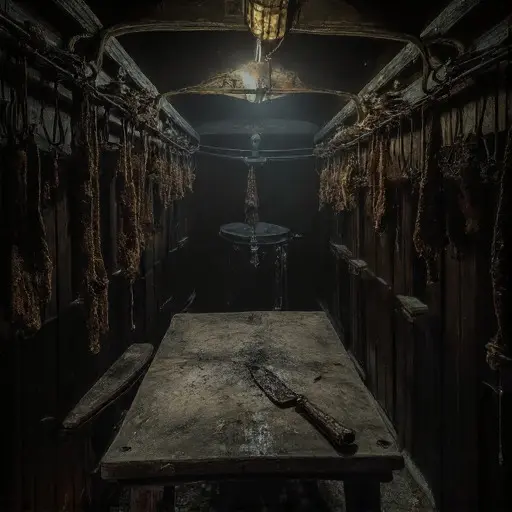
Silas’s smoking chamber, deep in the basement, was the nexus of his preservation mania. The air was heavy, dry, and thick with the residual scent of processed smoke. We found his extensive, handwritten ledgers here, meticulously documenting the brine mixtures, smoke times, and weights of every single item processed. His entries chronicled his growing suspicion that the quality of his meat was dependent on the silence of the process—he sought to preserve his goods before they had time to “scream.” His final ledger entries devolved into a desperate personal note: he realized that his own body, and that of his wife, Lydia, were decaying faster than his stock. He wrote, “The only perfect preservation is stillness before the change.”
Lydia’s Locked Chamber
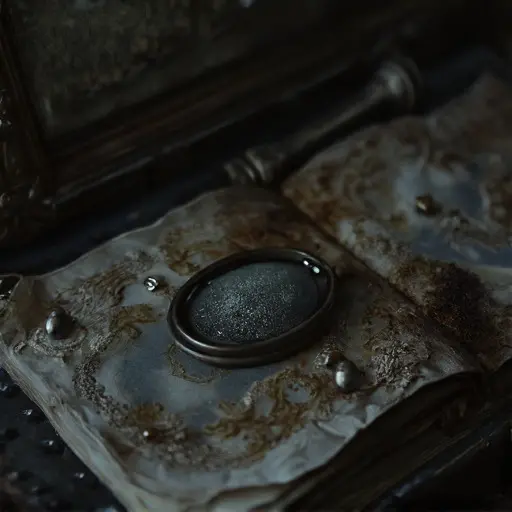
The most heartbreaking discovery was not in the service areas, but in the master suite. Lydia’s personal dressing room was locked from the outside. Inside, everything was covered in a heavy, custom-made linen sheet that Silas had treated with his strongest preservation brine. When the sheet was carefully removed, the room revealed a perfectly maintained, albeit dusty, tableau: a beautiful dress laid out on the bed, a jewelry box open on the vanity. On the pillow rested a silver locket, open to reveal two tiny portraits—Lydia and their infant son, Arthur, who had tragically died of consumption months earlier. Silas’s final journal entry, found beneath the locket, was his confession: Lydia, overwhelmed by her husband’s sterile, cold obsession after their son’s death, had attempted to flee the house. Silas, convinced that leaving would expose her to the decay of the outside world, locked her in her room, ensuring her “perfect, sterile preservation.” The frozen display of Iron-Eglantine is the profound stillness of a house where love was twisted into a cold, terrifying form of imprisonment, leaving the abandoned Victorian house as a monument to a butcher who failed to preserve the only life that truly mattered to him.