The Forsworn House Near the Salt Gardens Where Pilar’s Wind Chimes Refused to Rust
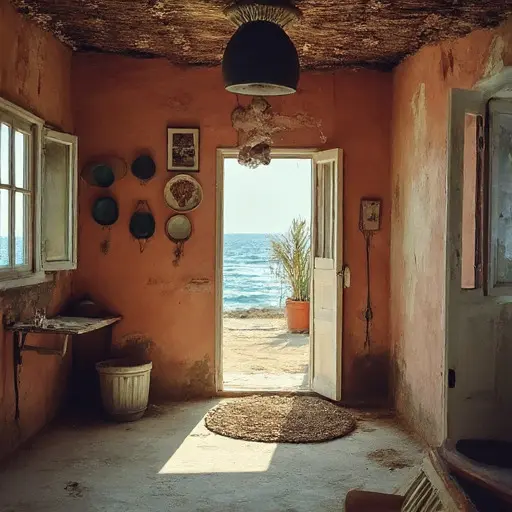
The sound survived longer than the paint.
That surprised people.
Long after the courtyard walls cracked and the shutters warped from sea air, delicate metallic notes still drifted through the house whenever afternoon wind crossed the salt gardens.
The chimes belonged to Pilar Duarte.
So did the house.
She lived there alone and practiced a profession built around sound, weather, and patience.
Pilar was a tidal wind chime tuner.
Her work had little to do with decoration.
She calibrated outdoor chimes for monasteries, courtyards, and seaside sanctuaries where specific tonal intervals were meant to interact with coastal wind and changing humidity. Each piece required adjustment according to air density, metal response, and surrounding architecture.
The courtyard workshop still reflects that precision.
Copper rods remain sorted by length. Tuning mallets sit beside notebooks crowded with measurements. Hanging frames cast thin shadows across floors dusted with salt carried inland by years of sea breeze.
The Brine Resonance Shelf
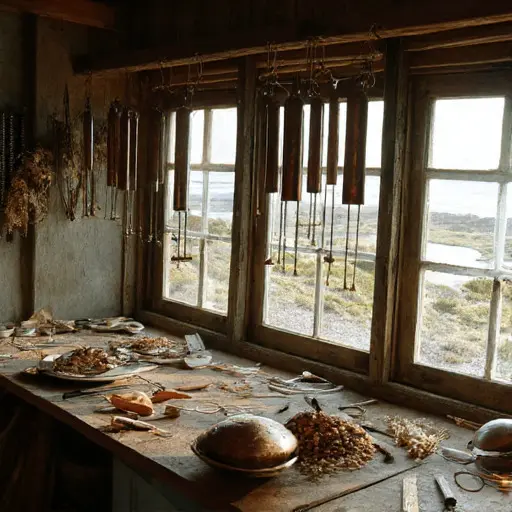
Pilar worked near the Brine Resonance Shelf.
The narrow wall niche faced directly toward prevailing wind and allowed her to test vibration before installation.
One unfinished chime still hangs there.
Only three rods attached.
Pilar had once shared the house with her father, a salt worker who taught her to read weather before she learned music.
After his death she rarely traveled far beyond the coast.
Visitors remembered her listening more than speaking.
For years, the craft survived through retreat houses, gardens, and religious sites seeking carefully tuned sound.
Then silence became commercial.
Mass-produced décor flooded markets and replaced artisan tuning with decorative replicas assembled cheaply overseas. Buyers chose appearance over acoustics. Many sites stopped commissioning custom work entirely.
Pilar repaired older chimes but resisted simplification.
She believed careless sound changed places.
Then the storms altered.
Rising sea temperatures intensified seasonal weather and damaged much of the surrounding salt economy through repeated flooding and erosion. Shrinking local livelihoods weakened the small network of cultural sites that once supported her work.
Pilar lost commissions gradually.
Already coping with chronic vertigo and refusing outside assistance, she spent increasing time repairing storm-damaged chimes alone.
During one severe coastal gale she climbed onto the courtyard roof to secure suspended frames.
She fell before neighbors saw her.
The funeral gathered former patrons and salt workers who remembered the courtyard music.
Afterward, the house remained closed.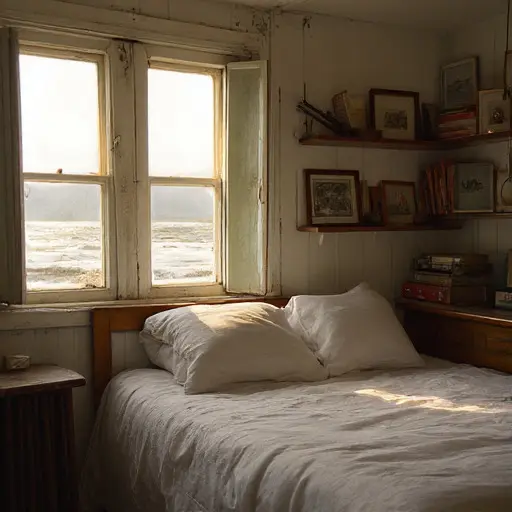
The copper rods remain sorted beside the wall.
The notebooks still carry her measurements.
And near the Brine Resonance Shelf, Pilar’s unfinished wind chime continues answering the sea with a sound she never finished tuning.