The Forsaken Valerio House
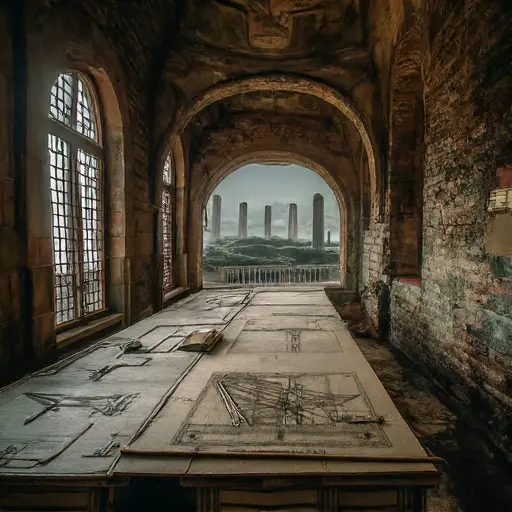
The Valerio House was constructed in 1900 along a major Danube crossing corridor for Karl Valerio (1865–1912), a bridge engineering surveyor employed by imperial infrastructure bureaus to calculate structural load distribution, test river current resistance, and certify feasibility reports for steel bridge construction projects spanning central European trade routes.
The villa functioned as both residence and engineering survey station, where Valerio and his assistants analyzed riverbed stability, recorded stress tolerance data, and maintained construction approval ledgers used to authorize bridge foundations, pier placements, and industrial transport crossings. His household included his wife Ilona and his assistant Friedrich Bauer, both responsible for maintaining engineering logs and structural certification records.
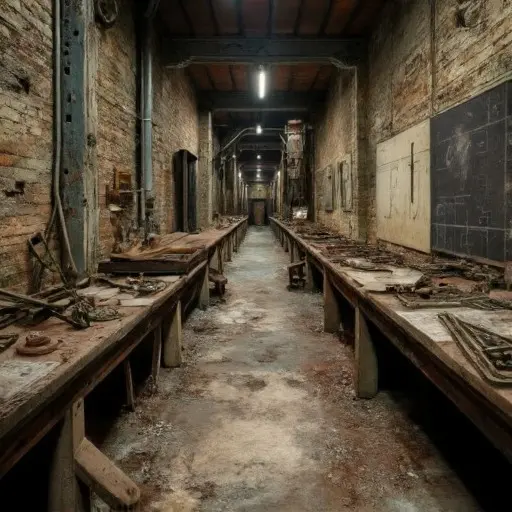
The decline began in 1908 when standardized reinforced concrete systems and centralized imperial engineering boards replaced localized river survey villas, shifting all bridge planning authority to state-controlled metropolitan design offices.
At the same time, several planned crossings along the Danube were canceled due to escalating political fragmentation and budget reallocations toward rail infrastructure, rendering river bridge surveys obsolete.
Project approvals stopped arriving. Survey commissions were revoked. The villa’s engineering authority quietly dissolved.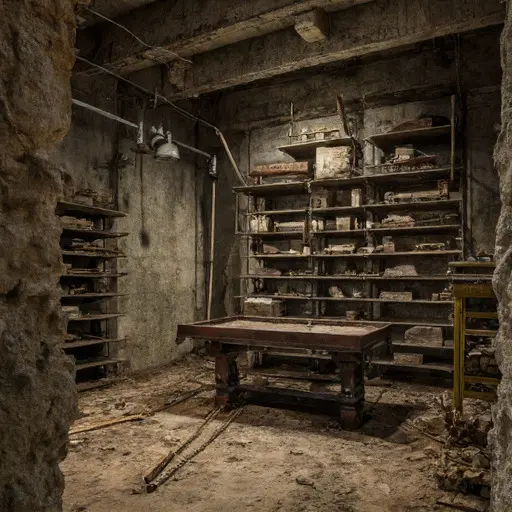
By 1912, Karl Valerio was formally removed from imperial engineering service following the dissolution of independent river survey houses and the full centralization of bridge design under metropolitan infrastructure ministries.
Inside the final structural ledger, inspectors found an incomplete load distribution analysis for a bridge that was never constructed after the river crossing project was canceled mid-planning.
The Valerio House remains abandoned beside the Danube, its calculations unresolved, its systems obsolete, and its rooms slowly fading into stone, rust, and silence.