The Forsaken D’Aragon House
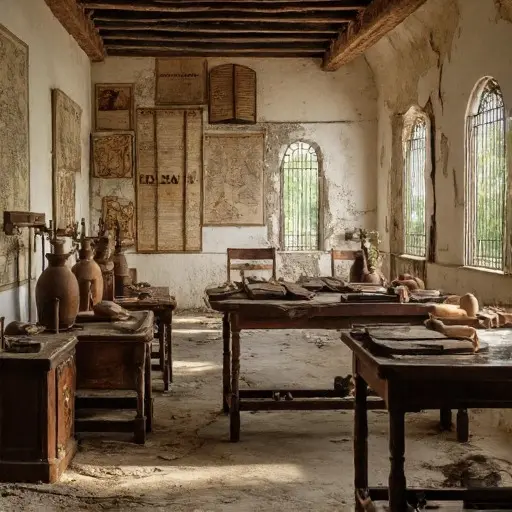
The D’Aragon House was constructed in 1900 in southern Andalusia for Rafael D’Aragon (1865–1912), an olive oil taxation clerk employed by regional land authorities to calculate agricultural levies based on grove yield, pressing efficiency, and export volume across rural estates supplying Mediterranean trade ports.
The villa functioned as both residence and fiscal office, where D’Aragon and his assistants recorded olive harvest outputs, oil extraction ratios, and taxation obligations assigned to each estate. His household included his wife Isabella and his assistant Miguel Serrano, both responsible for maintaining levy registers, production logs, and rural compliance records.
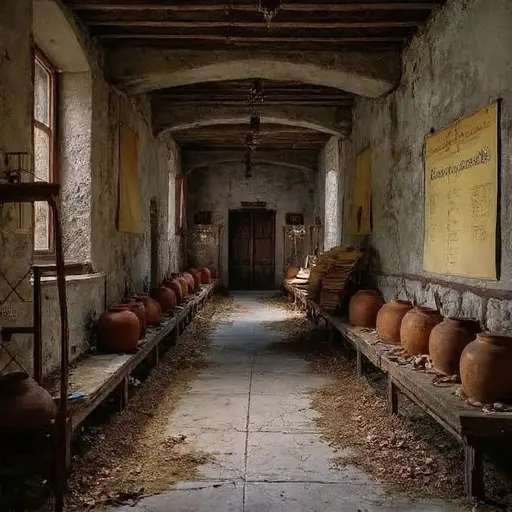
The turning point came in 1909 when regional agricultural reforms replaced estate-based taxation with centralized provincial accounting systems, standardizing olive oil levies and eliminating local fiscal offices.
At the same time, rapid industrial milling introduced large-scale oil cooperatives that bypassed individual estate reporting, making small taxation stations economically irrelevant.
Revenue requests stopped arriving. Estate filings were redirected elsewhere. The villa’s fiscal authority quietly dissolved.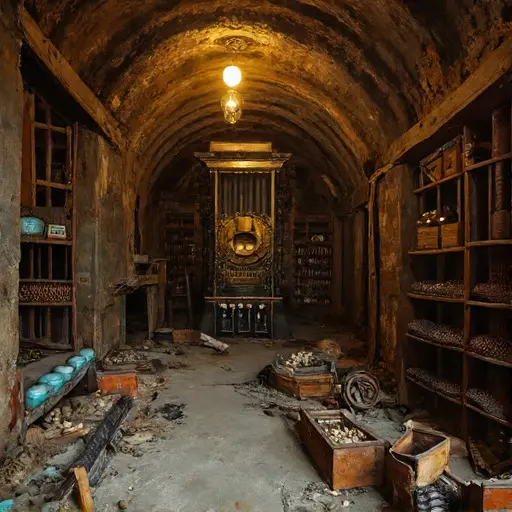
By 1912, Rafael D’Aragon was formally dismissed from provincial revenue service following the abolition of estate-based agricultural taxation offices across Andalusia.
Inside the final levy ledger, inspectors found an incomplete olive yield entry for a grove that had already been absorbed into a cooperative system.
The D’Aragon House remains abandoned among the olive terraces, its records uncollected, its systems obsolete, and its rooms slowly fading into oil, dust, and silence.