The Forgotten Stencil Boards of the Nakamura Kimono Studio
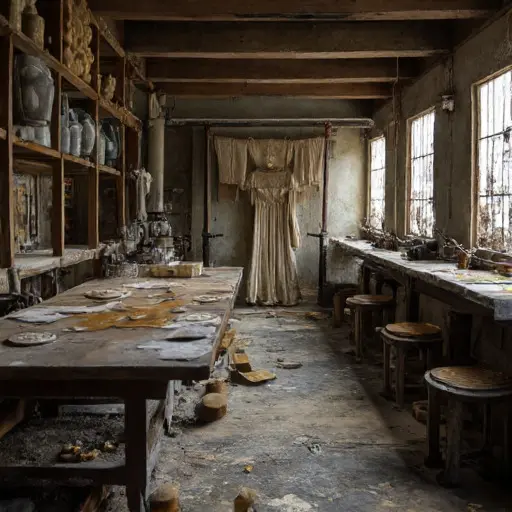
A gentle hush fills the Kimono Studio, where a penciled motif notation on a folded stencil board stops mid-instruction, signaling unfinished designs.
Artisan’s Precision
These tools belonged to Hanae Nakamura, textile designer (b. 1885, Kyoto), trained in a local dyeing atelier.
Her notes in neat Japanese characters record stencil sequences, color layering, and seasonal pattern adjustments. A folded slip references her niece, Emiko Nakamura, “prepare chrysanthemum set Tuesday,” revealing a disciplined rhythm of dyeing, stenciling, and careful folding, alongside a temperament defined by patient, exacting attention to detail.
Stencils and Silks
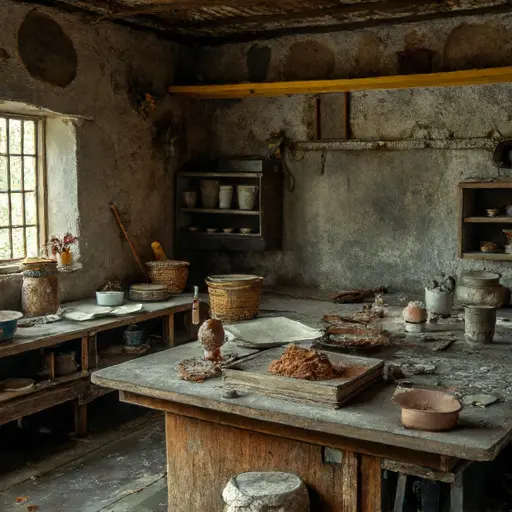
On the main table, carved wooden stencils are stacked by size. Dipped brushes rest on bamboo holders. A ledger beneath a folded cloth records ink recipes, layering techniques, and garment orders, each entry carefully dated. A half-printed silk panel remains pinned, awaiting final color layers, evidence of sudden interruption in methodical work.
Interruptions in Craft
Later ledger pages reveal corrections in stencil alignment and dye concentrations. Several silk panels show uneven color layering. A margin note—“client displeased with hue”—is smudged, indicating pressure mounting beyond usual composure. Brushes lie abandoned mid-stroke, revealing growing fatigue and waning eyesight, forcing Hanae’s precise craft to falter and remain incomplete.
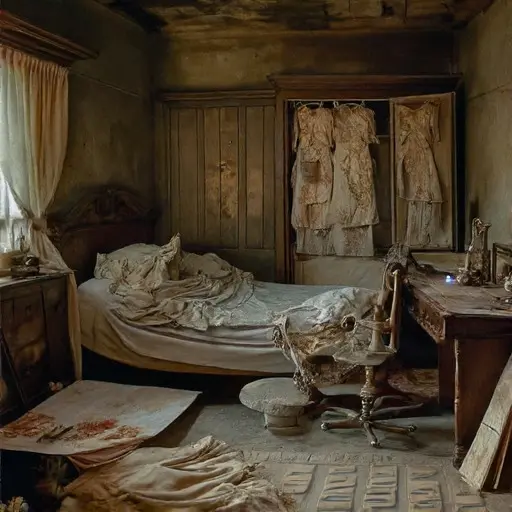
In the Studio’s final drawer, Hanae’s last motif sheet ends mid-sketch, stencil lines incomplete. A penciled note—“verify with Emiko”—breaks off abruptly.
No explanation survives for her sudden departure, nor why Emiko never returned to complete the garments.
The house remains abandoned, silks and stencils suspended mid-creation, preserving the quiet persistence of craft and artistry, unfinished and unresolved, resting in silent neglect.