The Forgotten Second Empire Mansion at the Corner of Time
Standing alone on a quiet American residential corner lot, this abandoned three-story Victorian mansion remains a powerful reminder of the elegance and ambition of the Second Empire era. Once a lavish showpiece admired throughout the neighborhood, the residence now rests behind weathered stone walls, surrounded by overgrown gardens and the quiet signs of a century of change.
The mansion’s towering curved mansard roof dominates the street view, rising above a grand corner pavilion and rows of tall arched dormers. Ornate iron cresting traces the roofline, while decorative copper elements have slowly transformed into a soft verdigris green after decades of exposure. The structure’s graceful bowed facade, once carefully maintained, has developed subtle waves and curves that reveal the natural settling of the historic home.
Built from warm pink sandstone with ivory limestone detailing, the exterior carries a faded richness that remains impressive despite years of neglect. Elaborate window surrounds frame the tall openings, while carved stone balconies and sweeping porch columns demonstrate the craftsmanship of a period when homes were designed as lasting statements of wealth and identity.
The compact front garden has become a quiet wilderness surrounding the mansion. A low stone wall borders cracked marble walkways, where ivy spreads across old surfaces and forgotten plants reclaim the landscape. A weathered wooden gate hangs near the entrance, while a faded garden statue rests among overgrown vegetation. An old rusted bicycle leans against the porch, untouched for years.
The surrounding residential street continues beyond the property, creating a striking contrast between everyday life and the abandoned grandeur of the mansion. A curbside mailbox stands near cracked asphalt, utility wires cross overhead, and neighboring houses fade softly into the background beneath peaceful overcast daylight.
Inside, the mansion reveals a remarkable interior that still reflects its former luxury. The entrance hall opens into a grand space centered around a sweeping staircase, where carved details and elegant proportions demonstrate the sophistication of the original design.
The curved staircase follows the architectural rhythm of the exterior, rising beneath high ceilings decorated with elaborate plasterwork. Dust covers the marble floors, but the craftsmanship remains visible in every railing, doorway, and decorative surface.
The formal rooms surrounding the entryway once hosted important gatherings and family celebrations. Large windows illuminated carefully arranged furniture, while carved fireplaces and detailed woodwork created a sense of refinement. Now, empty rooms and faded materials tell the story of a home slowly left behind.
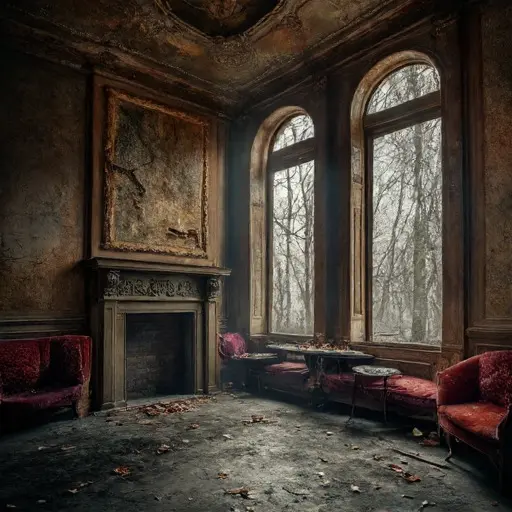
The mansion’s parlor remains one of its most elegant surviving spaces. The tall windows, decorative fireplace, and carefully proportioned room still suggest the social importance this area once held. Though the furniture has aged and the finishes have faded, the atmosphere of old refinement remains.
The upper floors reveal quieter family spaces hidden behind the grand public rooms. Long corridors connect bedrooms with worn wooden floors and peeling wallpaper, while abandoned closets and forgotten belongings preserve small details of daily life from generations past.
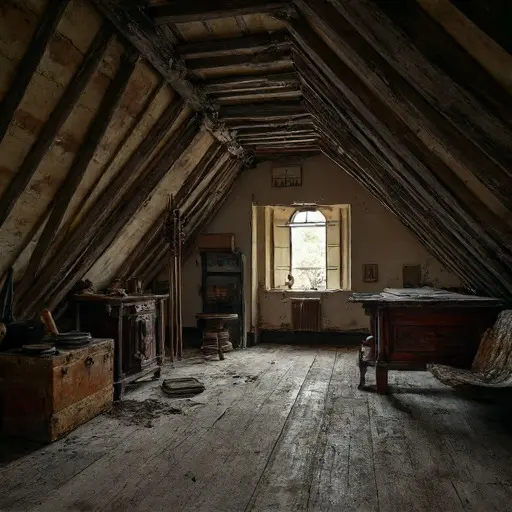
The highest levels beneath the curved mansard roof contain storage areas and hidden rooms shaped by the complex architecture. Wooden beams, old trunks, and unused household items remain scattered throughout these forgotten spaces, preserving fragments of the mansion’s long history.
Outside, the mansion continues its slow transformation. Ivy climbs along stone surfaces, garden plants spread across old paths, and weathered architectural details blend with the surrounding landscape. The rusted bicycle beside the porch and the faded statue in the garden remain as silent reminders of the people who once lived here.
Although abandoned, the Second Empire mansion has not lost its presence. Its sweeping roof, carved stone details, copper ornamentation, and elegant proportions continue to define the corner where it stands.
Today, the residence remains a remarkable piece of Victorian history hidden within an ordinary neighborhood. Every cracked marble step, weathered stone wall, and faded decorative detail preserves the memory of a grand home built to last — a mansion now cared for only by time, weather, and nature.