The Forgotten Richardsonian Mansion Beneath the Quiet Neighborhood Sky
Standing along a modest American residential street, this abandoned three-story Richardsonian Romanesque Victorian family mansion remains as a powerful reminder of an era when architecture was built to impress. Once a commanding landmark home within the neighborhood, the residence now rests quietly behind a rusted iron fence, its massive stonework slowly weathering while preserving the strength and character of its original design.
The mansion’s enormous rounded stone arches dominate the facade, creating a sense of permanence and grandeur even after decades of neglect. A cylindrical corner turret rises above the property, adding a dramatic vertical element to the heavy Romanesque silhouette. Carved sandstone columns, deep-set windows, and ornate masonry bands reveal the craftsmanship and ambition that shaped the residence when it was first constructed.
Built from pale grey limestone with rose sandstone detailing, the exterior carries a rich contrast of textures and colors. The dark slate roofing remains above the aging structure, while weathered copper gutters have developed a muted patina from years of exposure. The asymmetrical form of the mansion has softened with age, giving the building a natural appearance shaped by time rather than design alone.

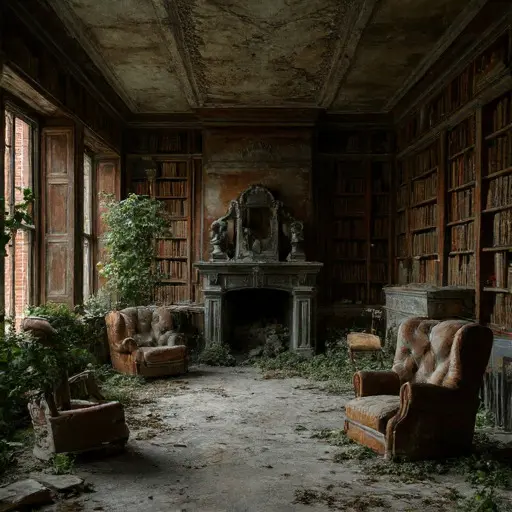
Inside, the mansion reveals the remains of a once-impressive family residence. The entrance hall still reflects the weight and scale of the exterior architecture, with broad openings, heavy woodwork, and decorative details hidden beneath layers of dust. The atmosphere feels almost like a forgotten museum, preserving traces of the families who once passed through its halls.
The formal rooms continue the mansion’s sense of permanence and craftsmanship. Large fireplaces, carved trim, and deep window openings remain visible despite peeling surfaces and years of abandonment. Soft daylight filters through damaged glass, illuminating empty rooms where old furniture and forgotten belongings sit quietly beneath layers of time.
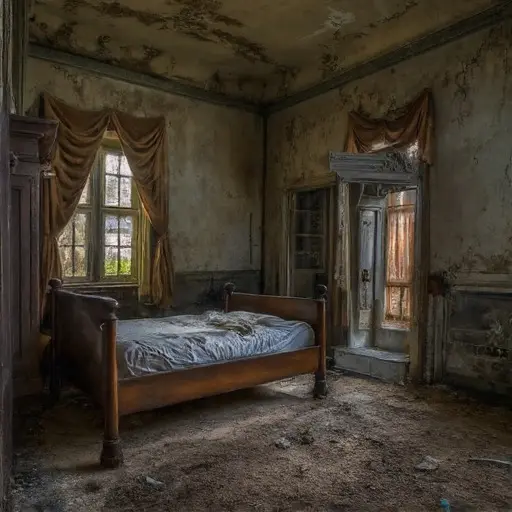
The upper floors hold more personal spaces, including abandoned bedrooms and narrow corridors where signs of everyday life remain. Faded fabrics, worn wooden floors, and aging fixtures create a quiet record of the home’s final years before it was left behind.
Outside, the small city lot has transformed into a neglected garden enclosed by the aging iron fence. The cracked stone walkway leads through overgrown grass and shrubs toward the massive front entrance, while a faded wicker chair remains on the porch as a reminder of quieter days.
Beside the garden, a moss-covered concrete fountain sits surrounded by wild vegetation, its dry basin reflecting the slow return of nature. Broken shutters, peeling surfaces, and weathered stone details reveal the long years the mansion has spent without care.
The surrounding neighborhood continues beyond the property, with a parked vintage car, old mailbox, utility wires, and blurred rooftops creating a connection between the abandoned mansion and the active world around it. The contrast makes the residence feel like a hidden historical monument preserved in the middle of everyday life.
Despite its abandonment, the mansion still carries the strength and elegance that defined Richardsonian Romanesque architecture. The massive arches, carved stone details, turret, and layered masonry remain a testament to the craftsmanship of another generation.
Captured in photorealistic documentary style with a full-frame camera, natural 40mm lens perspective, realistic stone textures, authentic aging details, balanced natural colors, and subtle film grain, this forgotten Victorian mansion stands as a haunting portrait of architectural power, memory, and graceful decay.