The Forgotten Queen Anne Mansion Beneath the Quiet Street
Standing along a quiet American residential street, this abandoned two-and-a-half-story Victorian mansion remains as a fading reminder of a wealthy family’s once-prized Queen Anne residence. Hidden behind a low stone wall and an overgrown garden, the home preserves the elegance of another era while slowly surrendering to time, weather, and nature.
The mansion’s sweeping corner turret rises above the surrounding neighborhood, creating the distinctive silhouette that once made the residence a local landmark. The curved wraparound veranda stretches across the facade, supported by peeling columns decorated with elaborate spindlework and handcrafted Victorian details. Carved wooden balconies, stained glass transoms, and layered gables reveal the extraordinary attention to craftsmanship that defined the home’s original design.
Built from warm sandstone with muted rose tones, the exterior carries a gentle richness softened by decades of exposure. Ivory limestone trim frames the windows and architectural details, while dark slate roof sections and weathered copper ornamentation create a timeless contrast against the aging facade. The slightly irregular shape of the mansion has been naturally transformed by a century of settling, giving it a graceful and organic character.
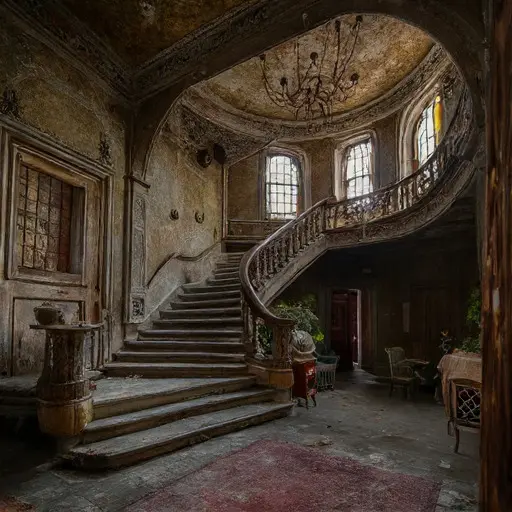
Inside, the mansion reveals the remains of a once-prosperous family home. The grand entrance hall still displays traces of Victorian craftsmanship, with detailed woodwork, elegant staircases, and decorative features hidden beneath layers of dust. The silence of the interior creates the feeling of a residence paused in time, where the final moments of daily life remain preserved.
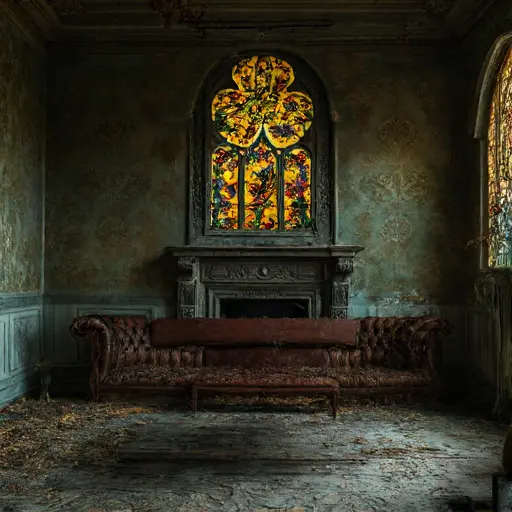
The formal rooms reflect the mansion’s former importance within the neighborhood. Large windows allow gentle overcast light to enter through damaged glass, illuminating worn wooden floors, faded decorative finishes, and abandoned furnishings. The carved details and stained glass elements continue to show the skill of the craftsmen who created the home generations ago.
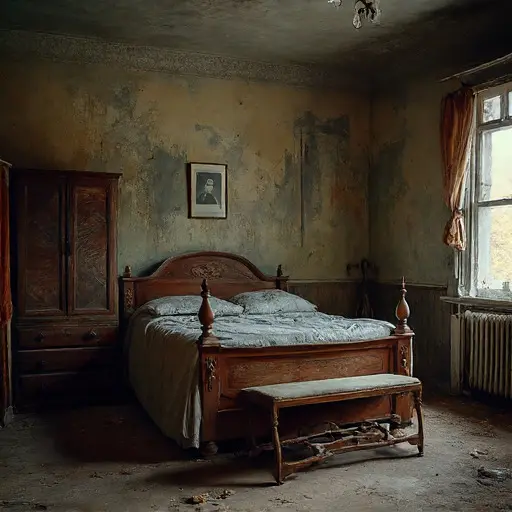
The upper floors contain quieter private spaces where the signs of abandonment become more visible. Old bedrooms, unused corridors, and forgotten rooms hold remnants of family life, with peeling surfaces, aged furniture, and small personal objects slowly becoming part of the mansion’s history.
Outside, the compact front garden has become a hidden landscape of neglect and beauty. The cracked flagstone walkway disappears beneath ivy and wild growth, while the faded wooden garden gate remains partially covered by climbing plants. A lichen-covered animal statue rests among the overgrown vegetation, surrounded by flowers that have returned without care.
The forgotten porch swing beneath the peeling columns remains one of the last signs of ordinary family life. Once a place for quiet evenings and conversations, it now hangs motionless above the weathered porch boards. Beyond the property, cracked roads, utility poles, and neighboring houses continue the everyday rhythm of the neighborhood, creating a striking contrast with the abandoned mansion.
Despite decades of abandonment, the mansion still carries the elegance and personality that made it special. The sweeping turret, carved balconies, stained glass, and sandstone facade continue to reveal the ambition and artistry behind its construction.
Captured in photorealistic documentary style with a full-frame camera, natural 35mm lens perspective, realistic aged textures, rich historic colors, and subtle film grain, this forgotten Queen Anne Victorian mansion remains a haunting portrait of faded wealth, architectural beauty, and the quiet passage of time.