The Forgotten Queen Anne Mansion Behind the Iron Fence
At the end of a quiet American residential avenue stands an abandoned Victorian mansion that once represented the height of family prosperity and architectural ambition. Hidden behind a decorative iron fence and surrounded by a garden slowly returning to nature, the grand Queen Anne residence remains frozen in a state of elegant decline.
The mansion’s massive rounded corner turret immediately dominates the street view, rising above layered gabled rooflines and weathered copper cresting. Its sweeping porte-cochère, carved mahogany porch columns, and intricate gingerbread trim reveal the craftsmanship of a period when every exterior detail was designed to impress visitors. The asymmetrical silhouette, once carefully balanced, has gently softened over decades of exposure, giving the home a unique character shaped by time.
Built from pale bone-white stone with blush sandstone ornamentation, the residence carries a subtle warmth beneath its faded appearance. Moss-green slate roofing spreads across the complex roof structure, while weathered bronze accents around the windows and decorative elements have developed a quiet patina. The combination of stone, metal, and wood creates a layered facade where every surface tells a story of craftsmanship and neglect.
The modest city lot surrounding the mansion feels strangely peaceful. Cracked brick pathways disappear beneath overgrown boxwood gardens, while forgotten landscaping features remain scattered throughout the property. A faded wicker chaise lounge rests near the porch, and a dry marble birdbath covered in moss sits beneath tangled vegetation, suggesting a garden once carefully maintained by generations of residents.
The street around the mansion continues with ordinary neighborhood life, making the abandoned estate feel even more mysterious. A rusted mailbox leans near the sidewalk, an old utility pole stands above cracked pavement, and neighboring homes fade softly into the background beneath calm overcast skies.
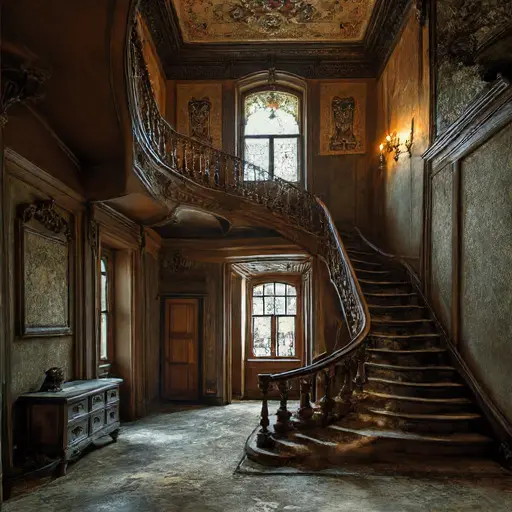
Inside, the mansion reveals the same extraordinary attention to detail found on its exterior. The entrance hall opens into a grand staircase wrapped in carved mahogany, with polished surfaces now dulled by years of dust. Stained glass fanlights cast muted patterns across the floor, creating a quiet atmosphere inside the forgotten home.
The formal reception rooms remain filled with traces of the family who once lived there. Tall windows overlook the abandoned gardens, while decorative fireplaces, carved wood panels, and intricate ceiling details survive despite years of silence. The rooms feel less destroyed than paused, as if the household simply disappeared and left the mansion waiting.
A long corridor connects the major living spaces, lined with faded portraits, built-in cabinets, and worn wooden floors. The scale of the interior reflects the confidence of its original owners, who built a residence intended for gatherings, celebrations, and generations of family memories.
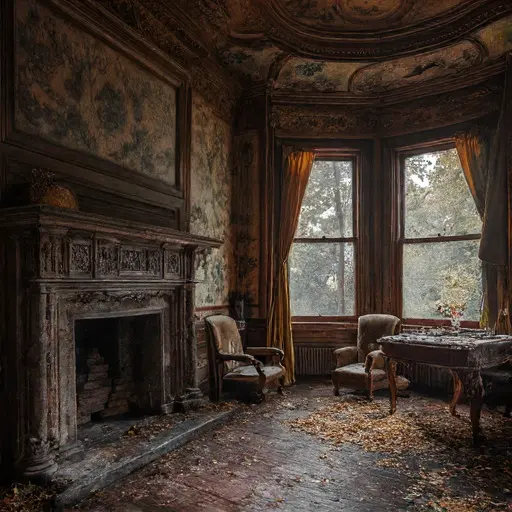
The main parlor remains one of the mansion’s most impressive surviving spaces. Large windows once filled the room with sunlight, while elegant furnishings created a setting for formal conversations and evening gatherings. Now, dust covers the remaining furniture, and creeping plants have begun reaching through broken window frames.
Beyond the public rooms are quieter family spaces where the mansion feels more personal. Bedrooms contain faded wallpaper, abandoned wardrobes, and small details left behind by former residents. The upper floors reveal how daily life unfolded within the enormous home, from private retreats to children’s rooms overlooking the neighborhood streets.
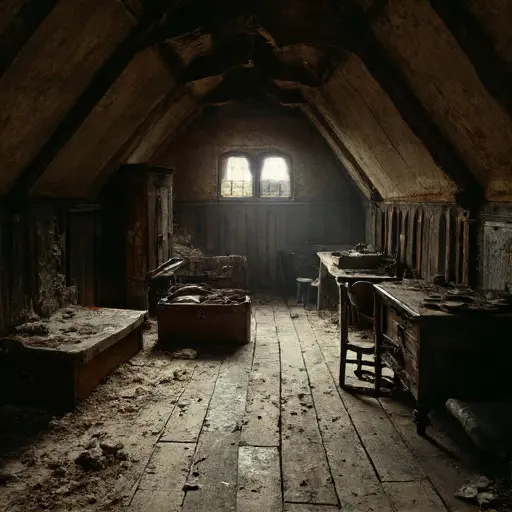
The attic levels beneath the layered rooflines contain forgotten storage areas filled with old trunks, damaged furniture, and remnants of previous generations. Wooden beams stretch across the ceiling, showing the impressive construction methods used to support the mansion’s complex Queen Anne design.
Outside, the mansion continues to age gracefully. The cracked paths, overgrown gardens, and weathered stone surfaces have become part of the architecture itself. Nature has not destroyed the home but instead layered it with new textures, turning the abandoned property into a living portrait of time.
The old porch columns still stand beneath the faded roofline, the turret still watches over the avenue, and the decorative iron fence still surrounds a place where countless memories were once created. Though abandoned, the Queen Anne mansion remains a remarkable reminder of a vanished era, preserving its beauty through every crack, stain, and weathered detail.
Today, the forgotten residence stands quietly among ordinary neighborhood streets, not as a ruin, but as a surviving piece of Victorian history waiting to be remembered.