The Forgotten Press Desk of the Calder Bookbinding Room

The Bookbinding Room holds a restrained quiet, where the last penciled signature count stops mid-column, leaving gatherings folded but unsewn. The air smells faintly of paste, leather, and old paper, a scent that implies routine rather than drama.
A Trade of Patience
This room belonged to Julian Calder, bookbinder (b.
1871, Lyon), trained through apprenticeship in fine binding and restoration. His ledgers recorded paper weights, sewing patterns, and spine measurements. A folded note addressed to his niece, Marie Calder, reads: “Sort gatherings before stitching,” suggesting a steady daily order: collating pages, pressing sheets, sewing spines, and finishing covers with measured care.
Tools and Paper
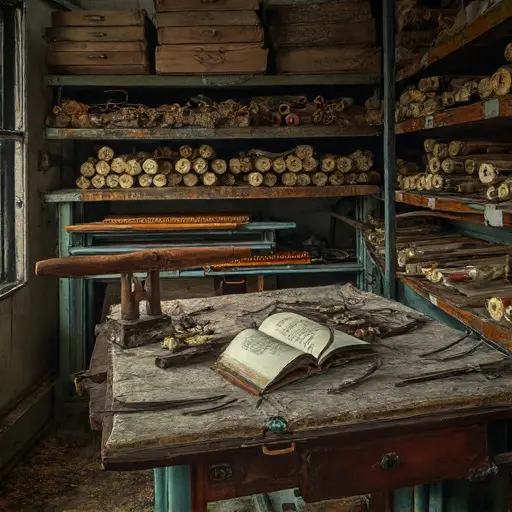
The press desk bears half-bound volumes weighted beneath boards. Loose signature stacks rest nearby, edges precisely aligned. Spools of linen thread hang from pegs. Leather scraps, gold leaf packets, and title stamps sit in shallow drawers. Every object reflects repetition and discipline, a middle-class craft practiced quietly and without ornament. Even the dust has settled evenly, as if unwilling to disturb the arrangement.
Unraveling Work
Later ledger pages show altered counts, crossed-out measurements, and repeated recalculations. One note reads simply: “client dispute,” underlined once. A failed commission for a legal archive left volumes unpaid and materials wasted. Julian’s correspondence thins after that point. Marie’s visits became irregular. Eventually, the press was never turned again. The signature piles remain folded, unstitched, and waiting.
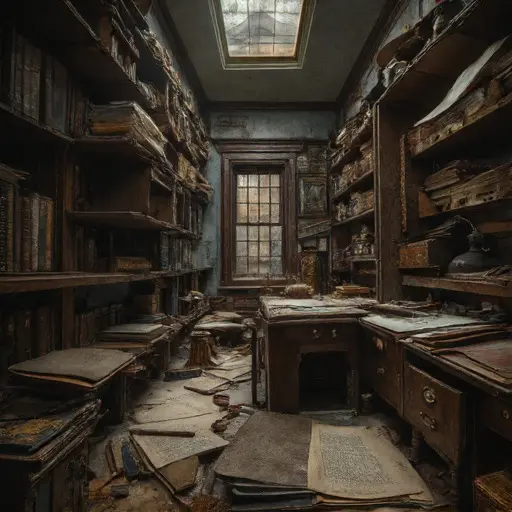
In the final ledger, Julian’s last entry ends mid-total. A penciled reminder—“confirm Marie’s collation”—breaks off.
No record explains his departure or why the work ceased entirely.
The house remains abandoned, its presses, paper, and signature stacks held in careful suspension, a record of patience undone and labor left unfinished, preserved without resolution.