The Forgotten Ledgers of Merrowick Hall
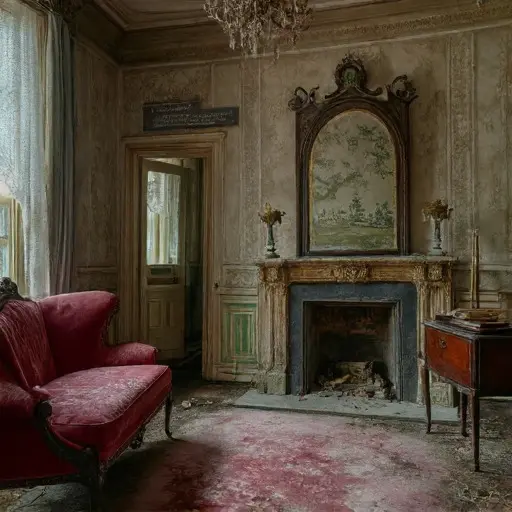
The first thing one notices inside Merrowick Hall is the temperature: cool, unmoving, as though time itself refuses to circulate. Dust dances in flat shafts of dull amber light filtered through moth-eaten drapes, but nothing breathes. The stillness is not peaceful—it’s the stillness of debt, of silences held too long, of a home emptied not of possessions, but of presence.
A fine layer of dirt lines the baseboards, undisturbed even by vermin. Each room retains the shape of function, yet not one shows signs of completion. No fires, no cleared dishes, no folded linens.
The hallway runners are still aligned, the hatstand still cradles a child’s woolen scarf stiff with age. Everything is in place. And no one came back.
The Eccentric Decline of Cassian Ellsworth
Cassian Wren Ellsworth, born 1859, was the third son of a baronet but disinherited for pursuing industrial investments. He purchased Merrowick Hall in 1894, expanding the property with borrowed funds from foreign creditors. According to surviving letters and ledgers, Cassian operated a private fund from his upstairs office, investing in gasworks, mechanized textile looms, and, increasingly, speculative electrical patents.
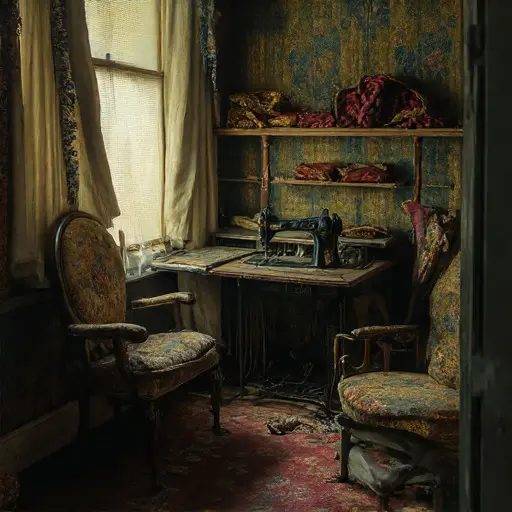
He was described in a solicitor’s letter as “brilliant but intemperate, and plagued by systems too complex for audit.” His journals—some still scattered across the study floor—detail nightly candlelit accountings that often ended in despair: “I fear I’ve backed another illusion. No dividend. No reply from Lyon.”
His wife, Margaretta Ellsworth, remained largely in the sewing room, rarely appearing in public after 1907. Her embroidery hoop remains on a chair cushion there, still threaded, abandoned mid-stitch. Their only child, Dorothy, was withdrawn from finishing school in 1911. After 1915, no records place any of them outside the Hall.
Thread and Silence in the Sewing Room
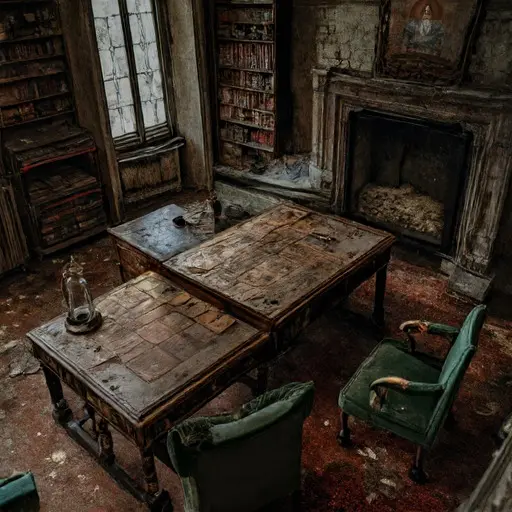
The sewing room, tucked behind a false panel near the linen closet, is the smallest chamber in Merrowick Hall. No one catalogued its existence on the official blueprints. Here, Margaretta Ellsworth spent the majority of her days—separated from the noise of Cassian’s affairs, from the questions of servants, and, eventually, from her daughter.
The room holds no furniture beyond a treadle sewing machine, a high-backed chair, and two shelves of fabric bolts long turned to lacework by moths. On the seat, a faded embroidery hoop still stretches a once-blue cotton square now gone nearly white with dust. The stitch reads: “M.E. for D.E.” The needle remains threaded, pointing down as though frozen mid-prick.
A glass of dried lavender water sits to one side. A stack of letters—sealed and never posted—rests inside a drawer. Their envelopes are all addressed to “Dorothy, c/o Miss Alden’s School.” The letters remain unread. The drawer was never locked.
There was no final transaction. No sale. No will. Merrowick Hall was left whole, its debts unanswered, its corridors filled with paused intentions.
It remains abandoned.
