The Forgotten Ledger of Whitmore’s Silent Tailoring Room
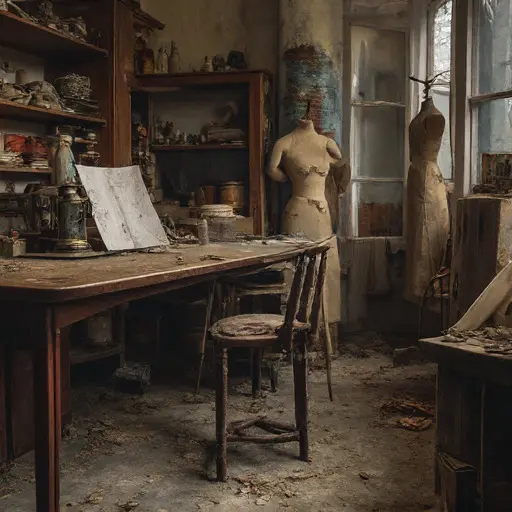
The tailoring room exudes careful stillness. On the central table, the ledger lies open with unfinished measurements, scissors and pins left as if dropped mid-task. Rolls of cloth lean against walls, patterns pinned but uncut, the silence of halted routine pervasive throughout the space.
Precision in Fabric and Form
The room belonged to Harriet Whitmore, professional dressmaker (b. 1876, Edinburgh), trained in bespoke gown design and employed by the upper-middle class. Her handwriting appears in the ledger, pattern sketches, and customer notes. A small photograph depicts her younger sister, Isobel Whitmore, organizing fabrics. Daily routines included morning fabric inspection, midday cutting and fitting, and evening record-keeping in the ledger. Harriet’s temperament was meticulous, patient, and exacting; every seam measured, every stitch noted carefully, preserving her high standards.
Abandoned Stitches and Mid-Work Silence
Needles lie scattered, threads entangled, and pins embedded in half-finished garments. The ledger ends abruptly mid-entry, ink smudged across the final lines. Dress forms hold partially sewn gowns, patterns half-traced, scissors resting beside stacks of fabric. The meticulous arrangement suggests sudden interruption rather than slow decline. Even small items—chalk, tape measures, and buttons—remain poised as though awaiting human touch, untouched for years.
Decline Through Industrial Change
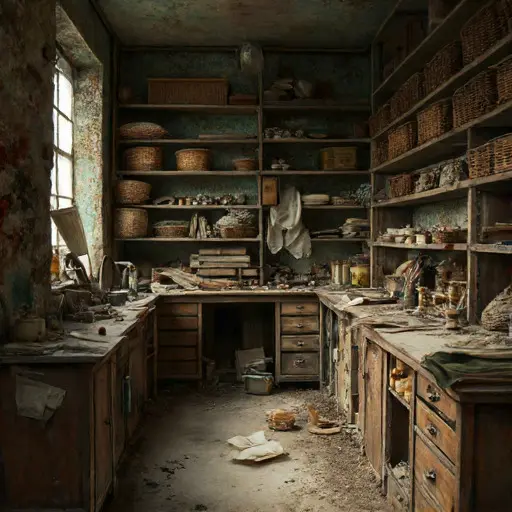
Later entries in the ledger grow sparse. Customer orders remain unfulfilled. Whitmore’s decline was caused by the introduction of ready-made clothing and mechanized stitching, rendering her hand-crafted gowns less viable commercially. Daily work slowed and then ceased completely, leaving every sewing machine, fabric bolt, and ledger entry uncompleted and waiting indefinitely.
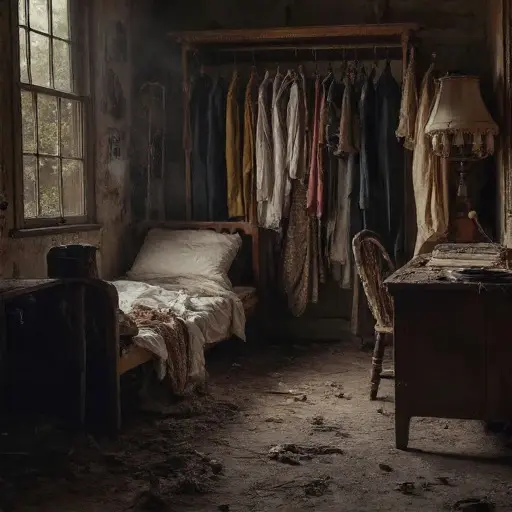
The final discovery is the silence of interrupted craft. No explanation survives. The house remains abandoned, fabrics uncut, machines idle, and every ledger frozen mid-measurement, a testament to halted labor, disrupted vocation, and unresolved tailoring artistry lingering quietly in every room.