The Forgotten Ledger of Bellgrave House
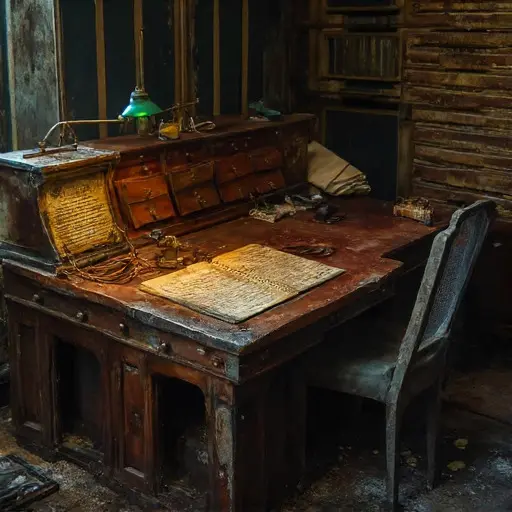
No one returned to close the books. The doors of Bellgrave House were not locked in fear or abandonment, but in pause — as though someone once intended to return. The silence inside has a weight, not of secrets, but of tasks left uncompleted, letters unsent, tea left to go cold.
Each room is heavy with practical memory, stripped of glamour but deeply human in its stillness.
The wallpaper peels not in dramatic sheets but flakes, and where it doesn’t, it clings stubbornly, as if the house itself refuses to be rewritten. The air is brittle with paper dust and faint iron. It is not haunted — it is forgotten.
Thaddeus Bellgrave and the Collapse of the Ledgers
Thaddeus Monroe Bellgrave, born 1846, was the second son of a coal merchant who, against his family’s wishes, studied business accounting in New York. He returned to found Bellgrave & Sons, though he had no sons — only a quiet wife, Beatrice, and a daughter, Clara, known locally for her watercolor paintings of botanical specimens.
Letters preserved in the drawing room escritoire speak of Thaddeus’s growing concern over “the discrepancy.” By 1907, the business had faltered, though no bankruptcy was ever filed. Clara’s paintings stopped after that year. Beatrice’s letters grow short, then stop altogether.
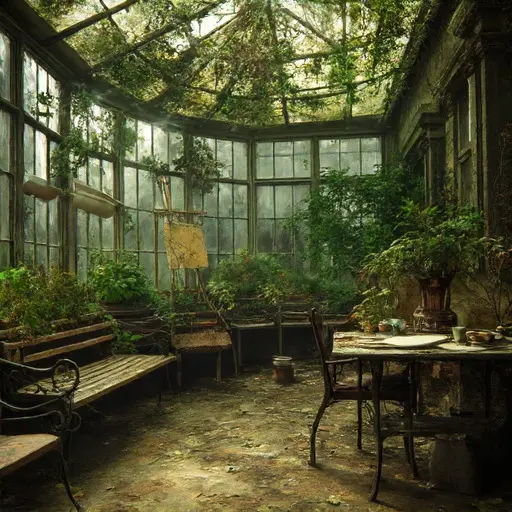
The house grew quieter. Servants were dismissed. Invoices piled in drawers. Clara took to painting exclusively in the upstairs conservatory, where blotched paper and shattered palettes remain. Her final signed work, found torn and water-damaged, depicts the house’s south wing — windows dark, vines overtaking the eaves.
Thaddeus’s last letter, unsent, was addressed to his daughter, never mailed: “The ledgers do not reconcile. I am not the man I promised to be.”
The Ledger Room Behind the Parlour Wall
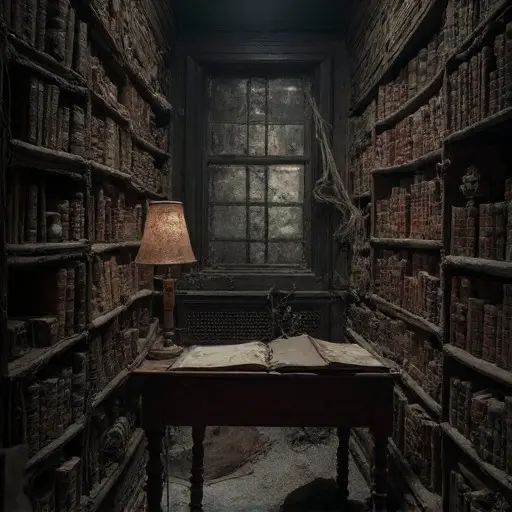
A hidden doorway in the parlour, marked only by an uneven molding seam, leads to what appears to have been a private record room. Inside: shelves buckling under the weight of unsorted ledgers, each bound in blue cloth, stamped with dates between 1881 and 1908. The dust here is thicker, the air cooler, the silence absolute.
One ledger lies open on a side table. Its columns are overwritten with notes in the margins: “missing,” “check again,” “incomplete.” A small envelope, unsealed, contains a clipping from a local paper about a partner’s sudden death in 1906. The ink has bled from water damage.
A Final Entry in the Basement Registry
In the basement, pinned to a corkboard near the coal chute, is a single, unsigned ledger sheet titled “Resolution.” Its final entry reads: “Assets to none. Closure without reconciliation. House to remain.”
It did.
Bellgrave House was removed from commercial records in 1935.
Bellgrave House still stands beneath layers of dust and debt, its ledgers untouched.
It remains abandoned.
