The Forgotten Havel Lantern Cellar Where the Mortar Lay Askew
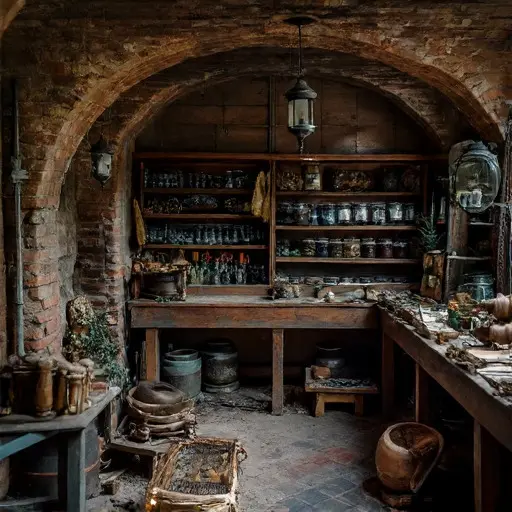
The lantern cellar holds a low, resinous hush; warmth dwindles along the floor where lantern soot smudges old stone. Nothing announces calamity, yet something softened in the room’s careful rhythm, as though a practiced gesture slipped and the silence kept it.
A Tradesman Bound to the Mortar’s Weight
Anton Josef Havel, born 1876 in Plzeň, compounded modest remedies for nearby households.
A woolen cloth from his sister Eva cushions glass vials arranged by hue. Anton mixed decoctions at dawn, ground roots by midday, and clarified tinctures under lantern glow. His quiet beginnings show in reused jars cleaned to near opacity and scales repaired with simple brass wire.
Labor Pressed Into Fragrant Corners
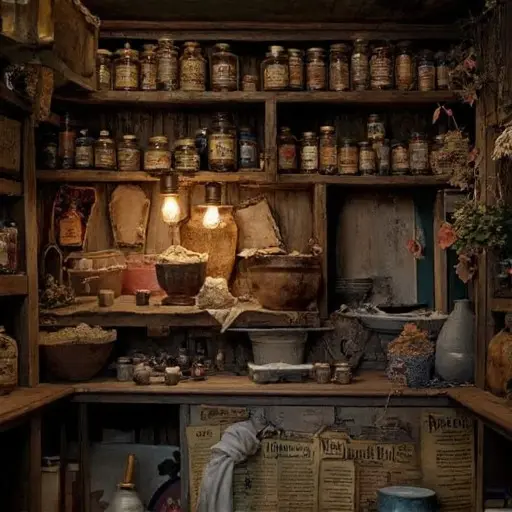
Dried chamomile spills from a linen packet near Czech-script dosage slips. A funnel rests atop a cooled decoction, its rim clouded by uncertain heating. On the bench, a tincture bottle stands half-filled, sediment veiling its clarity. A folded tag describing a client’s request reveals a hesitant line through the final measure. Even the lantern wicks seem trimmed with distracted care.
Strain Seeping Through the Lantern’s Glow
Behind a rack of tinctures hides a returned slip: “inconsistent strength.” A measuring spoon rests crooked on a bundle of dried mint, its handle marked by uneven pressure. The stool stands angled toward the stairs, as if Anton rose repeatedly, testing the cellar’s thin draft. A vial stopper bears a shallow crack, placed too carefully to be dismissed.
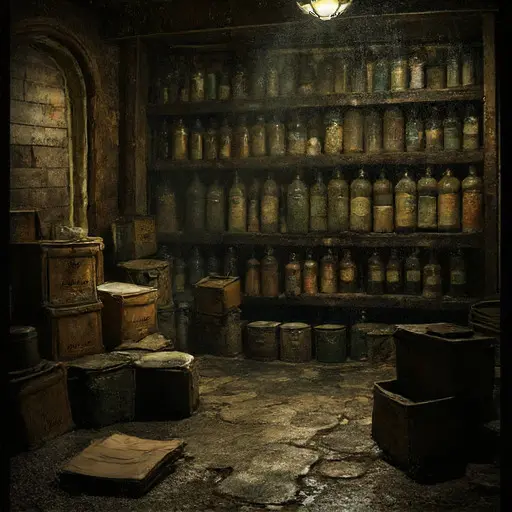
Returning to the lantern cellar, one last sign remains: Anton’s flawless measuring scale placed beside the askew mortar—precision and doubt settling together in the quiet.
The house remains abandoned.
