The Forgotten Gothic Manor Behind the Ivy Path
Hidden deep within a quiet forest neighborhood, this abandoned Victorian Gothic Revival house stands as a silent monument to another century. Surrounded by towering cedar trees, silver birches, moss-covered rock gardens, and winding stone pathways, the three-story residence has slowly disappeared into the landscape, leaving only fragments of its former elegance visible beneath years of neglect.
Constructed from pale ivory sandstone, deep cobalt-blue brick accents, warm copper roof panels, and dark basalt foundation stones covered with patches of moss, the house carries a powerful yet graceful presence. Its dramatic central tower rises above the garden with a pointed roof and narrow arched windows, creating a striking silhouette among the surrounding trees.
The architecture combines Gothic details with a comfortable family-home character.
Carved stone balconies, decorative iron railings, and the sweeping side wing give the property a grand appearance, while the rounded glass conservatory at the end of the house adds a softer connection between the interior and the overgrown gardens outside.
Decades of abandonment have transformed the once-precise structure into something more organic. The exterior walls have gently curved with age, the tower leans slightly above the garden, roof sections sit unevenly, and softened stone carvings reveal the slow passage of time. The porch now bends around the property like a sheltered corridor, partially hidden beneath climbing plants and wild growth.
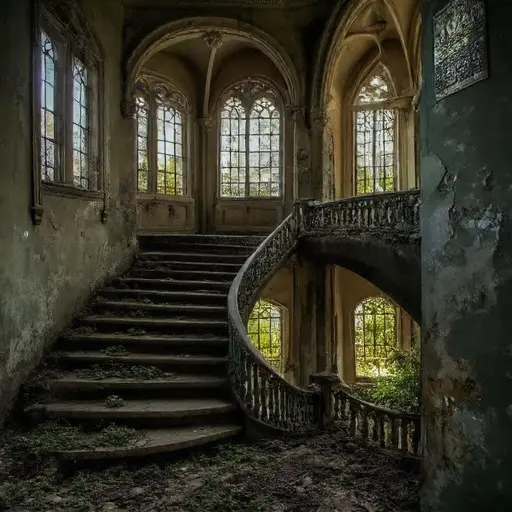
Inside, the forgotten home reveals a collection of quiet rooms shaped by years of silence. Tall ceilings, aged wooden floors, and decorative architectural details remain preserved beneath layers of dust. The narrow arched windows allow soft daylight to enter, illuminating empty hallways and forgotten family spaces that have remained untouched for generations.
The central tower contains some of the most mysterious rooms in the house, with curved walls, narrow staircases, and small observation spaces overlooking the forest garden. Faded textures, weathered materials, and abandoned furnishings create the feeling of a place paused in time rather than completely lost.
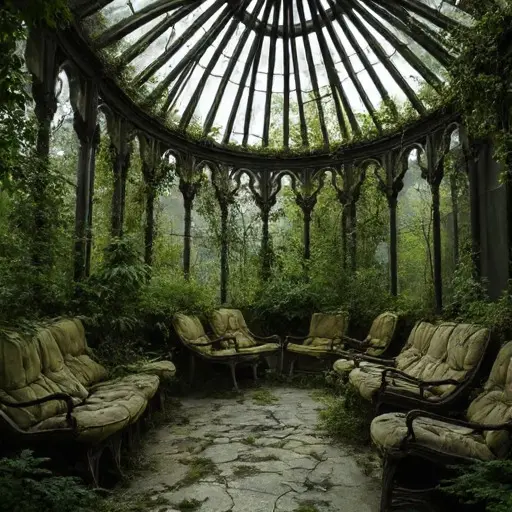
Beyond the house, the surrounding grounds have become a natural woodland sanctuary. The moss-covered rock gardens blend into the forest floor, while old stone paths disappear beneath ferns, wildflowers, and fallen leaves. Every corner of the property shows signs of nature slowly reclaiming the forgotten estate.
A faded red wooden gate remains open at the garden entrance, leading toward a cracked slate walkway that once welcomed visitors. Near the neglected pond, a weathered ivory garden statue stands among reeds and wildflowers, watching over the quiet grounds as the landscape continues to grow around it.
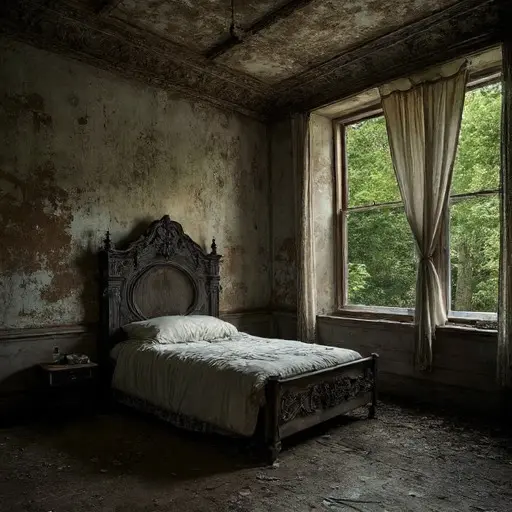
The upper floors hold the final traces of the family who once lived here. Empty bedrooms, silent corridors, and forgotten balconies overlook a garden that has transformed into a wild forest clearing. The house no longer feels abandoned but instead like a living part of the woodland surrounding it.
Captured in a wide three-quarter composition from the garden entrance, the residence appears like a rare documentary discovery hidden among the trees. Soft overcast daylight, clear air, natural lens rendering, realistic color grading, subtle film grain, and moderate depth of field reveal the quiet beauty of a Gothic home slowly returning to nature.