The Forgotten Glass Garden of Willow Lane
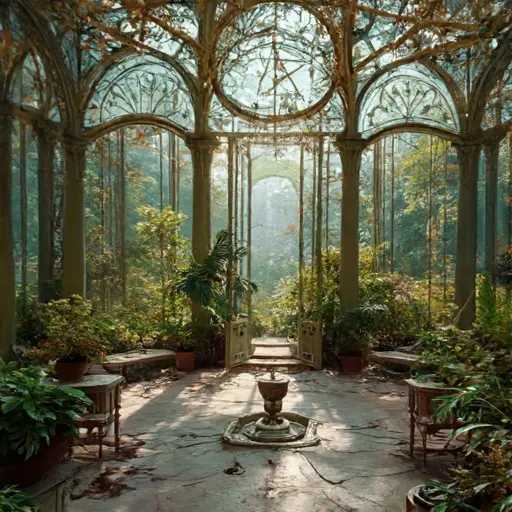
The Willow Lane garden pavilion was built in 1906 as a private botanical retreat for the Whitmore family, who lived in the modest residential neighborhood surrounding the property. Unlike the grand mansions found in wealthier districts, the pavilion was created as a smaller expression of luxury, designed not for public attention but as a peaceful sanctuary where the family could escape the noise of the growing city.
Edward Whitmore, a successful horticulturist and landscape designer, commissioned the structure after returning from travels through Europe where he became fascinated by the Art Nouveau movement.
He wanted a space where architecture and nature would blend together, creating the feeling of a living garden rather than a traditional building.
The pavilion was constructed with dark emerald wrought iron, ivory limestone arches, and custom curved glass panels that were considered unusually advanced for the time. Its flowing metalwork resembled vines and flowers, while the softly rounded dome roof allowed sunlight to spread evenly across the interior garden.
The Whitmore family used the pavilion for quiet afternoon gatherings, botanical experiments, and seasonal celebrations. Rare plants grew inside ceramic pots along the curved pathways, and the central marble fountain became the heart of the space. Guests often described the pavilion as a hidden jewel surrounded by ordinary neighborhood homes.
The surrounding residential street changed slowly over the decades, but the pavilion remained almost untouched. While nearby houses were renovated and expanded, the small glasshouse continued to preserve its original character, protected by mature trees, climbing vines, and the family’s dedication to maintaining its delicate features.
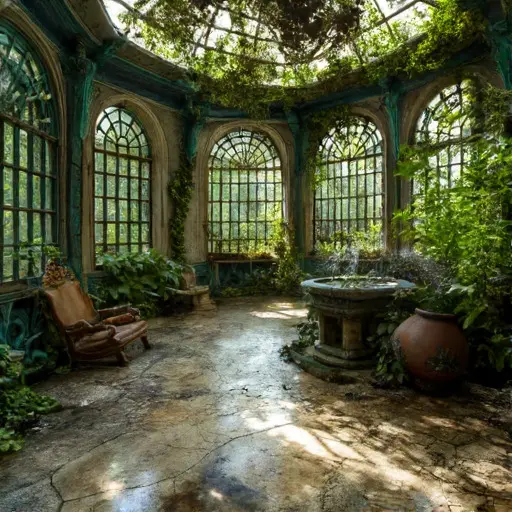
After Edward Whitmore passed away in the late 1930s, ownership of the property changed several times. The family members who inherited the pavilion appreciated its beauty but struggled with the specialized maintenance required for the aging glass and metal structure.
By the 1960s, the heating system had failed, many of the rare plants had disappeared, and sections of the copper framing began to weather. Without regular restoration, the pavilion slowly transformed from a carefully maintained garden retreat into a forgotten corner of the neighborhood.
Several restoration proposals were introduced over the years, including plans to convert the pavilion into a community garden space. However, the cost of repairing the custom curved glass and handcrafted ironwork prevented any major project from moving forward.
As the decades passed, nature began reclaiming the structure. Vines wrapped around the dome, wildflowers grew through cracks in the stone paths, and moss spread across the old fountain. Instead of destroying the pavilion, neglect created a new kind of beauty, blending the original Art Nouveau vision with the unpredictable patterns of nature.
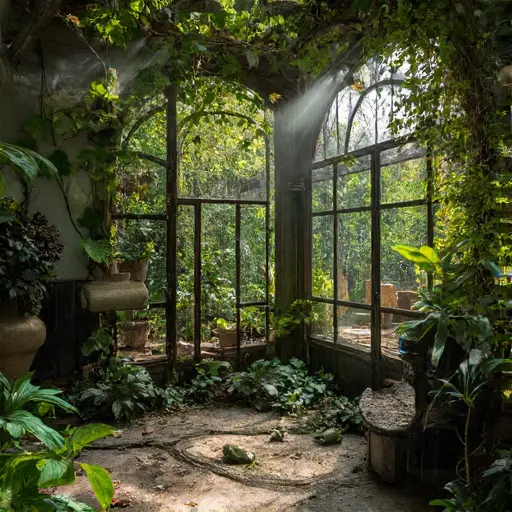
Today, the Willow Lane garden pavilion remains a rare survivor from the early twentieth century, hidden behind a simple neighborhood fence and surrounded by ordinary suburban life. The cracked sidewalk, old driveway, and nearby utility poles contrast with the delicate craftsmanship of the forgotten glasshouse.
The pavilion stands as a reminder that beauty does not always come from size or grandeur. Its curved ironwork, aging glass, and overgrown garden tell the story of a family who created a private world where architecture and nature could exist together.
Though abandoned, the little glass garden of Willow Lane continues to feel alive, preserved by sunlight, vines, and the quiet passage of time.