The Forgotten Duarte Servants’ Hall Where the Forms Went Awry
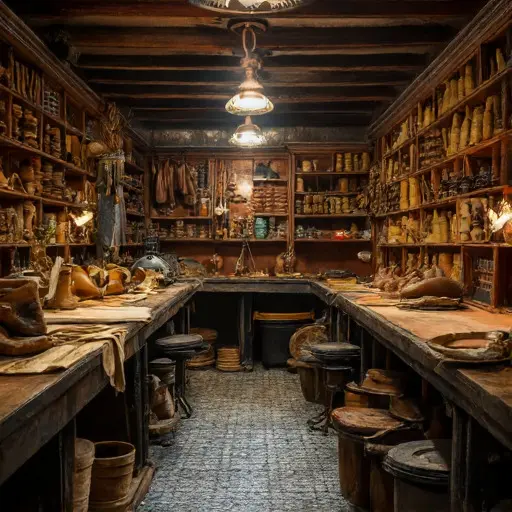
The hush inside the servants’ hall carries warmth fading from its stone flags. Wax glimmers on a dropped heel plate; threads lie poised as if about to be drawn tight. No scuffle, no tears—only a pause, so careful it feels almost apologetic.
A Tradesman’s Work Carried Across Quiet Corners
Manuel Vasco Duarte, born 1878 in Porto, shaped bespoke footwear for provincial officers. A linen kerchief from his sister Helena drapes a chair, near sketches of boots marked in Lusophone script. Manuel kept strict hours: mornings cutting patterns, afternoons stitching uppers, evenings refining seams beside a gentle brazier. His modest upbringing lingers in reused parchment offcuts pressed beneath a wooden crate.
Patterns That Promised Honest Ambition
Waxed threads, evenly coiled, lie beside a brass compass for measuring arches. A crate of imported cork—light, precious—rests under the main table. One boot, exquisitely stitched across the vamp, waits for its mate. A narrow sheet of notes lists commissions, the final line half-scored.
Strains Weaving Into the Last Steps
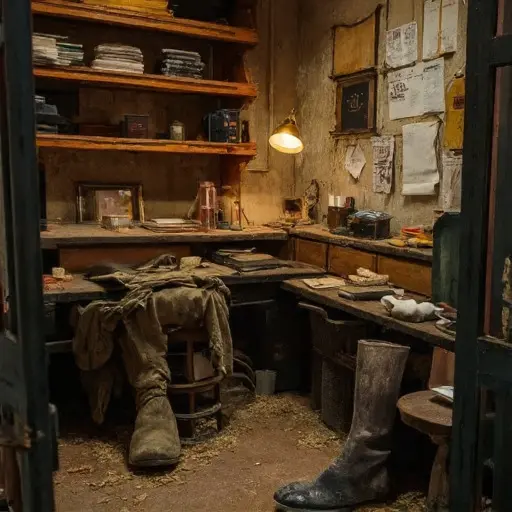
Behind a workbench lies a returned order slip accusing Manuel of “structural weakness in the welt.” A heelcap, cracked at the seam, sits on the brazier’s rim, soot-ringed from testing. The servants’ chairs stand askew, as though someone paced in mild, careful distress. Near the tiles, a spool of waxed thread has unwound in a hesitant line.
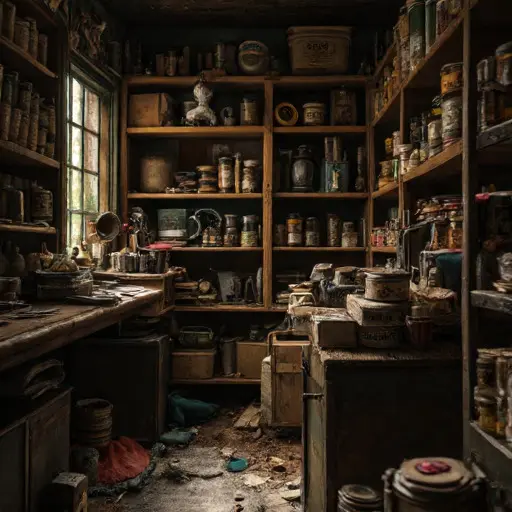
Returning to the servants’ hall, the final sign remains: a single, flawless upper placed beside its stripped sole—perfect, unusable—left at the edge of silence.
The house remains abandoned.
