The Forgotten Drawing Room of Ellgrave House
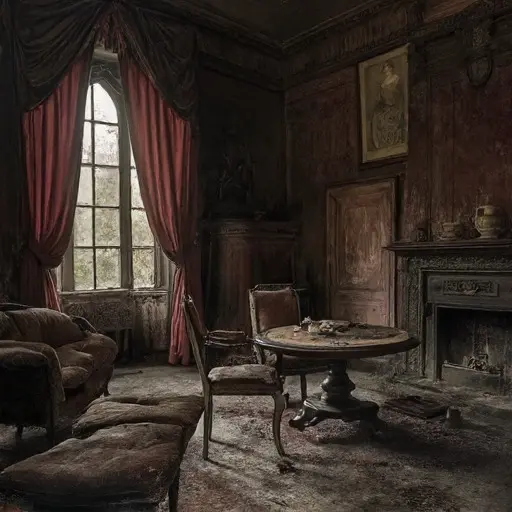
The air inside Ellgrave House carries more than stillness — it carries sequence. Every object feels positioned mid-movement, yet untouched for decades. The scent is permanent: dry wood, old cloth, iron dust.
Light barely filters through gauzy panels nailed into doorframes, giving everything the quality of soft rot. And yet, nothing is broken by force. No theft. No intrusion. Only gradual surrender.
The Forgotten Calendar Beside the Bed
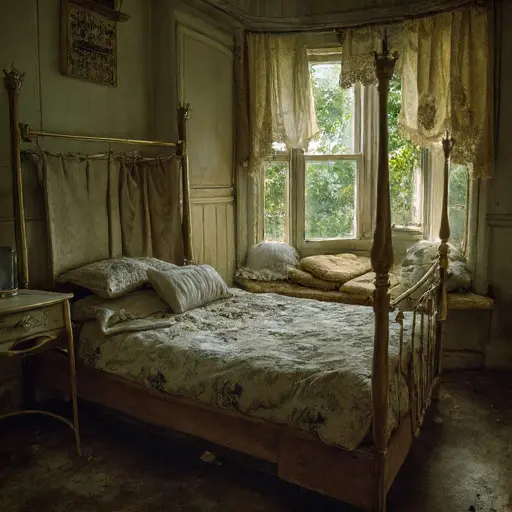
Miriam Elvane, born 1874, inherited Ellgrave House in 1912 upon the sudden passing of her father, a textile merchant. She remained unmarried, preferring solitude and her work as a watercolorist. Her journals — discovered stacked beside the brass bedstead in the upstairs bedchamber — reveal her rituals: tea at 3, painting from 4 to 6, and letter-writing before turning in. She wrote to no fewer than twenty correspondents per month. Each envelope bore meticulous calligraphy.
In later entries, her writing becomes abbreviated. One reads: “April 2 — no post. No music. Light not quite right.” On April 18, 1931, she wrote, “Can’t smell ink anymore.” After that, no entries. A calendar in her room remains marked at April 1931. The page was never turned.
Drawing Room Decay and the Letter Never Sent
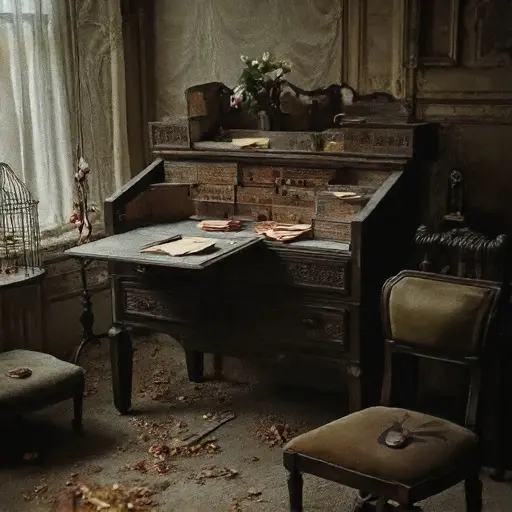
Downstairs, the writing bureau in the drawing room remains open, a single unsent letter tucked beneath the blotter. Addressed to “Miss H. Cartright,” it reads only: “I meant to tell you about the music. The silence here is different now.” The letter was never sealed.
The fireplace is long gone cold. The silver tray still holds a note: “Supper 7pm.” No plate was ever brought. The dining room chairs remain pushed out — not violently, just as if someone stood and never returned.
Ellgrave House remains closed. The bed unmade. The calendar unturned.
It remains abandoned.
