The Forgotten Drafts of the Beaumont Calligraphy Chamber
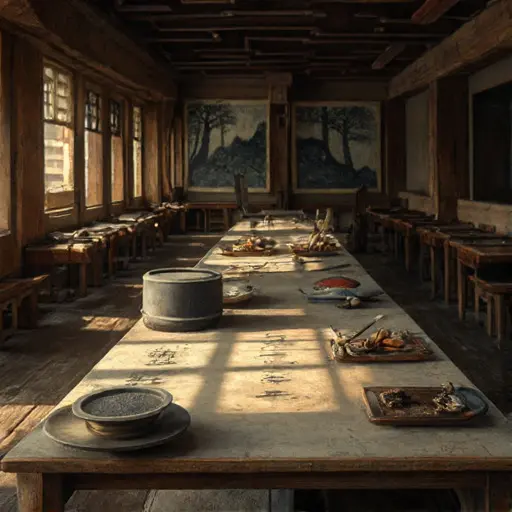
The Calligraphy Chamber exudes a hushed focus. A penciled note on a desk marks the stroke sequence for a commissioned manuscript, interrupted abruptly. The room’s quiet is precise and intentional, not violent or chaotic, only suspended.
Precision in Ink
These implements belonged to Madeleine Beaumont, calligrapher (b. 1876, Lyon), trained in both French script and Japanese brush techniques. Her meticulous annotations document commissions for local salons and private patrons. A folded slip names her cousin, Éloise Beaumont, “deliver manuscript Thursday,” suggesting a habitual rhythm of delicate strokes, careful rubbing of ink, and evening review.
Tools and Rituals
Quills are lined by size, nibs resting lightly on paper scraps. Ink pots, some dried, others partially used, sit beneath a rack of finished vellum. A small wooden brush holder bears faint residue, while a brass ruler shows scratches from repeated measurement. Madeleine’s ledger, tucked beneath a blotter, tracks orders with narrow, even columns, illustrating a patient temperament.
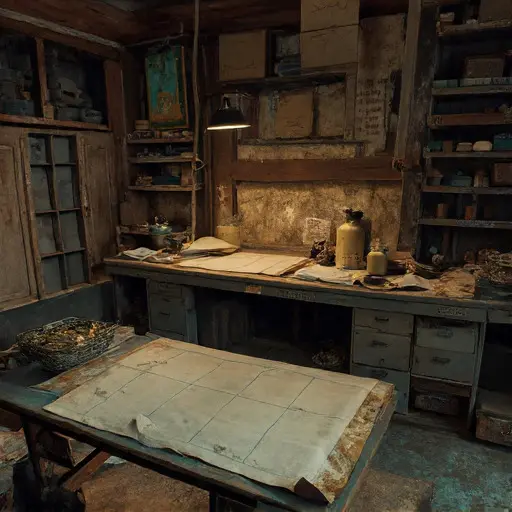
Signs of Unease
Later pages of Madeleine’s ledger show inconsistencies: strokes corrected, then struck through. Several manuscripts display uneven line weight. Margin notes—“client queries spacing”—are lightly smudged. A broken nib rests atop a sheet of practice strokes, indicating frustration or failing sight. Penciled guides on new drafts wobble, as if the hand hesitated where once confident.
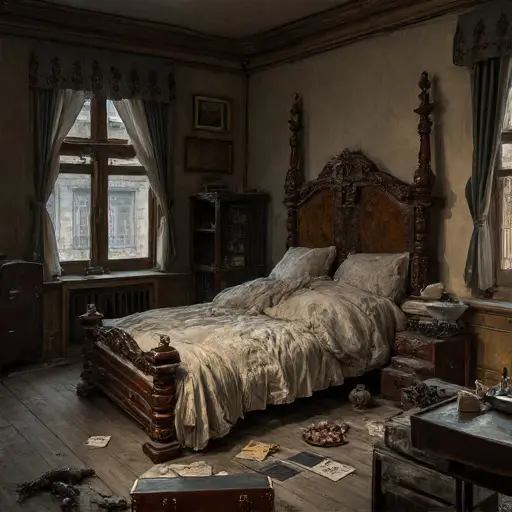
In the Chamber’s final drawer, Madeleine’s last draft halts mid-stroke. A penciled note—“check Éloise’s delivery”—cuts off abruptly.
No record explains her sudden withdrawal, nor why Éloise never arrived.
The house remains abandoned, its vellum sheets and pens frozen in silent suspension, awaiting a mastery that will not return, preserved in quiet, deliberate stillness.
