The Forgotten Delorme Stillroom and Its Vanished Scent
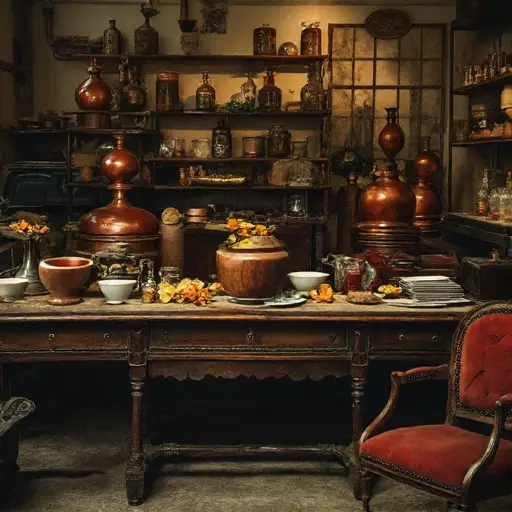
A hush clings to the jars, as if the last breath of steam never dispersed. Inside Delorme House, the stillroom carries an anxious quiet. The glassware reflects faint tremors of light, catching a trace of amber warmth that seems misplaced.
A stool is nudged away from the table, as though a perfumer halted mid-blend when some unspoken shift unsettled the room.
Amber in the Perfumer’s Story
Clémence Adèle Delorme, perfumer, born 1878 in Marseille, shaped aromas with meticulous devotion. A ceramic palette painted with Provencal motifs hints at her origins; a lace-edged apron hangs beside brass funnels arranged by decreasing size. Notes pinned to a spice cupboard list her trials in delicate handwriting. Her brother, Étienne Delorme, once assisted her—his monogrammed handkerchief tucked behind a cache of orris root. Their routines intertwined: she blended at dawn, he strained tinctures at dusk, the house scented with layered intentions.
The Rupture of Routine
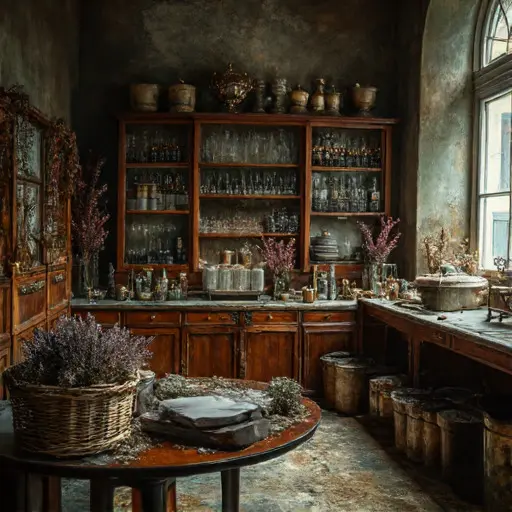
As commissions grew, Clémence faced subtler pressures. A merchant’s accusation—implying her prized extrait mimicked another’s formula—left a stain deeper than spilled essence. In the pantry alcove, a bottle of costly attar lies cracked and seeping into warped boards. Étienne’s apron bears scorch marks not matching any burner nearby. A drawer of fragrance trials shows abrupt crossings-out, her elegant script collapsing into hurried strokes. At the back, a locket containing a dried sprig has snapped open, its chain snarled around a brass vial.
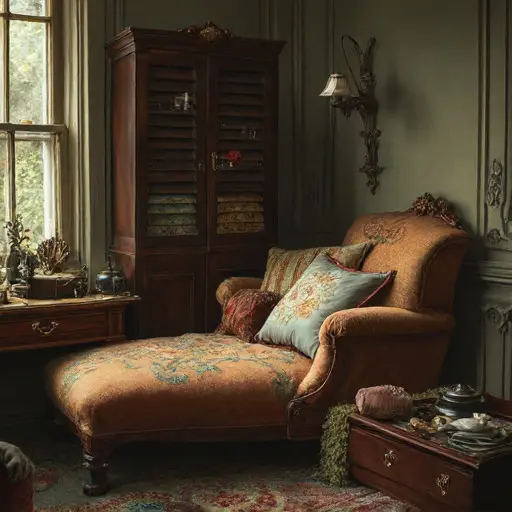
In the end, the last bottle on the stillroom table remains uncorked, its surface clouded by a faint bloom. Whatever Clémence attempted that night—correction, confession, or farewell—left only the tremor of lost intention in the air.
Delorme House stands abandoned still.
