The Forgotten Cabinet of the Hawthorne Apothecary

The Apothecary carries a silent tension, where the last penciled compound in a ledger stops mid-formula, leaving mixtures only partially documented. The faint aroma of dried herbs and medicinal resins lingers, a residue of interrupted care.
The Measure of Remedies
This room belonged to Edmund Hawthorne, apothecary and chemist (b.
1874, Dublin), trained in compounding medicines and herbal tinctures. His ledgers recorded ingredient ratios, drying times, and experimental notes. A folded note for his assistant, Clara Hawthorne, reads: “Check valerian tincture before noon,” revealing a life structured by precision: measuring powders, blending extracts, testing solutions, and recording effects meticulously.
Cabinets and Mixtures
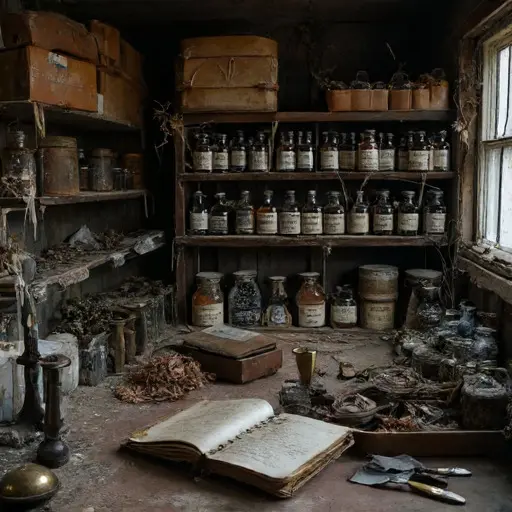
The central table is cluttered with scales, mortar and pestle, glass flasks, and ink pots. Shelves hold jars of powdered roots, bark, and dried flowers, each labeled in neat script. Half-completed tinctures stand beside them. Each object reflects repeated method, practiced hands, and middle-class dedication to chemical craft. Dust has settled in fine layers along tools and bottles, tracing halted routine with quiet insistence.
Signs of Neglect
Later ledgers reveal smudged calculations, missing quantities, and repeated corrections. One page bears a note: “contaminated batch,” underlined twice. Rising commercial pharmacies and imported remedies reduced the demand for hand-compounded medicines. Edmund’s eyesight dimmed, hands trembled, and Clara’s duties became irregular. Eventually, compounding ceased entirely. The compound records remain unfinished, instruments untouched, powders settled, and tinctures idle.
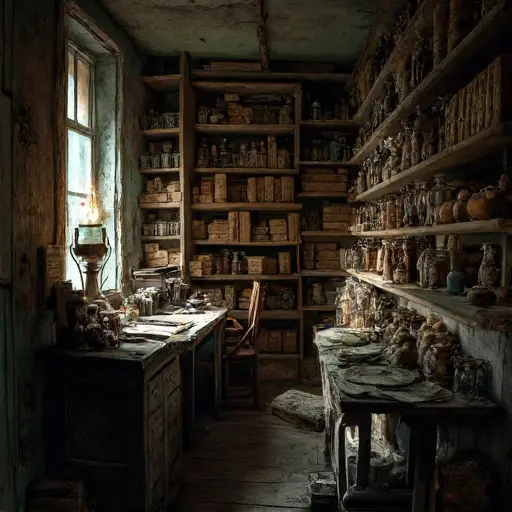
In the final ledger, Edmund’s last entry ends mid-formula. A penciled reminder—“verify Clara’s tincture ratios”—cuts off abruptly.
No explanation survives for his departure or why the apothecary was never reopened. Powders, jars, and compound sheets remain poised in quiet equilibrium, a record of interrupted labor, suspended care, and silent abandonment preserved with careful order.