The Forbidden Echoes of Silken-Wane
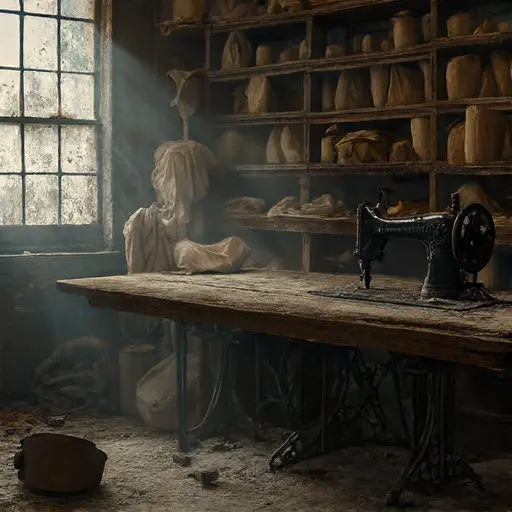
Silken-Wane—a name suggesting faded luxury and fragility—was an architecturally light and delicate mansion of white-painted wood and high, narrow windows, contrasting sharply with the somber, heavy Victorian style of its contemporaries. It sat in a dense, overgrown grove of birch trees, perpetually shadowed. The mansion felt thin and almost temporary, as if it had been built quickly and carelessly. Upon entering, the air was surprisingly dry and thin, carrying a faint, musty scent of old silk and something acrid, almost like burnt sugar. The floorboards were numerous and creaking, yet the silence was overwhelming, a soundlessness that suggested the house was holding its breath. This abandoned Victorian house was a beautiful, elegant shell concealing a profound, tragic flaw.
The Dressmaker’s Unraveling
Silken-Wane was the workshop and residence of Madeline Dubois, a brilliant but desperately unhappy dressmaker of the Gilded Age. Her professional life was spent creating exquisite, intricate silk gowns for the elite, requiring endless hours of painstaking, delicate handiwork. Personally, Madeline was plagued by a profound, escalating sense of claustrophobia and the belief that all beauty was inherently temporary, destined to unravel. She built Silken-Wane to be light, airy, and full of windows, constantly attempting to push back the physical confinement she felt was closing in on her, both emotionally and architecturally.
The Grand Salon of Unfinished Silk
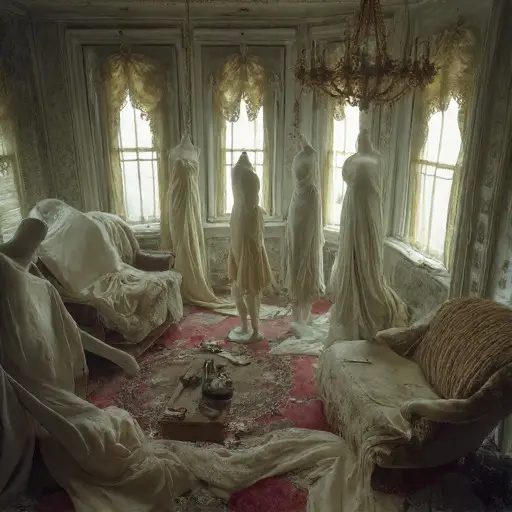
Madeline’s main salon was her central workspace. Here, the numerous dressmaker’s dummies stood like an audience of ghostly, silent patrons. We discovered her detailed, cloth-bound journal hidden inside one of the hollow wooden display pedestals. Her entries chronicled her increasing obsession with using only the finest, sheerest silk, believing that if the dress was light enough, it could not confine the wearer. Her final project, detailed meticulously, was a wedding gown made of raw, un-dyed silk, woven with her own hair, which she called “The Unwoven.” Her notes described her growing despair over the feeling that the walls of the mansion, despite all the windows, were shrinking, closing in on her.
The Observation Box
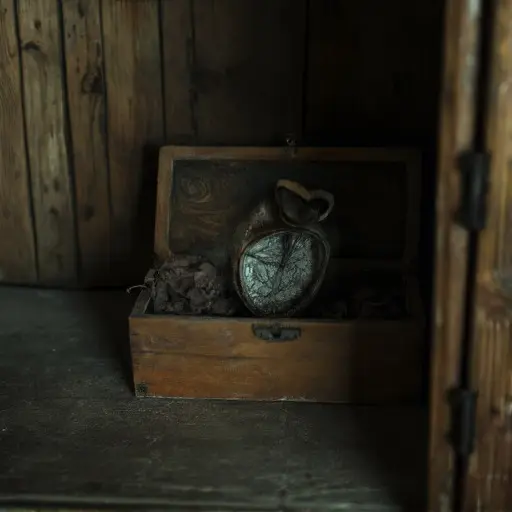
The most chilling secret was located in her personal dressing room. Behind a panel of mirrors, we found a small, secondary chamber, completely bare save for one object: a large, sturdy wooden box, built exactly to the dimensions of a coffin. This was the “Observation Box,” as described in her final journal entries. She used it as a claustrophobia therapy device, locking herself inside to confront her fear, timing her sessions with a small, wind-up clock. The final note, tucked under the clock’s broken glass face, was a list of her most expensive gowns, bequeathed to her former rival, followed by a single, final phrase: “The last fitting is complete. Now, the final unraveling.” Madeline’s body was never found. The theory is that her fear eventually consumed her: she sealed herself in the final, ultimate confinement—the box—and either starved or suffocated. The forbidden echoes of Silken-Wane are the whispers of silk and the sharp silence of a woman who chased lightness until she disappeared completely within the elegant, abandoned walls of her abandoned Victorian house.