The Flint and Limestone House in the Highland Clearing
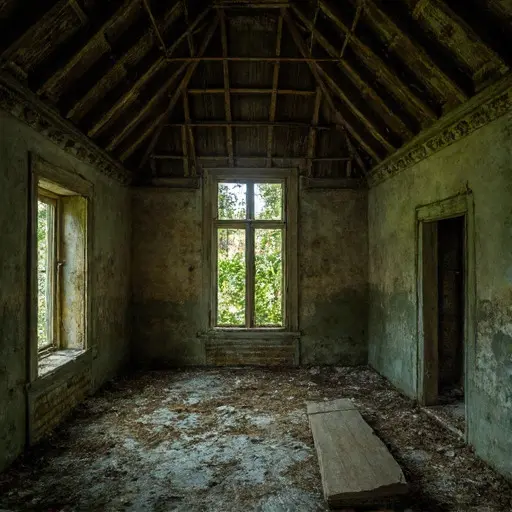
In a tropical highland rainforest clearing, a Stick Style Victorian house stands quietly among dense broad-leaf vegetation and towering trees. Built from flint and pale limestone with cream mortar, the structure feels grounded yet weathered, its materials blending into the humid environment.
The rooflines are sharply angled but gently settling, with exposed wooden trusses softened by age.
The geometry of the house is subtly irregular—vertical siding is unevenly spaced, and windows sit slightly offset, as though the structure has shifted imperceptibly over time.
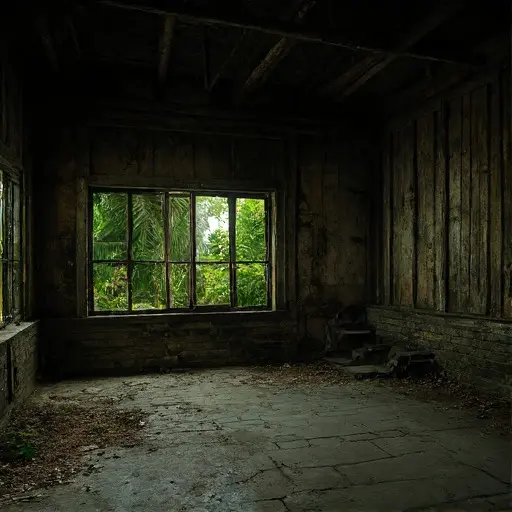
Inside, the house is entirely unlit. No interior glow exists anywhere, and every room remains dark and quiet. Soft overcast daylight filters through surrounding rainforest canopy, entering through slightly offset windows and broken openings, casting muted patterns across stone and timber surfaces.
Outside, a broken stone stairway leads down into thick vegetation. At its base sits a collapsed wrought-iron gazebo, its structure overtaken by vines and climbing plants that wrap through its twisted frame.
The rainforest steadily reclaims the site—broad leaves pressing against stone, roots threading through gaps in masonry, and moisture darkening every exposed surface. The house remains as a quiet fragment of human construction within an overwhelming green landscape, neither fully consumed nor maintained, but suspended in slow decay.